 1.
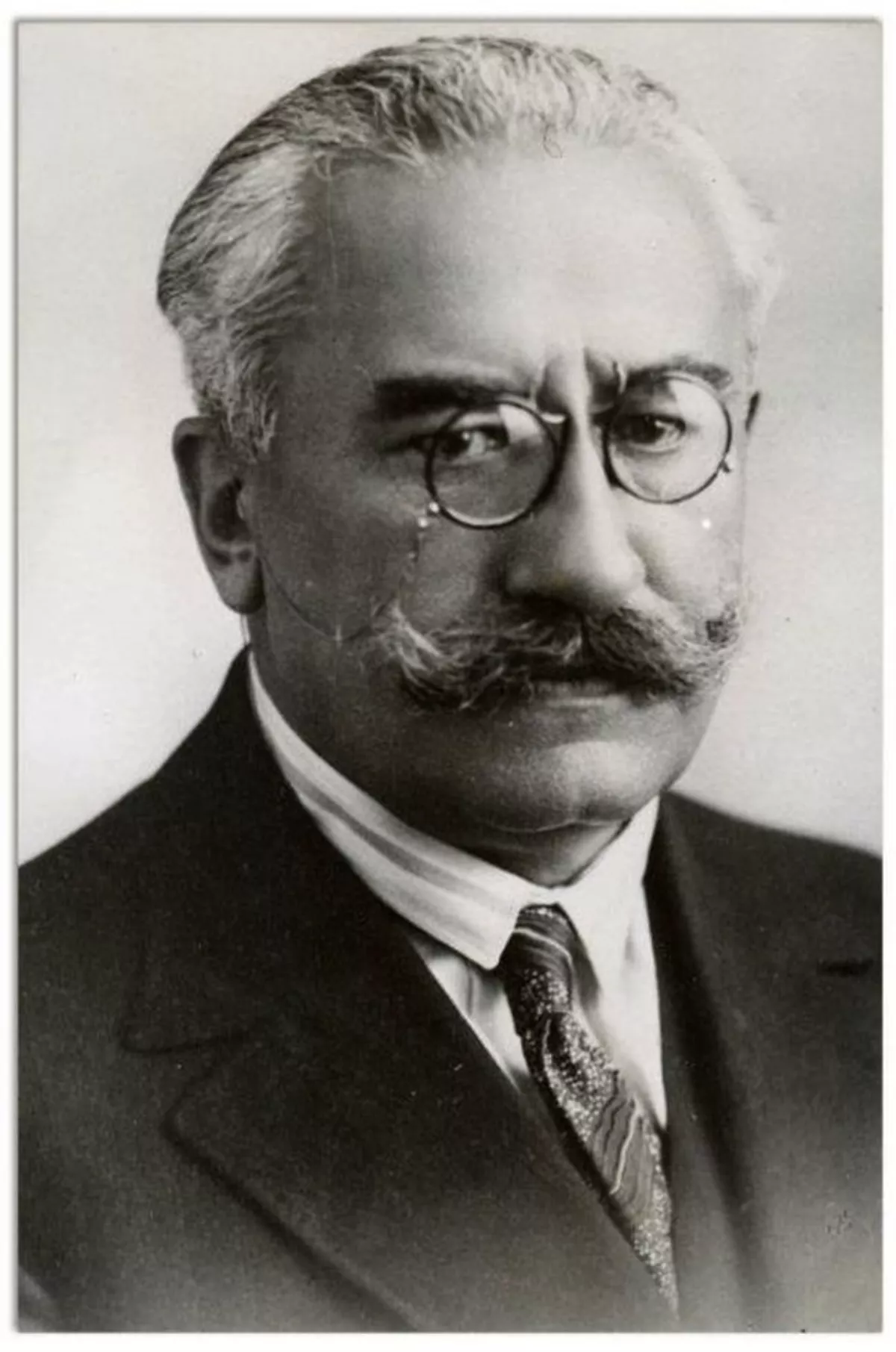
1. Alexandru Vaida-Voevod or Vaida-Voievod was an Austro-Hungarian-born Romanian politician who was a supporter and promoter of the union of Transylvania with the Romanian Old Kingdom.
 1.
1. Alexandru Vaida-Voevod or Vaida-Voievod was an Austro-Hungarian-born Romanian politician who was a supporter and promoter of the union of Transylvania with the Romanian Old Kingdom.
Alexandru Vaida-Voevod later served as 28th Prime Minister of Romania.
In 1906, Alexandru Vaida-Voevod joined a group of Romanian nationalists in the Budapest Parliament, becoming an important opponent of the Hungarian governmental policy of Magyarization, and fought for the right of Transylvania to self-determination.
Alexandru Vaida-Voevod drafted quickly a proposal in that respect and went to his good friend Iuliu Hossu in Gherla to seek his advice.
On 18 October 1918, Alexandru Vaida-Voevod presented this proposal in the Hungarian Diet, asking for the right to self-determination of the Romanians in Hungary.
Alexandru Vaida-Voevod began his discourse in a dull tone, then he suddenly read the declaration of self-determination, to the shock of his fellow deputies, who started to throw objects at him.
In December 1918, after the Aster Revolution when Hungary had become a republic, Alexandru Vaida-Voevod was elected in the Great National Assembly of Alba Iulia that proclaimed the union with Romania, and was, alongside Vasile Goldis, Iuliu Hossu, and Miron Cristea, a member of the Transylvanian group of envoys that presented the decision to King Ferdinand I in Bucharest.
Alexandru Vaida-Voevod joined the Romanian delegation to the Paris Peace Conference of 1919, and was one of its most prominent members throughout the negotiations, as an organizer of press campaigns.
The elections of November 1919 were successful for his party, and Vaida-Voevod replaced the National Liberal Ion I C Bratianu as prime minister and Nicolae Misu as foreign minister.
Alexandru Vaida-Voevod secured the demarcation lines by ordering Romanian troops to fight off the Hungarian Soviet Republic.
Alexandru Vaida-Voevod's party emerged as the National Peasants' Party in 1926, and he served as its leader.
Alexandru Vaida-Voevod served twice as Interior Minister.
Alexandru Vaida-Voevod's second government fell because of Armand Calinescu, who was a staunch opponent of the Legionary Movement.
On 25 February 1935, Alexandru Vaida-Voevod created his own movement, the Romanian Front, which survived through the increasingly authoritarian regime of King Carol II, the National Legionary State, Ion Antonescu's regime and most of World War II.