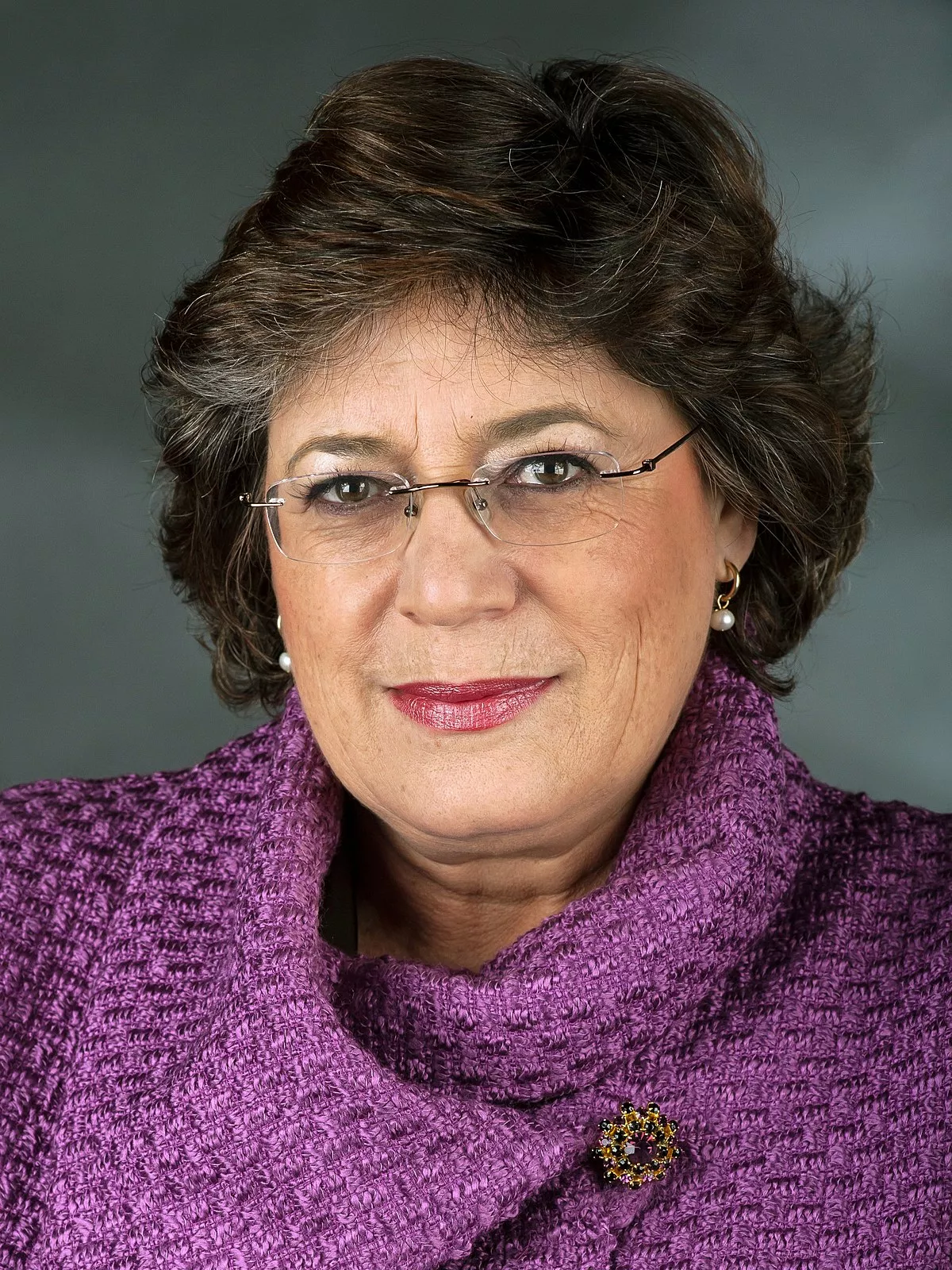
 1.
1. Ana Gomes earned wide recognition for her role in negotiating independence for East Timor, a former Portuguese colony, and in the reestablishment of diplomatic relations between Portugal and Indonesia.
 1.
1. Ana Gomes earned wide recognition for her role in negotiating independence for East Timor, a former Portuguese colony, and in the reestablishment of diplomatic relations between Portugal and Indonesia.
Ana Gomes later suspended her career as a diplomat to enter party politics, and served as a Member of the European Parliament from 2004 until 2019, where she was an outspoken campaigner on corruption and human rights.
Ana Gomes was born in 1954 in Alfredo da Costa Maternity Hospital, in the Lisbon parish of Sao Sebastiao da Pedreira, and she grew up during the authoritarian Estado Novo regime.
Ana Gomes's father, Jorge Pedro Martins Gomes, was an officer of the merchant marine and her mother, Maria Alice Rosa Gomes, a homemaker.
Ana Gomes's parents allowed her and her sister a liberal education, initially at Colegio da Baforeira, a boarding school in Parede, and then the lyceum in Sao Joao do Estoril, and later still the Maria Amalia Vaz de Carvalho Lyceum in Lisbon, where she became an activist of the Associative Movement of the Lisbon Secondary Education Students, at the time led by Nuno Crato.
In what she considered a "political act", Gomes formally requested to be released from religious education classes at school.
Ana Gomes soon became active in student political activism against the regime as part of the underground Anti-Colonial Struggle Committees, groups with links to the Re-Organized Movement of the Party of the Proletariat, a clandestine communist party.
Ana Gomes was present at the Largo do Carmo in the afternoon of the day of the revolution, 25 April 1974, when the forces of the Armed Forces Movement led by Salgueiro Maia and a crowd of civilian supporters besieged the headquarters of the National Republican Guard, where Prime Minister Marcelo Caetano had sought refuge, demanding he cede power.
Ana Gomes later went to the Fort of Caxias to witness the release of the political prisoners.
Ana Gomes was preparing to marry a fellow law student and political activist, Antonio Monteiro Cardoso, just as the revolution took place, but the marriage had to be postponed to the following month.
Ana Gomes was elected to the Faculty's student council in the electoral list supported by MRPP in November 1974 as well as to the Faculty governing board.
Ana Gomes was working as a teaching assistant at the Faculty of Law and training to become a lawyer under Manuel Figueira, a specialist in public international law and maritime law, when she was challenged by friends Joao Ramos Pinto and Jose de Freitas Ferraz to apply for the diplomatic service.
Ana Gomes came out on top of all applicants in the concours to gain access to the Ministry of Foreign Affairs.
Ana Gomes became a career diplomat in 1980 and worked for the department of the Ministry of Foreign Affairs that dealt with the negotiations for the accession of Portugal to the European Economic Community.
In 2000, with the reestablishment of bilateral relations with Indonesia, Ana Gomes was the first Portuguese Ambassador in Jakarta, having played an important role both in the process leading up to the independence of East Timor and in the reestablishment of diplomatic relations between Portugal and Indonesia.
Ana Gomes was indignant Ferro Rodrigues, who she regarded as an honest politician, lost the election, and joined the Socialist Party the day after the election, on 18 March 2002.
Ana Gomes was elected Member of the European Parliament in the 2004 election, and served for three terms.
From 2006 until 2007, Ana Gomes was a member the Temporary Committee on the alleged use of European countries by the CIA for the transport and illegal detention of prisoners.
Ana Gomes authored a 2008 report on China's role in Africa, which criticised Chinese imports of natural resources from the continent.
Ana Gomes participated in a number of European Parliament missions to Afghanistan, Bosnia-Herzegovina, Chad, China, Democratic Republic of Congo, East Timor, Kosovo, Lebanon, Indonesia, Iraq, Israel, Palestine, Sudan, Turkey, USA, etc.
Ana Gomes took part in the following Election Observation Missions :.
In 2012, Ana Gomes argued she was held at Bahrain International Airport for over seven hours despite holding a diplomatic passport when she tried to enter Bahrain during a stopover on the way to Benghazi, Libya.
Ana Gomes faced accusations of antisemitism for inviting anti-Israel speakers to the European Parliament and allegedly referring to Jewish organizations as a "perverse lobby".
In January 2024, Ana Gomes faced trial at the Bolhao Court in Porto, in a case involving allegations of aggravated defamation against entrepreneur Mario Ferreira.
Ana Gomes ended up being accquited from her charges she was facing from Mario Ferreira.
Ana Gomes civilly married a colleague of the Faculty of Law of the University of Lisbon, Antonio Monteiro Cardoso on 20 May 1974, shortly after the Carnation Revolution, in a register office in Alcantara, Lisbon.
Ana Gomes later married fellow diplomat Antonio Franco in 1994, whom she had met in 1983 while working for President Antonio Ramalho Eanes.