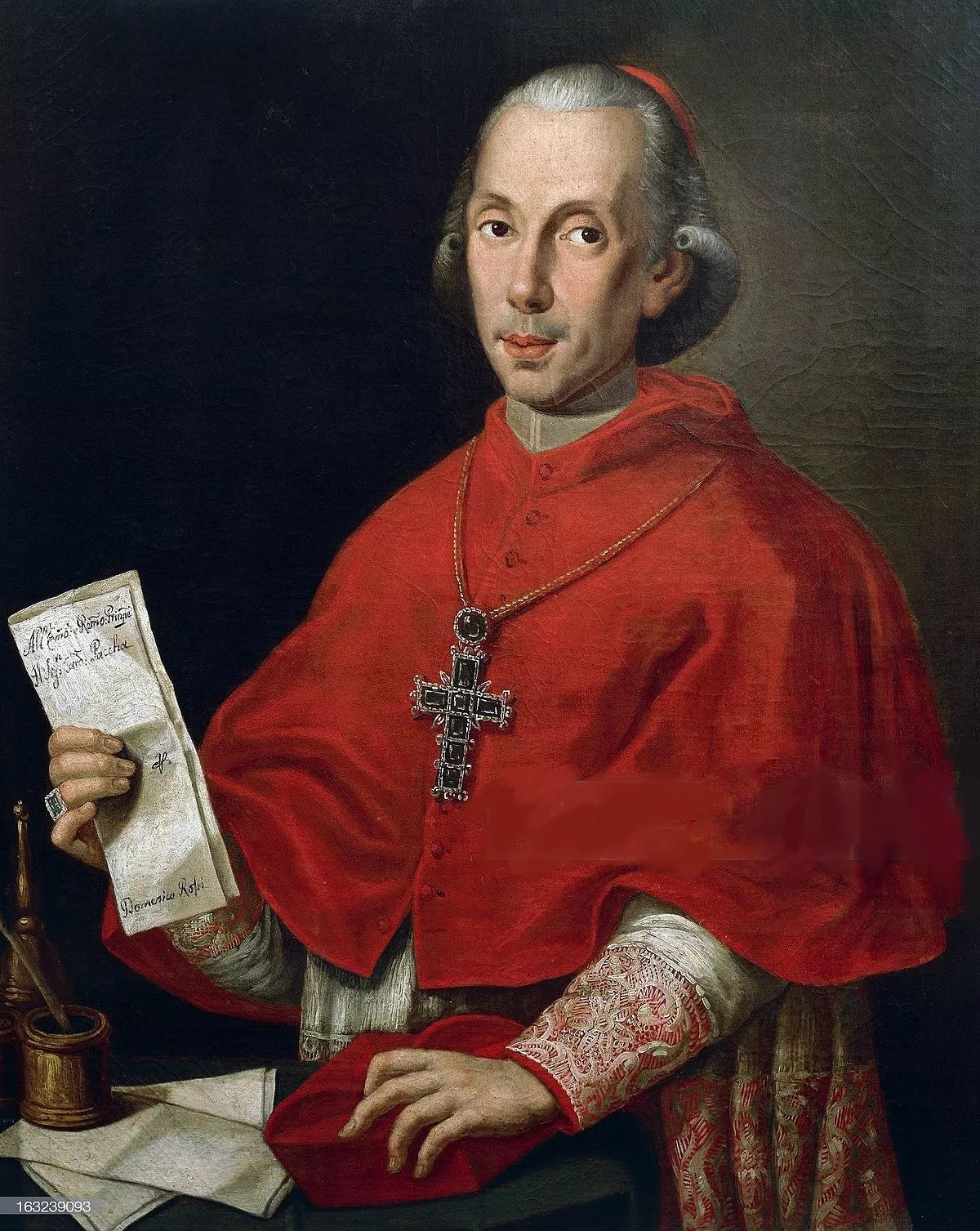
 1.
1. Bartolomeo Pacca was an Italian cardinal, scholar, and statesman as Cardinal Secretary of State.
 1.
1. Bartolomeo Pacca was an Italian cardinal, scholar, and statesman as Cardinal Secretary of State.
Bartolomeo Pacca was born at Benevento, the son of the nobleman Orazio Pacca, Marquess di Matrice, and Crispina Malaspina.
Bartolomeo Pacca was educated by the Jesuits at Naples, by the Somaschans in the Clementine College at Rome, and at the Accademia dei Nobili Ecclesiastici.
Bartolomeo Pacca induced some prominent German writers to uphold the rights of the Holy See.
Bartolomeo Pacca soon had a dispute with the Elector of Cologne.
Bartolomeo Pacca opposed freedom of worship for the Protestants of Cologne, but so tactfully that his intervention was not apparent, and did not offend the King of Prussia.
Napoleon had long objected to his liberation, declaring: "Bartolomeo Pacca is my enemy".
Bartolomeo Pacca suggested the re-establishment of the Society of Jesus, although both the pope and he himself had been educated in prejudices against the society.
Bartolomeo Pacca joined the pope at Sinigaglia whence he accompanied him to Rome.
Bartolomeo Pacca was reproved by Consalvi, from Vienna, for his severity towards the supporters of the Napoleonic regime, and vainly tried to justify his conduct.
When Joachim Murat, Napoleonic satellite King of Naples, sent his troops through the Pontifical States to meet the Austrians, Bartolomeo Pacca advised Pius VII to seek temporary refuge at Genoa, fearing that Murat would attempt to ravage the domains of the Holy See.
The rest of Bartolomeo Pacca's life was occupied in the affairs of the different congregations to which he was assigned, and in the administration of the suburbicarian sees.
Bartolomeo Pacca resigned the office of Camerlengo in 1824, when Pope Leo XII appointed him pro-datary, he was the first to hold the post of cardinal legate of Velletri, and he was active against the Carbonari.
Bartolomeo Pacca was himself a candidate for the Papacy, and enjoyed considerable support from the pro-Austrian faction of cardinals, led by Cardinal Giuseppe Albani.
Bartolomeo Pacca had indicated his own sympathies in a pre-conclave meeting of cardinals, at which he read a letter which had been given to him by Pius VIII shortly before his death.
Nonetheless, Bartolomeo Pacca was not elected pope, and Albani did not receive a continuation of his post as Secretary of State.
Under the new pope, Gregory XVI, Bartolomeo Pacca received the additional appointment of Secretary to the Sacred Congregation of the Holy Inquisition.
Bartolomeo Pacca was engaged by Gregory in attempting to resolve the church's continuing dispute with Felicite de La Mennais.
Bartolomeo Pacca died at Rome on 19 April 1844, and was buried in the church of Santa Maria in Portico.
Bartolomeo Pacca's house was frequented by illustrious scientists, men of letters and artists, both Roman and foreign.
Bartolomeo Pacca had excavations made at Ostia at his own expense, and with the objects discovered formed a small museum in his vineyard on the Via Aurelia.