 1.
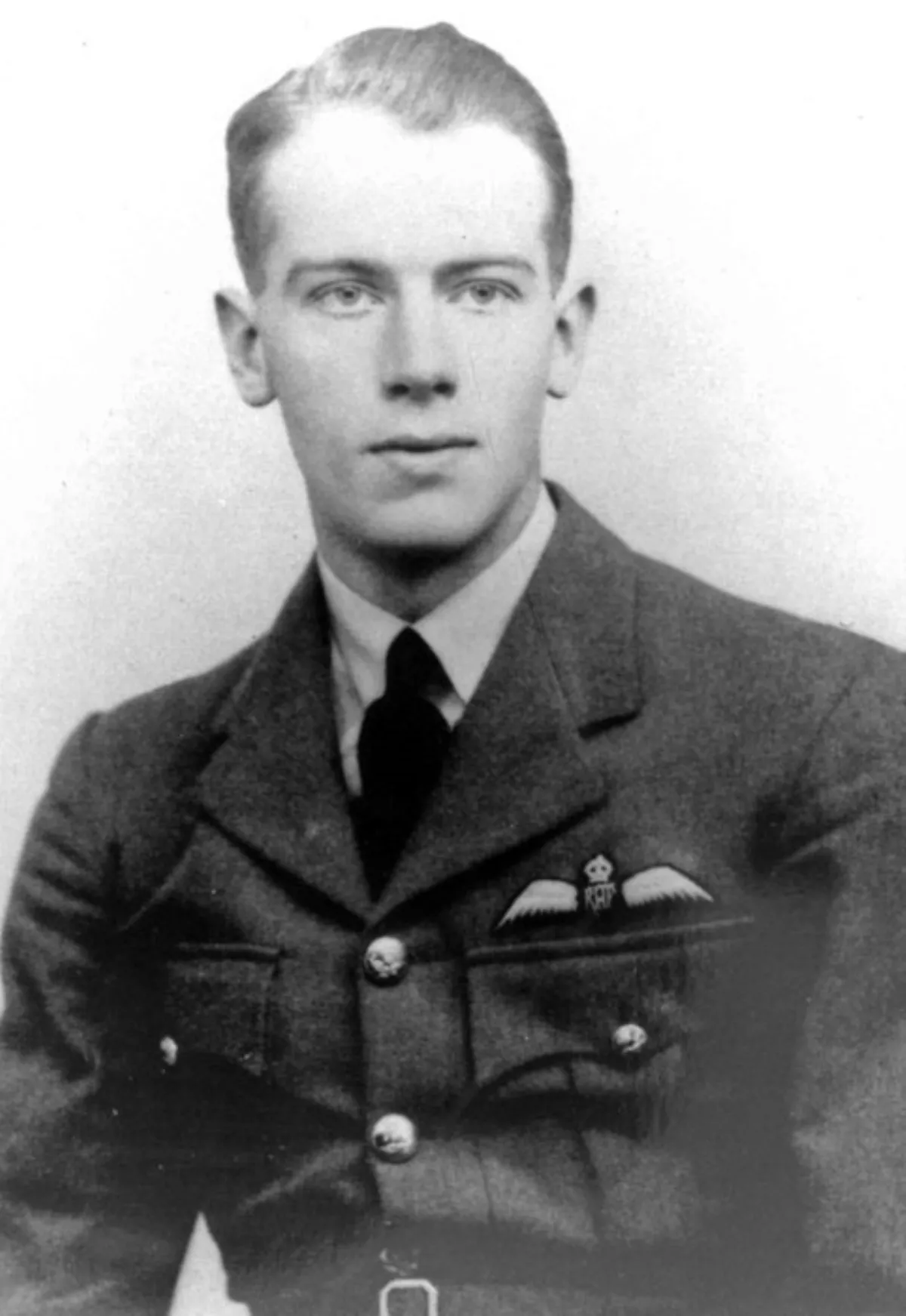
1. Bob Doe flew with the Royal Air Force during the Battle of Britain, and was seconded to the Indian Air Force during the Burma campaign.
 1.
1. Bob Doe flew with the Royal Air Force during the Battle of Britain, and was seconded to the Indian Air Force during the Burma campaign.
Bob Doe started school at age seven years, relatively late, probably as a result of suffering from rickets and a family move to Walton-on-the-Hill.
Bob Doe joined the Royal Air Force Volunteer Reserve in March 1938 and made his first solo flight on 16 June 1938.
Bob Doe was posted on 6 November 1939 to No 234 Squadron, a Spitfire Squadron at RAF Leconfield alongside Australian Pat Hughes, who would later become an ace.
Bob Doe served with No 234 squadron for most of the Battle of Britain.
Bob Doe claimed his first victory on 15 August 1940 when he shot down two Messerschmitt Bf 110s followed by a Messerschmitt Bf 109 and a Dornier Do 18 on 16 August, a Bf 109 destroyed and another Bf 109 damaged on 18 August, a half-share of a KG 54 Junkers Ju 88 on 21 August and a Bf 109 shot down on 26 August 1940.
On 27 September 1940 Bob Doe was posted to No 238 Squadron, flying Hurricanes from RAF Middle Wallop in Wiltshire, claiming his first victory for the squadron on 30 September by shooting down a KG 55 He 111.
Bob Doe bailed out, landing on Brownsea Island while his Hawker Hurricane crashed near Corfe Castle viaduct on what is part of the Swanage Railway.
Bob Doe was taken to Park Prewett Hospital where he underwent 22 operations by pioneering New Zealand plastic surgeon Harold Gillies.
On 22 October 1941 Bob Doe was posted to No 57 Operational Training Unit as an instructor.
On 9 June 1943 Bob Doe went to the Fighter Leaders School at RAF Milfield and then joined No 118 Squadron at RAF Coltishall in July.
In October 1943 Bob Doe was posted to Burma as the activities on the Western Front changed from defence to attack in preparation for Operation Overlord and the invasion of Normandy; while in the East, the Japanese Army was still advancing on key British Empire assets, including India.
In December 1943 Bob Doe was tasked with forming No 10 Squadron of the Indian Air Force, commanding it throughout the Burma Campaign until April 1945 when he joined the Indian Army Staff College in Quetta and then from August the planning staff at Delhi.
On 2 October 1945, Bob Doe received the Distinguished Service Order for his leadership of No 10 Squadron.
In September 1946, Bob Doe returned to the UK, where he held several staff positions.
Bob Doe commanded No 32 squadron in Egypt in 1952, and retired on 1 April 1966 with the rank of wing commander.