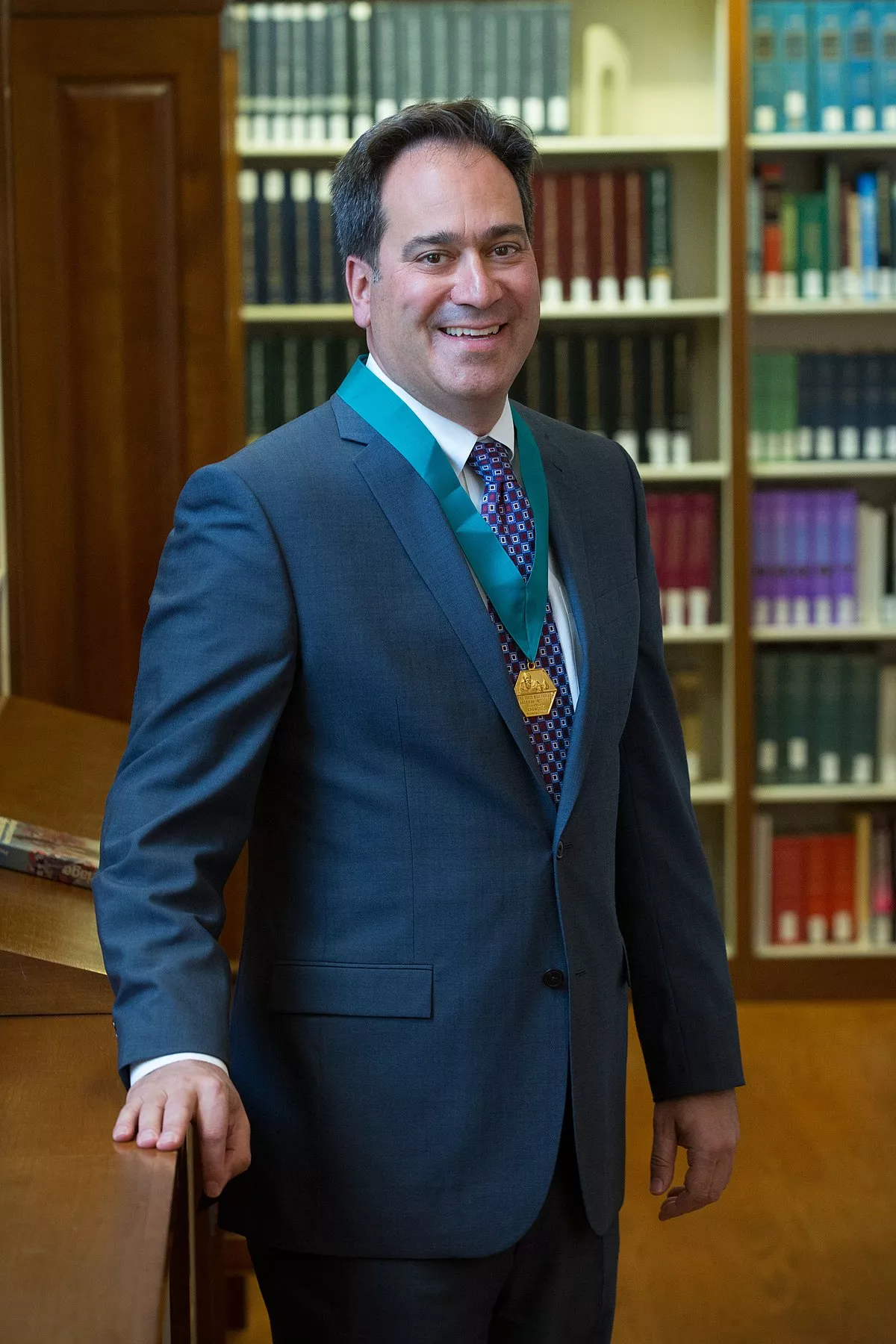
 1.
1. Chad Alexander Mirkin was born on November 23,1963 and is an American chemist.
 1.
1. Chad Alexander Mirkin was born on November 23,1963 and is an American chemist.
Chad Mirkin is the George B Rathmann professor of chemistry, professor of medicine, professor of materials science and engineering, professor of biomedical engineering, and professor of chemical and biological engineering, and director of the International Institute for Nanotechnology and Center for Nanofabrication and Molecular Self-Assembly at Northwestern University.
Chad Mirkin was a NSF postdoctoral research fellow at Massachusetts Institute of Technology where he worked with Professor Mark S Wrighton on microelectrode devices for electrocatalysis.
Chad Mirkin became a professor at Northwestern University in 1991.
Chad Mirkin has pioneered the use of DNA and nanoparticles as synthons in materials science and the development of nanoparticle-based biodiagnostics.
Chad Mirkin has published over 900 manuscripts, with a Google Scholar H-index of 205, and has over 1,200 patents and patent applications.
Chad Mirkin has been elected into all three branches of the National Academies of Sciences, Engineering, and Medicine, the 10th person so honored.
Chad Mirkin has served on several editorial advisory boards, including ACS Nano, the Journal of the American Chemical Society and Angewandte Chemie.
Chad Mirkin is the founding editor of the nanotechnology journal Small, and he is an associate editor of the Journal of the American Chemical Society.
Chad Mirkin is a co-founder of multiple companies, including NanoInk, Nanosphere, Azul 3D, TERA-print, Exicure, and Stoicheia.
From 2009 to 2017 Chad Mirkin was appointed to President Barack Obama's President's Council of Advisors on Science and Technology.
Chad Mirkin co-chaired the PCAST report titled, "Engage to Excel," focusing on teaching and engagement issues involving students who are in their first two years of undergraduate study at R-1,2 and 4-year institutions, and community colleges.