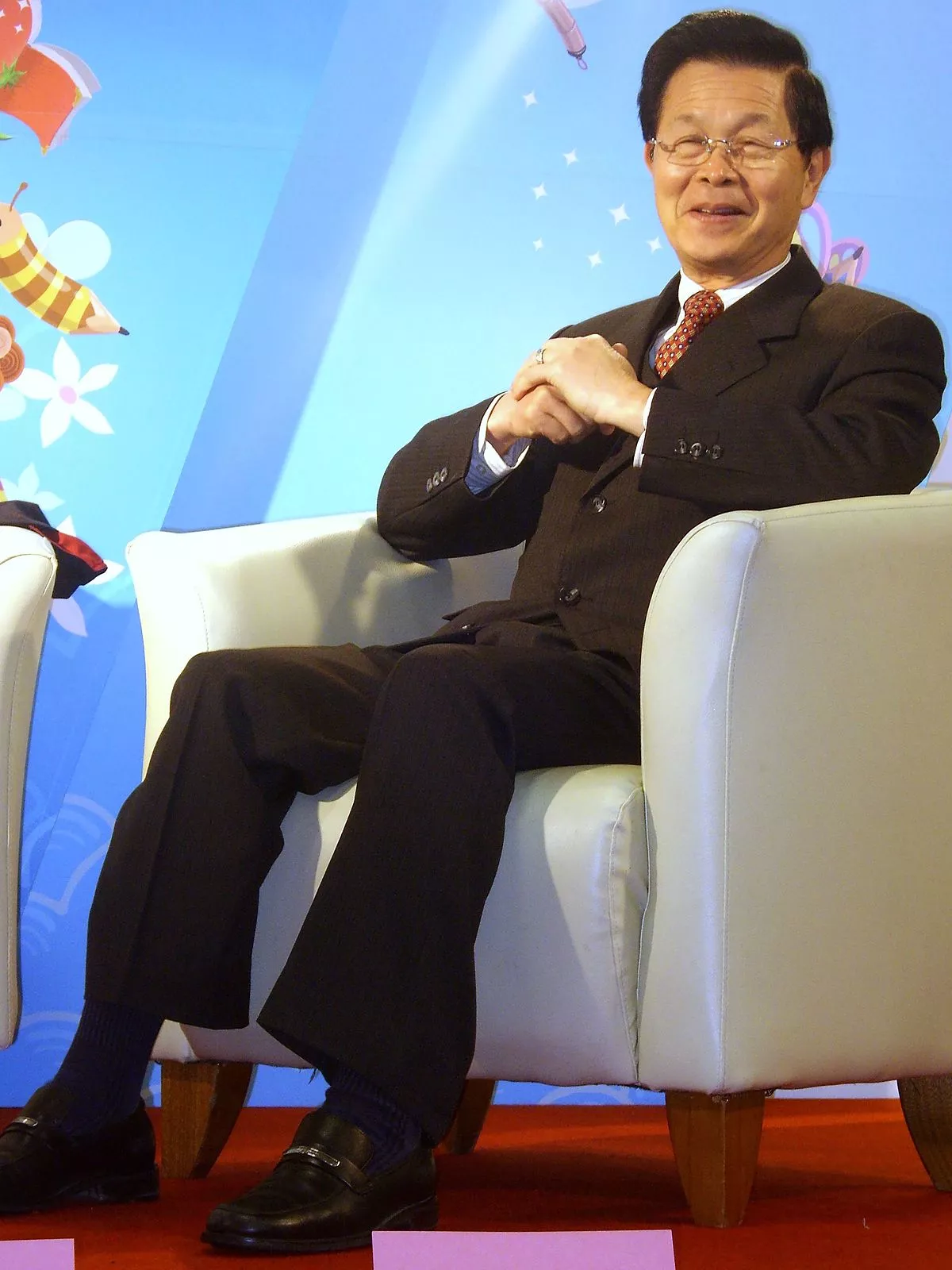
 1.
1. Chao Shou-po is a Taiwanese lawyer and politician who has served as Governor of Taiwan Province and Commissioner of the Chinese Professional Baseball League.
 1.
1. Chao Shou-po is a Taiwanese lawyer and politician who has served as Governor of Taiwan Province and Commissioner of the Chinese Professional Baseball League.
Chao Shou-po is a prominent leader in the World Scout Movement.
Chao Shou-po has served as a Presidium Member of the Central Advisory Committee of the Kuomintang, and has taught law at several Taiwanese universities.
Chao Shou-po has held many government posts including Labor Minister, Secretary-General of the Cabinet, Minister without Portfolio and Governor of the Province of Taiwan.
Chao Shou-po was born in March 1941 to a farming family in the countryside in what is Lukang Township, Changhua County, Taiwan.
In 1945, Taiwan was transferred from Japanese rule to the Nationalist Government of China and in 1947 Chao Shou-po started his education.
Chao Shou-po graduated from the Tsaokang Elementary School of Lukang Township in 1953.
Chao Shou-po graduated first in his class in 1963 with a Bachelor of Laws degree.
Chao Shou-po enrolled at the College of Law of the University of Illinois, US in 1967 for a master's degree.
Immediately after his completion of the master's degree, Chao Shou-po was admitted to the doctoral program in the University of Illinois College of Law.
Chao Shou-po has been given the Outstanding Alumnus Award by all the Schools he attended from the elementary school to the University of Illinois College of Law.
Chao Shou-po has a long career in governmental services in Taiwan from the 1970s to the 2000s.
Chao Shou-po became the commissioner of the Department of Information of the Taiwan Provincial Government in 1976 at the age of 35, concurrently the spokesman of the Taiwan Provincial Government, the youngest Provincial Government department commissioner in history up to then.
In October 1979, Chao Shou-po was appointed as Commissioner of the Council of the Taiwan Provincial Government.
Chao Shou-po was Commissioner of the Department of Social Affairs of the Taiwan Provincial Government from 1981 to 1987; during this period, Chao initiated many innovative programs and projects to upgrade and expand the social welfare services, employment security, occupational health and safety, labor insurance, community development in the Province of Taiwan, making great contributions to the improvement of the well-being of the people, especially the employed and the low-income people.
In February 1989, Chao Shou-po was appointed as the Labor Minister of the National Government of the Republic of China, a post he held until December 1994, making him the longest-serving labor minister until now in Taiwan.
Chao Shou-po maintained a good and reasonable balance between the employers and the employed and helped the labor unions to function more effectively and properly.
In December 1994, Chao Shou-po became the secretary-general of the Cabinet headed by Premier Lien Chan, a post he held until June 1997 when he was appointed as a minister without portfolio after a cabinet reshuffle.
Chao Shou-po was in charge of the review of the legislative proposals and governmental programs as submitted by the various ministries to the cabinet in the areas of social welfare, labor affairs, justice, youth affairs, police and internal affairs when he was minister without portfolio.
Chao Shou-po was made the governor of the Province of Taiwan from December 1998 to May 2000 with the duty to restructure the Taiwan Provincial Government.
Chao Shou-po retired from the governmental service in May 2000 after his party, the Kuomintang, was defeated in the 2000 presidential election.
In 2008, Chao Shou-po was appointed by President Ma Ying-jeou of the ROC as the Presidential National Policy Advisor, a post he held until January 2011 when President Ma appointed him as the Senior Advisor to the President of the Republic of China, a post he has held since then.
Chao Shou-po has involved actively in the party affairs in the Kuomintang, the ruling party from 1949 to 2000 and from 2008 until now, in the Republic of China on Taiwan.
Chao Shou-po was a Central Committee member from 1980 to 2001, a Central Standing Committee member from 1996 to 2000 of the Kuomintang.
Chao Shou-po served as the deputy director-general of the Department of Information and Propaganda, director-general of the Department of Social Affairs and director-general of the Department of Organization of the Central Committee of the Kuomintang during the party chairmanship respectively of Chiang Ching-kuo, Lee Teng-hui and Lien Chan.
Chao Shou-po has been a Presidium Member of the Central Advisory Committee of the Kuomintang since 2001.
Chao Shou-po was the chairman of the Board of the Broadcasting Corporation of China, the largest broadcasting institution in Taiwan, from 2002 to 2005 and has been the host of a special Sunday commentary program called "Talk Everything for Taiwan" at the BCC since 2005.
Chao Shou-po was the Commissioner of the Chinese Professional Baseball League in Taiwan from 2006 to 2012; during his term as the Commissioner, he successfully persuaded the government to give more incentives for the promotion of professional sports and for the enactment of stricter law to prevent illegal gambling regarding professional sports.
Chao Shou-po has been very actively involved in the Scout movement and world Scouting activities.
Chao Shou-po was a national council member in the Scouts of China in Taiwan from the 1970s until the 2010s.
Chao Shou-po was the chairman and the Chief Commissioner of the General Association of Scouts of China from 2007 to 2013.
Chao Shou-po has been the chairman of the Board of the Scouts of China Foundation since 2007.
Chao Shou-po has participated many important international Scouting events including the 26th World Scout Conference in Montreal, Quebec, Canada, in 1977; the 27th World Scout Conference in 1979 in Birmingham, England, United Kingdom; the 38th World Scout Conference in Jeju Island, Korea, in 2008; the 39th World Scout Conference in Curitiba, Brazil, in 2011; and the 40th World Scout Conference in Ljubljana, Slovenia, in 2014.
Chao Shou-po took part in several World Scout Jamborees including the 14th World Scout Jamboree in Lillehammer, Norway, in 1975; the 21st World Scout Jamboree in 2007 in Chelmsford, Essex, England, UK; the 22nd World Scout Jamboree in Rinkaby, Sweden, in 2011; and the 23rd World Scout Jamboree in Kirarahama, Yamaguchi, Japan, in 2015.
Chao Shou-po is a 2003 recipient of the Bronze Wolf Award of the World Organization of the Scout Movement, the highest honor in the World Scout Movement.
In 2009, Chao Shou-po was elected at the 23rd Asia-Pacific Regional Scout Conference in Kuala Lumpur, Malaysia, as a member of the Asia-Pacific Regional Scout Committee for a six-year term.
Chao Shou-po became the chairman of the Asia-Pacific Regional Scout Committee through committee election at the 24th Regional Asia-Pacific Scout Conference in November 2012 in Dhaka, Bangladesh; he served as the committee chairman until November 2015.
Chao Shou-po has devoted quite a lot of time to teaching at the universities in Taiwan since he returned to Taiwan after his completion of doctoral education in the United States.
Chao Shou-po was a professor of law at the Central Police College from 1972 to 1977, teaching constitution, international law and criminal law.
Since 2002, Chao Shou-po has taught at the Graduate School of Management of I-Shou University in Kaohsiung as a chair professor.
Chao Shou-po has taught international criminal law at the Institute of the Law of Sea of the National Taiwan Ocean University in Keelung and the Doctorate Program of the Department of Industrial Education of the National Changhua University of Education in Changhua in central Taiwan.
Chao Shou-po is writing books on international criminal law, international labor law and comparative industrial relations.