 1.
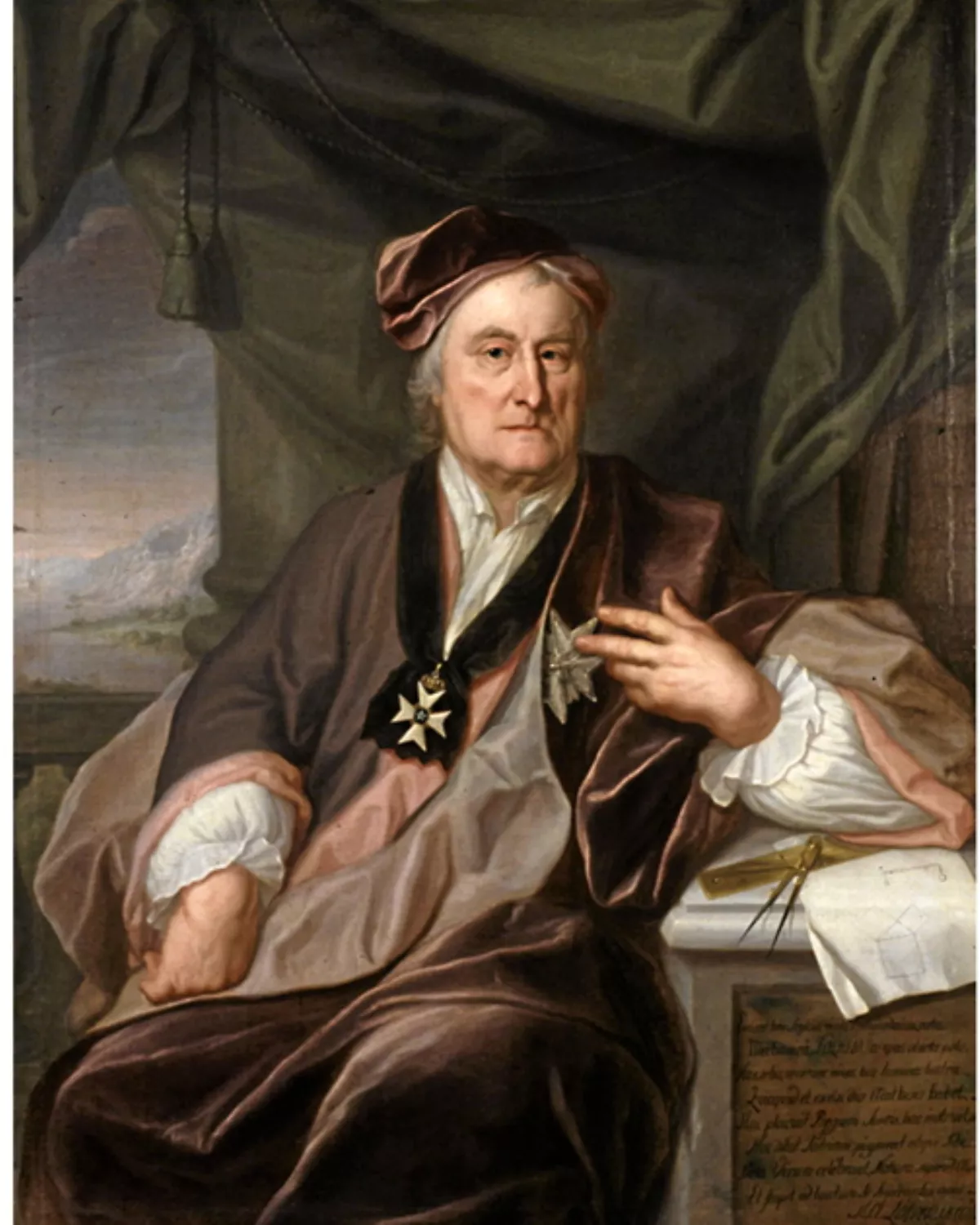
1. Christopher Polhem made significant contributions to the economic and industrial development of Sweden, particularly mining.
 1.
1. Christopher Polhem made significant contributions to the economic and industrial development of Sweden, particularly mining.
Christopher Polhem was ennobled by King Charles XII of Sweden for his contributions to Swedish technological development.
Originally, the Christopher Polhem family came from Hungary, where they were established latest in the 14th century of possible Austrian descent.
Christopher Polhem took a job as a farmhand on Vansta, a property in Sodertorn, Stockholm.
Christopher Polhem worked at Vansta for ten years, during which period he constructed a workshop where he made tools, repaired and constructed simple machinery to earn money.
Self-studies were attempted, but given up; Christopher Polhem realized he needed a tutor.
Anders Spole, grandfather of Anders Celsius, presented two broken clocks to Christopher Polhem and offered to let him study under him if he could repair them.
Christopher Polhem repaired the clocks with no difficulty and in 1687, entered the University of Uppsala at the age of 26.
Christopher Polhem died of natural causes in 1751 in Stockholm, at the age of 90.
In 1690 Christopher Polhem was appointed to improve upon the current mining operations of Sweden.
Christopher Polhem's contribution was a construction for lifting and transporting ore from mines, a process that was rather risky and inefficient at the time.
Christopher Polhem returned to Sweden in 1697 to establish laboratorium mechanicum in Stockholm, a facility for the training of engineers, as well as a laboratory for testing and exhibiting his designs.
Christopher Polhem's greatest achievement was an automated factory powered entirely by water; automation was very unusual at the time.
Christopher Polhem contributed to the construction of Gota Canal, a canal connecting the east and west coasts of Sweden.
Christopher Polhem was not only active within the field of mechanics, he actively wrote essays concerning medicine, social criticism, astronomy, geology, and economics.