 1.
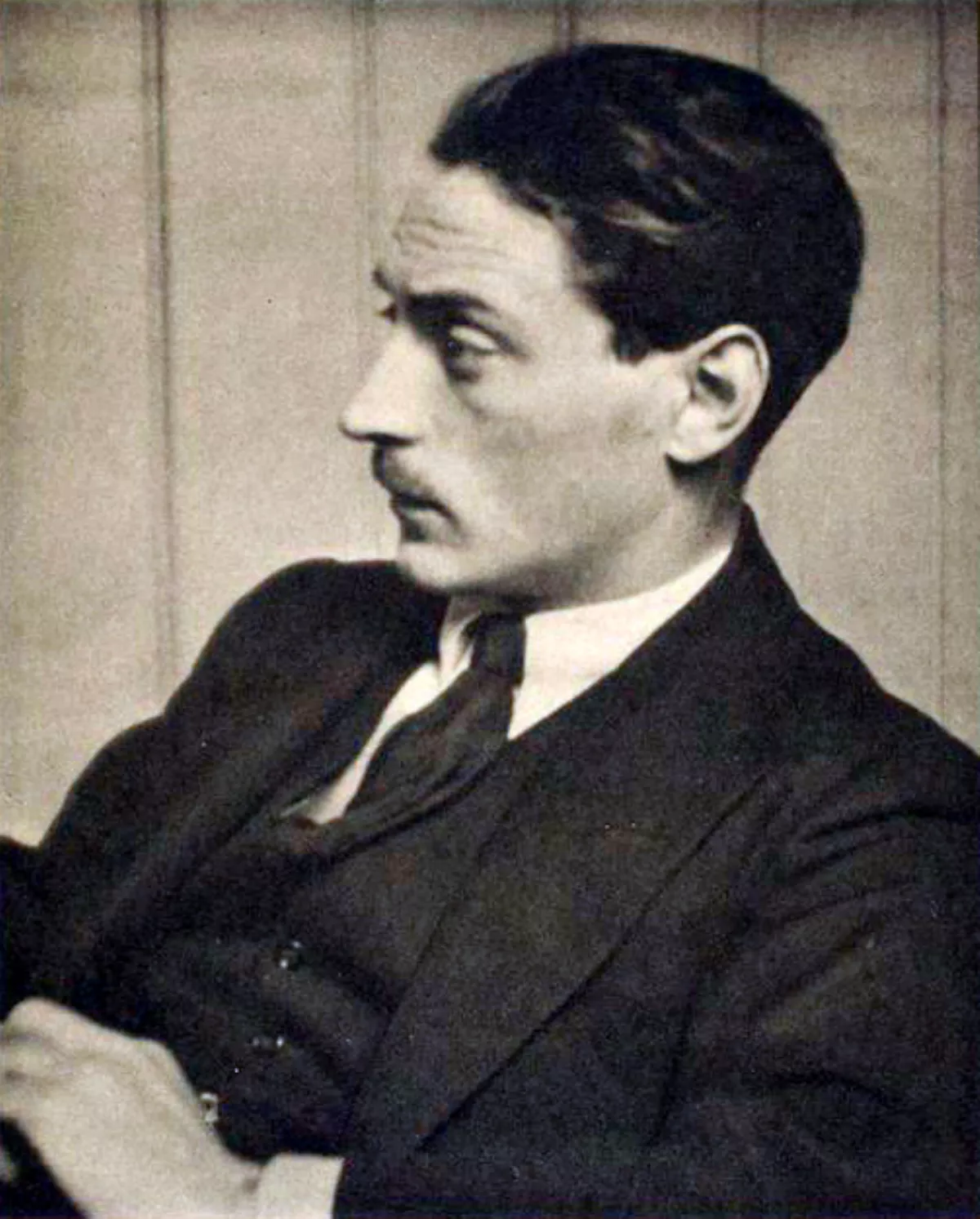
1. Sir Edward Montague Compton Mackenzie, was a Scottish writer of fiction, biography, histories and a memoir, as well as a cultural commentator, raconteur and lifelong Scottish nationalist.
 1.
1. Sir Edward Montague Compton Mackenzie, was a Scottish writer of fiction, biography, histories and a memoir, as well as a cultural commentator, raconteur and lifelong Scottish nationalist.
Compton Mackenzie was one of the co-founders in 1928 of the National Party of Scotland along with Hugh MacDiarmid, Cunninghame Graham and John MacCormick.
Compton Mackenzie was knighted in the 1952 Birthday Honours List.
Edward Montague Compton Mackenzie was born in West Hartlepool, County Durham, England, into a theatrical family of Mackenzies, many of whose members used Compton as their stage surname, starting with his English grandfather Henry Compton, a well-known Shakespearean actor of the Victorian era.
Compton Mackenzie was educated at St Paul's School, London, and Magdalen College, Oxford, from where he graduated with a degree in Modern History.
Compton Mackenzie published almost a hundred books on different subjects, including ten volumes of autobiography: My Life and Times.
Compton Mackenzie wrote history, biography, literary criticism, satires, apologia, children's stories, poetry and so on.
Compton Mackenzie was admired by F Scott Fitzgerald, whose first book, This Side of Paradise, was written under the literary influence of Compton.
Max Beerbohm praised Compton Mackenzie's writing for vividness and emotional reality.
In 1922, Robin Legge, chief music critic of The Daily Telegraph, encouraged Compton Mackenzie to write some of the earliest gramophone record reviews.
Compton Mackenzie was the literary critic for the London-based national newspaper Daily Mail.
Compton Mackenzie served with British Intelligence in the Eastern Mediterranean during the First World War, later publishing four books on his experiences.
Compton Mackenzie's ill-health making front-line service impractical, he was assigned counter-espionage work during the Gallipoli campaign, and in 1916 built up a considerable counter-intelligence network in Athens, Greece then being neutral.
Compton Mackenzie is alleged to have taken part in an attempt to assassinate the King by poison in August 1916, during which the royal palace was to be surrounded by fire to prevent him escaping.
Compton Mackenzie was offered the Presidency of the Republic of Cerigo, which was briefly independent while Greece was split between Royalists and Venizelists, but declined the office.
Smith-Cumming considered appointing him as his deputy, but withdrew the suggestion after opposition from within his own service, and Compton Mackenzie played no further active role in the war.
Compton Mackenzie was president of the Croquet Association from 1953 to 1966.
Compton Mackenzie was the subject of This Is Your Life in 1956 when he was surprised by Eamonn Andrews at the King's Theatre, Hammersmith, London.
Compton Mackenzie became friends with the writer Somerset Maugham, a frequent visitor to the island.
The latter, a roman a clef about a group of lesbians arriving on the island of Sirene, a fictional version of Capri, was published in Britain in the same year as two other ground-breaking novels with lesbian themes, Virginia Woolf's love letter to Vita Sackville-West, Orlando, and Radclyffe Hall's controversial polemic, The Well of Loneliness, but Compton Mackenzie's satire did not attract legal attention.
Compton Mackenzie went to great lengths to trace the steps of his ancestors back to his spiritual home in the Highlands, and displayed a deep and tenacious attachment to Gaelic culture throughout his long and very colourful life.
Compton Mackenzie became a member of the Scottish Arts Club in 1929.
Compton Mackenzie was rector of University of Glasgow from 1931 to 1934, defeating Oswald Mosley, who later led the British Union of Fascists, in his bid for the job.
From 1920 to 1923 Compton Mackenzie was the Tenant of Herm and Jethou.
Compton Mackenzie built a house on Barra, in the Western Isles of Scotland, in the 1930s.
Compton Mackenzie was a founding member of the short-lived secret organisation Clann Albain.
Compton Mackenzie was a supporter of West Bromwich Albion FC Although from the north east of England, he "was influenced in the choice of Albion as 'my' team by the fact that their ground was romantically called The Hawthorns and that they were nicknamed the Throstles".
Compton Mackenzie was a fan of snooker, and gave an account of the origin of the game's name in The Billiard Player magazine of 1939, describing how a young lieutenant named Neville Chamberlain had been experimenting on the officers' mess table with the existing game of "Black Pool" featuring 15 red balls and a black.
Compton Mackenzie presented the World Championship trophy to Joe Davis at the 1939 Championships.
Compton Mackenzie died on 30 November 1972, aged 89, in Edinburgh and was interred in St Barr's churchyard cemetery at Eoligarry on the Isle of Barra.