 1.
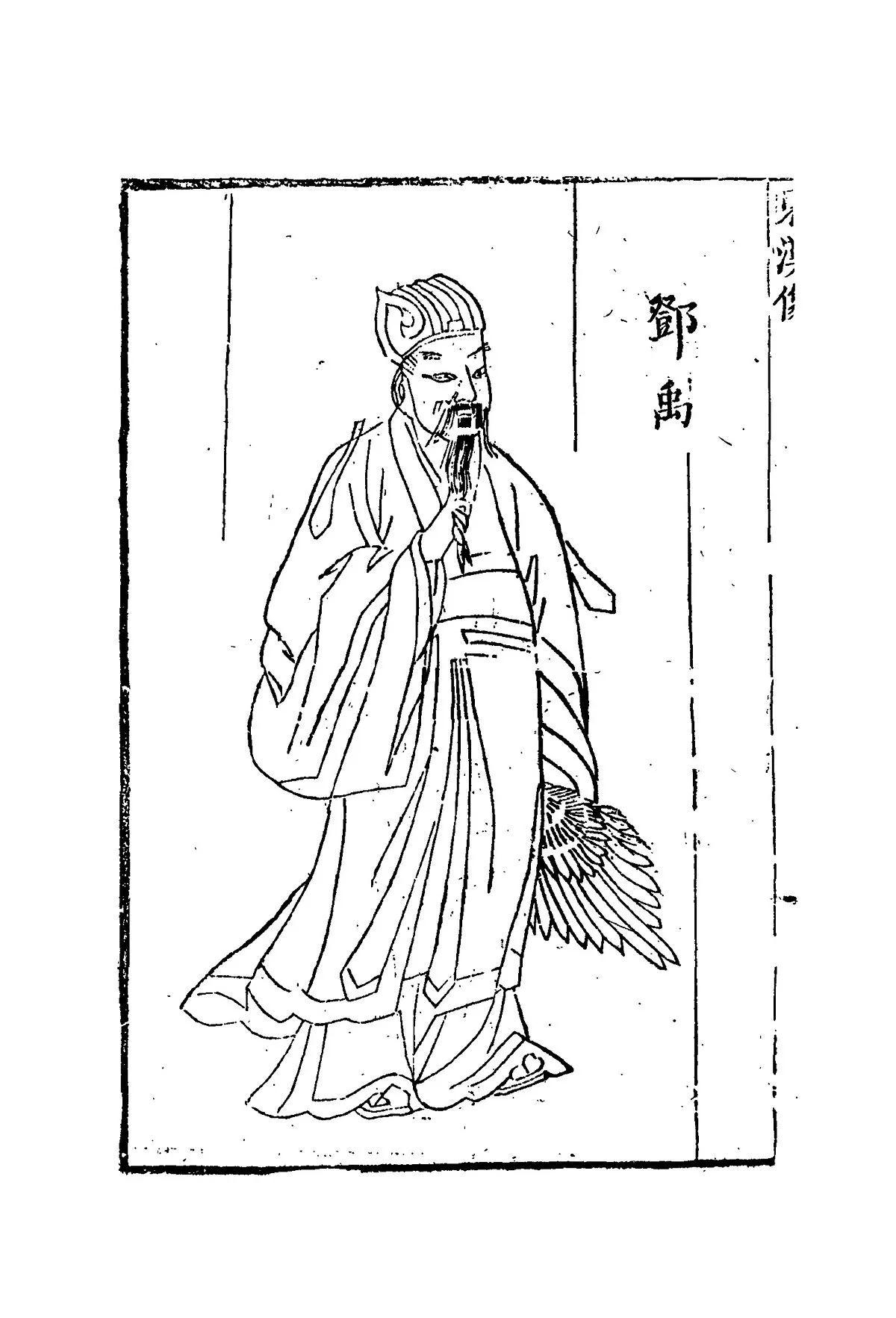
1. Deng Yu, courtesy name Zhonghua, was a Chinese statesman and military commander of the early Eastern Han dynasty who was instrumental in Emperor Guangwu's reunification of China.
 1.
1. Deng Yu, courtesy name Zhonghua, was a Chinese statesman and military commander of the early Eastern Han dynasty who was instrumental in Emperor Guangwu's reunification of China.
Deng Yu rejoined Liu as an advisor when the latter was a general under the Gengshi Emperor's short-lived Han restoration, and earned recognition for his skill in recommending talented personnel.
When Liu himself claimed the Han imperial title, Deng Yu was appointed Excellency over the Masses, a prime ministerial office, at the age of 24 and further rewarded with a marquisate.
Deng Yu spent much of his time as Excellency on campaign, with mixed results.
Deng Yu subsequently resigned as Excellency but remained a senior military commander until his voluntary demobilization in 37 CE, at a time when Emperor Guangwu sought to reduce the military power of his key subordinates.
Deng Yu first met Liu Xiu when both were visiting and studying in the Xin dynasty capital of Chang'an, perhaps in 14; Deng Yu was 12 at the time.
Deng Yu befriended Liu as both were from Nanyang Commandery.
Deng Yu apparently was not involved in any revolutionary activities against Xin at this point.
Deng Yu, having heard this, and believing from his earlier experience with Liu Xiu that Liu Xiu was a capable man who could do great things, left home and chased Liu Xiu, finally catching him at Yecheng.
When Liu Xiu saw Deng Yu, he asked Deng Yu whether he was looking for a commission.
Liu was impressed, and requested Deng Yu to remain and give him suggestions.
Deng Yu analyzed the situation and suggested to him that the Gengshi Emperor's administration would eventually fall, and that he should be ready to establish great things.
Deng Yu was quickly able to capture the Hedong region for Liu.
Deng Yu, reluctantly, engaged the Chimei in a number of battles but had limited success, perhaps showing that his reluctance to engage the Chimei was correct.
Deng Yu would remain a trusted advisor to Emperor Guangwu throughout Emperor Guangwu's reign.
In 60, when Emperor Ming honored those who had served his father well by painting their portraits on a palace tower, Deng Yu's portrait was placed in the first position.