 1.
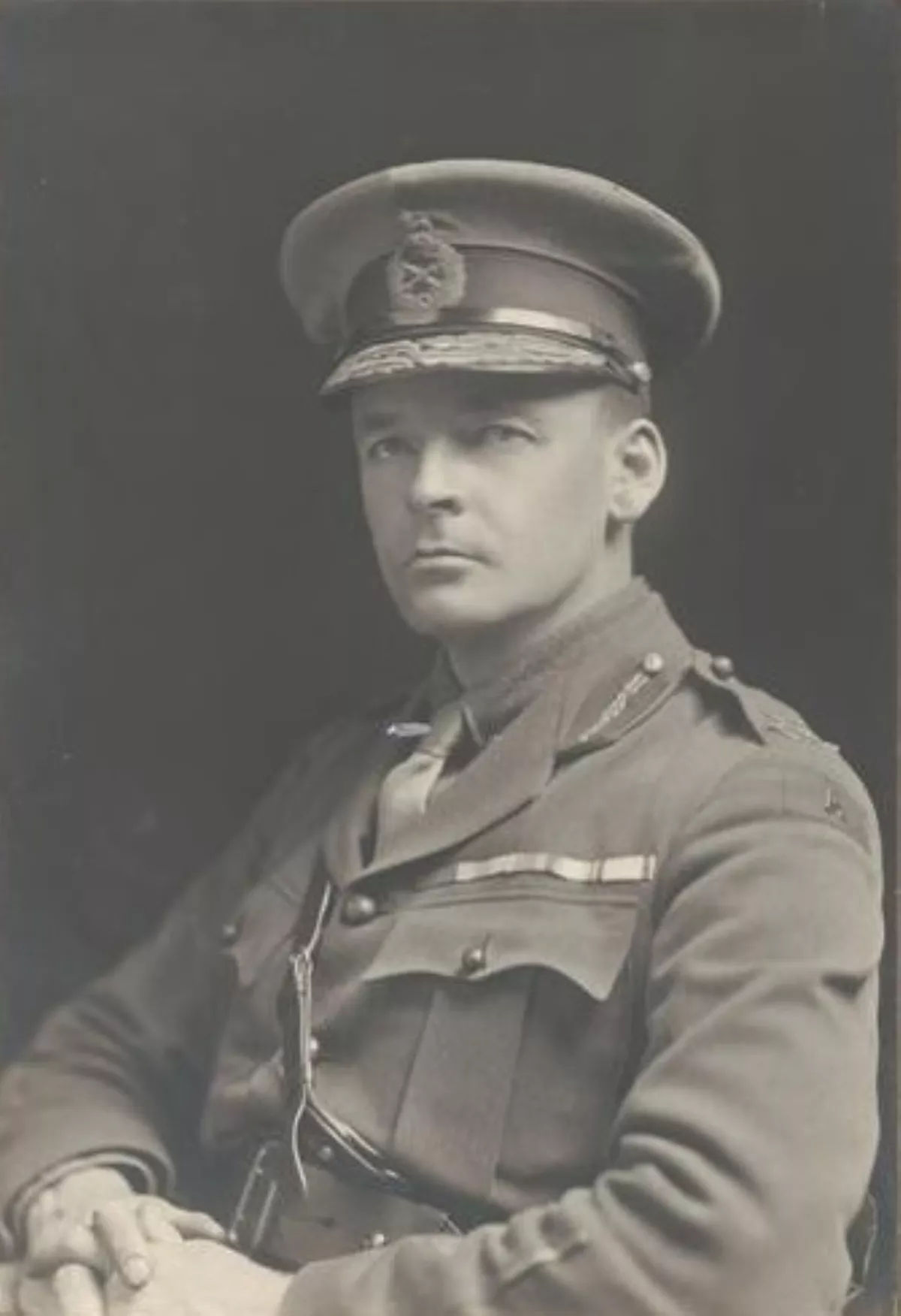
1. Edmund Drake-Brockman served in both the First and Second World Wars.
 1.
1. Edmund Drake-Brockman served in both the First and Second World Wars.
Edmund Drake-Brockman was a Senator for Western Australia from 1920 to 1926, representing the Nationalist Party, and later served as a judge of the Commonwealth Court of Conciliation and Arbitration from 1927 until his death in 1949.
Edmund Drake-Brockman was one of seven children born to Grace Vernon Bussell and Frederick Slade Drake-Brockman, both members of pioneer families in the South West.
Edmund Drake-Brockman's father was a surveyor and explorer, while his mother was known for her role as a teenager in the rescue of SS Georgette.
Edmund Drake-Brockman subsequently read law as an articled clerk with Walter Hartwell James's firm of James and Derbyshire, and was admitted to practise law in Western Australia in 1909.
Edmund Drake-Brockman joined the Citizen Military Forces at the age of 19.
Edmund Drake-Brockman was made a Companion of the Order of St Michael and St George for his services at Gallipoli.
Edmund Drake-Brockman was elected to the Senate at the 1919 federal election, one of a number of former AIF commanders elected as Nationalists.
Edmund Drake-Brockman was the first native-born Western Australian to be elected to the Senate, and only the second to be elected to federal parliament.
Edmund Drake-Brockman supported the government's Defence Bill 1921 which would have applied the United Kingdom's Army Act to the Australian military, and warned of Japanese aggression in the Pacific in the context of "the preservation of a White Australia".
Edmund Drake-Brockman was a member of several select committees, including that which recommended that the government commission Amalgamated Wireless to develop an overseas radio communication service.
In 1924, Edmund Drake-Brockman was elected president of the Central Council of Australian Employers, an employers' federation, succeeding George Fairbairn.
Edmund Drake-Brockman did not recontest the 1925 federal election, in order to allow the Nationalists to put forward a joint ticket with their coalition partners the Country Party.
Edmund Drake-Brockman was the most junior of the three Nationalist senators in Western Australia up for re-election.
Edmund Drake-Brockman delivered a number of important decisions on the court.
In 1943, Edmund Drake-Brockman raised the minimum wage for female employees in the clothing and rubber trades to 75 percent of the male basic wage, despite opposition from other judges on the court.
Edmund Drake-Brockman initially viewed this as a special wartime measure but later supported its continuation.
Edmund Drake-Brockman's appointment was initially criticised by trade union leaders due to his conservative politics and association with employers' groups, but over time "his judgements came to be welcomed by much of the trade union movement".
Edmund Drake-Brockman's judgments were marked by a "mixture of conservatism and pragmatism" and he was known as a skilled negotiator and arbitrator with a "practical, humane approach to problems".
Still in the Citizen Military Forces, Edmund Drake-Brockman was called up for duty during the Second World War, and commanded the 3rd Division, a militia formation, until 1942.
Edmund Drake-Brockman married Constance Andrews in 1912, with whom he had three children.
Edmund Drake-Brockman was widowed in 1946, and suffered from arteriosclerosis in his final years.
Edmund Drake-Brockman died at his home in Badaginnie on 1 June 1949, aged 65.