 1.
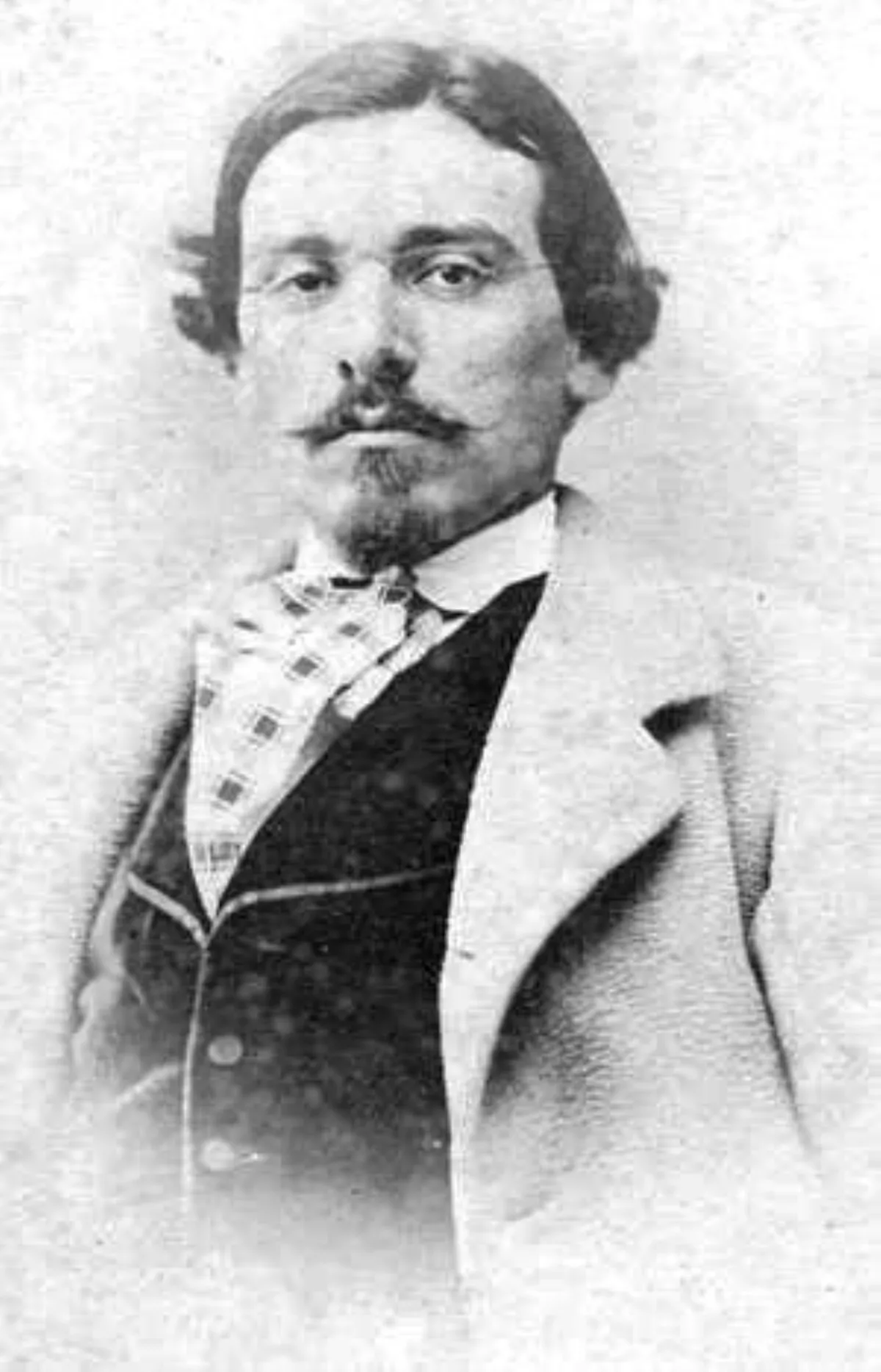
1. In 1860, Eduardo Pondal completed his studies and began working as a doctor for the Spanish Army at Ferrol.
 1.
1. In 1860, Eduardo Pondal completed his studies and began working as a doctor for the Spanish Army at Ferrol.
Eduardo Pondal published A Campana de Anllons, his first poem in the Galician language.
Eduardo Pondal got the job in Asturias, but he left it, and his career as a doctor.
Eduardo Pondal published Rumores de los pinos in 1877, a compilation of 21 poems in Galician and Spanish, which would become the basis for Queixumes dos pinos.
Eduardo Pondal considered himself a "poet of freedom", wanting to raise his people.
Eduardo Pondal imagined a past of freedom and independence, which he tried to recover with his poetry, renewing History.
Galician-Celtic mythology was almost completely lost in those days, so Eduardo Pondal had to guess and re-invent it, based on Ossian's poetry, quotations from the Leabhar Gabala and Murguia's analysis.
Eduardo Pondal created a fragmentary mythology, using as his archetypes o Heroe and o Bardo.
Eduardo Pondal invented historic characters, like Ourens.
Eduardo Pondal tried to restore the Galician language in a time in which it lacked social status.
From a linguistic perspective, Eduardo Pondal tried to mix the populist style of the Galician of his time, with different scholarly terms in the lexicon and syntax.
Eduardo Pondal tried to write a long epic poem, Os Eoas, based on the discovery of the Americas, but he was never satisfied with his work and only published a first draft in 1858.
Eduardo Pondal died in La Luguesa hotel in A Coruna on 8 March 1917.