 1.
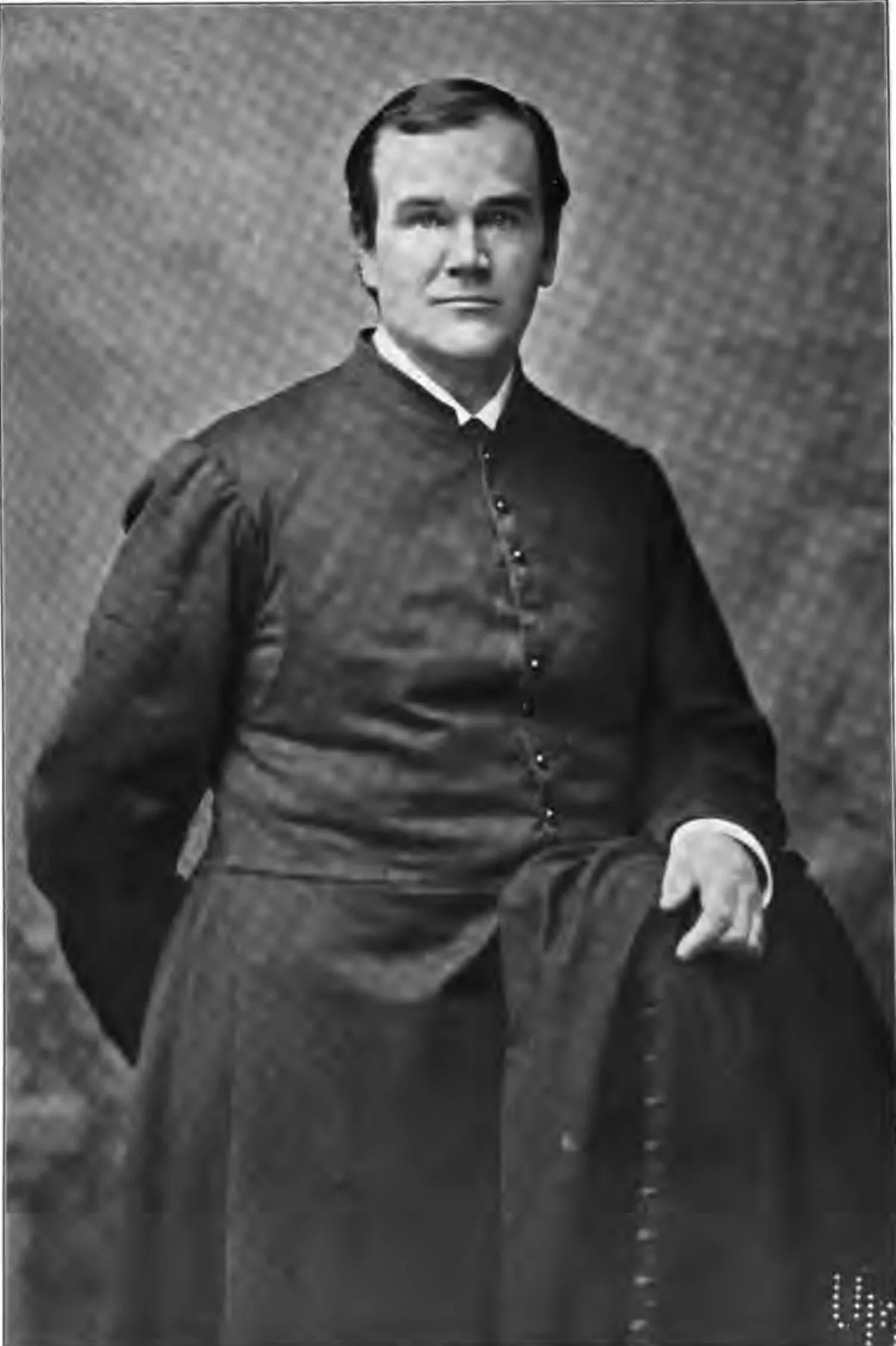
1. Edward McGlynn, American Catholic priest and social reformer, was born in New York City of Irish parents.
 1.
1. Edward McGlynn, American Catholic priest and social reformer, was born in New York City of Irish parents.
Edward McGlynn was controversial in Catholic circles for his acceptance of public schools.
Edward McGlynn actively promoted the political goals of Henry George and the "Single Tax" movement; he campaigned for George who ran for mayor in 1886.
Edward McGlynn was censured and excommunicated from 1887 until 1892 on the charges of disobedience and suspicion of socialist leanings, due to his support of Henry George.
Edward McGlynn was born in New York City on September 27,1837.
Edward McGlynn's father became a contractor, acquiring a small fortune before dying in 1847, leaving a widow and ten children.
When Edward McGlynn was thirteen years of age, Archbishop Hughes, a family friend, and his pastor, Father Jeremiah Williams Cummings, arranged for him to attend the Urban College of the Propaganda in Rome.
Edward McGlynn had received his doctorate in theology and philosophy, and was ordained a priest on March 24,1860, in the Church of St John Lateran.
Edward McGlynn next served at St Ann's Church, Eighth Street.
Edward McGlynn was appointed chaplain of St Joseph's Military Hospital at McGowan's Pass on the former grounds of Mount St Vincent's Academy in Central Park, and retained this position until after the end of the Civil War in 1865.
At the death of Cummings, the following year, Edward McGlynn became pastor, at the age of twenty-nine, of St Stephen's Church on East Twenty-eighth Street, one of the largest parishes in New York, where he served as pastor until 1887.
At over six feet tall and two hundred pounds, Edward McGlynn was both an imposing figure and a compelling orator.
Edward McGlynn first drew national attention and came into conflict with his ecclesiastical superiors over his opposition to parish schools, as he claimed that public schools were good enough for all American children.
Edward McGlynn refused to build a parochial school in his parish, despite the fact that the Second Plenary Council of Baltimore, held in 1866, stated a school should be established in every parish.
Edward McGlynn drew criticism for his open friendship with Protestant clergymen, even giving an address once in Henry Ward Beecher's church, even though Beecher was outspoken against Catholicism.
Edward McGlynn was deeply impressed by Henry George's Progress and Poverty.
Edward McGlynn met George in 1882 and took an active part in the 1886 failed campaign of Henry George for the office of Mayor of New York City.
About four years previously, Cardinal Simeoni, prefect of the Congregation of the Propaganda, had directed the authorities of the Archdiocese to compel Edward McGlynn to retract his views on the land question as opposed to Catholic teaching.
Cardinal McCloskey, at that time head of the Archdiocese, reprimanded Edward McGlynn and required him to refrain from defending these views in public.
Edward McGlynn replied that to break this engagement would be imprudent, but promised to refrain from addressing any later meeting during the political campaign.
In December 1886, Edward McGlynn was called to Rome by the Propaganda, which was reviewing George's theories.
Edward McGlynn lived at the home of his widowed sister in Brooklyn.
An examination was held at the Catholic University; Edward McGlynn had authorized Burtsell to promise that he would no longer promulgate doctrines unauthorized by the Church.
In 1892, on Christmas morning, Edward McGlynn said Mass for the first time since his excommunication in 1887, celebrating three liturgies in Brooklyn.
Edward McGlynn remained a friend of Henry George, delivering his eulogy in 1897.
Edward McGlynn celebrated his first Mass there on January 1,1895.