 1.
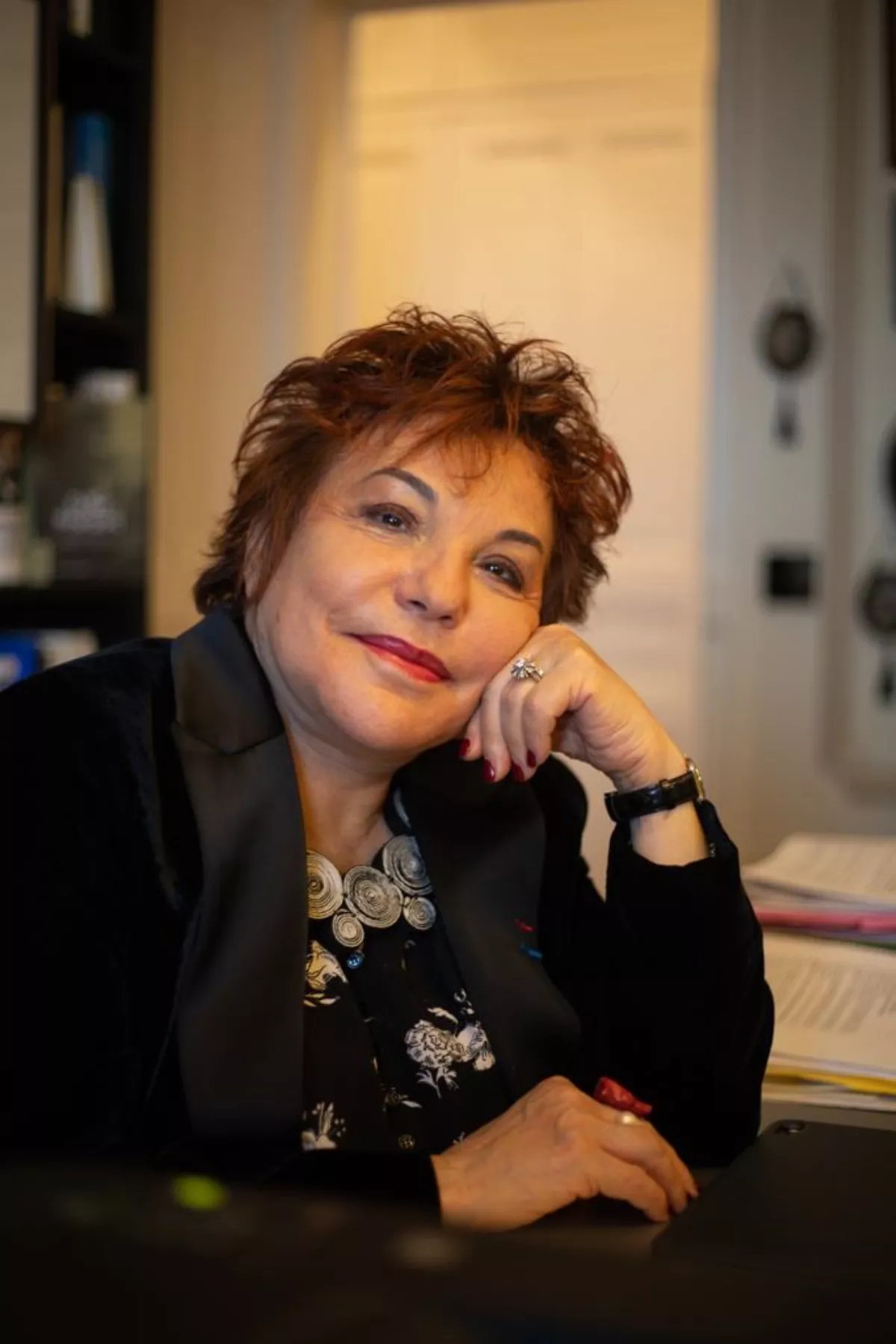
1. Esther Benbassa-Dudonney is a Turkish-Israeli-French historian and politician.
 1.
1. Esther Benbassa-Dudonney is a Turkish-Israeli-French historian and politician.
Esther Benbassa specializes in the history of Jews and other minorities.
Between 2011 and 2023, Benbassa served as a French senator, representing Paris and Val-de-Marne.
Esther Benbassa was born on 27 March 1950 in Istanbul, Turkey.
Esther Benbassa is the descendant of a family of Jews expelled from Spain in 1492, emigrating to the Ottoman Empire.
Esther Benbassa graduated from Tel Aviv University with a Bachelor of Arts in 1972, supporting her education by working in the tourism industry.
Esther Benbassa moved to France with a scholarship later that year and obtained a master's degree in modern literature from Paris 8 University Vincennes-Saint-Denis in 1973.
In 1974, Esther Benbassa became a French citizen by marriage, making her a triple citizen of France, Israel and Turkey.
Esther Benbassa received her Certificate of Aptitude for Secondary School Teachers in 1975 and taught in a lycee from 1975 to 1988.
Esther Benbassa achieved the latter by completing a dissertation titled "Haim Nahum Efendi, Last Great Rabbi of the Ottoman Empire " with Louis Bazin as her doctoral adviser.
Esther Benbassa had previously drafted a dissertation about the Paris Commune.
Esther Benbassa conducted her postdoctoral studies in the department of Jewish history at the Hebrew University of Jerusalem from 1988 to 1989.
Esther Benbassa served as director of research at the French National Centre for Scientific Research from 1989 to 2000, in which year she became the director of studies in religious studies at the Practical School of High Studies.
Esther Benbassa was a researcher at the Roland Mousnier Centre, a joint venture of the CNRS, EPHE and Sorbonne University.
In 2012, Esther Benbassa began to advocate for the right of French expatriates to vote in French elections.
At Esther Benbassa's urging, the Senate laws committee created a fact-finding mission on racial, ethnic and religious discrimination in the autumn of 2012.
Esther Benbassa served alongside Jean-Rene Lecerf of the Union for a Popular Movement as the mission's co-rapporteur.
Esther Benbassa authored the first ever French bill for the legalization of cannabis and introduced it in the Senate in January 2014.
Esther Benbassa joined several other senators in introducing a resolution urging other branches of the French government to recognize the State of Palestine, passing in December 2014.
Esther Benbassa drafted a resolution for the protection of environmental migrants, which the Senate passed in October 2015.
In March 2016, Esther Benbassa led the laws committee in establishing a fact-finding mission on deradicalization, for which she served as co-rapporteur along with Catherine Troendle of The Republicans.
In November 2019, Esther Benbassa took part in a protest against Islamophobia organized by several parties and civil society organizations.
In October 2020, Esther Benbassa became the secretary of the Senate and vice-president of the EELV group.
Esther Benbassa was expelled from the group on 15 September 2021 following allegations of workplace bullying and consequently became a member of the administrative group of senators not appearing on the list of any group.
All accusers described an atmosphere of "terror" Esther Benbassa had created among her subordinates.
Esther Benbassa is married to Jean-Christophe Attias, who serves as the director of studies at the Practical School of High Studies and won the 2015 Goncourt Prize in Biography.