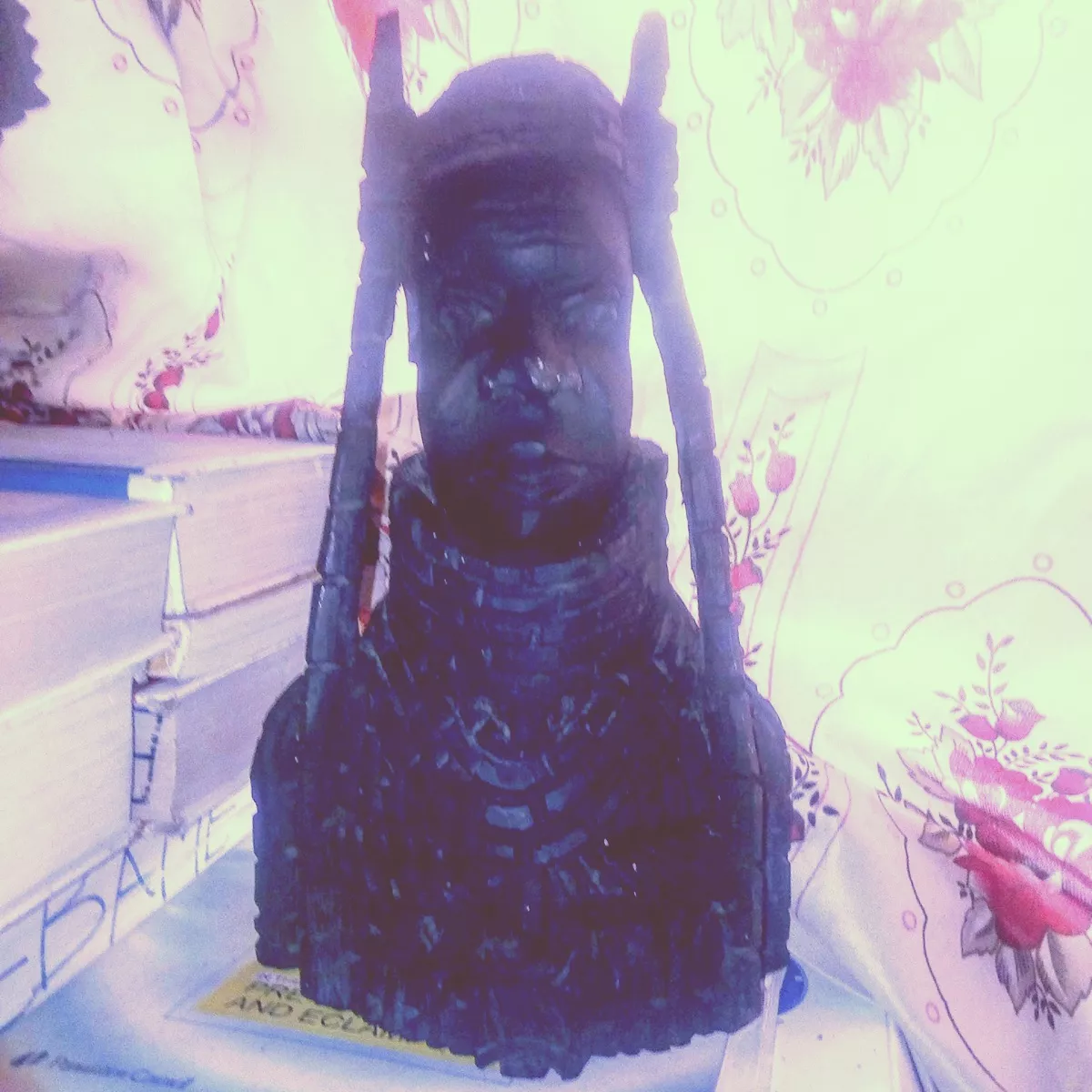
 1.
1. Ewuare, originally known as Prince Ogun, was the twelfth Oba of the Benin Empire from 1440 until 1473.
 1.
1. Ewuare, originally known as Prince Ogun, was the twelfth Oba of the Benin Empire from 1440 until 1473.
Ewuare became king in a violent coup against his brother Uwaifiokun which destroyed much of Benin City.
Ewuare left a significant legacy in the Kingdom of Benin.
Ewuare was most likely born in the Benin Royal Palace in Benin City and he wasn't proclaimed heir.
Ewuare's name means "the trouble has ceased", referring to when he finally gained the throne after rebelling against Uwaifiokun.
Ewuare was the founder of Benin's "Imperial Era" and expanded the Benin Empire in all directions.
Ewuare was the first Oba to meet the Portuguese in 1473.
Ewuare was a key general and from oral history, recounted 201 victories against other cities and states.
Ewuare was the first Oba to establish limited trade with the Portuguese in 1473 and gradually began to acquire firearms for the empire.
The story in which Ewuare got his name happened when he was wandering around the kingdom.
Ewuare asked to buy the name from the farmer so he could use it for himself.
At this point, Ewuare was known by the name Prince Ogun.
Ewuare arrived in Benin City surprised to find a parade for his brother Uwaifaikon while the people were in destitute circumstances.
Ewuare then reached into Agbavboko and pulled out a bow with a poison arrow which he then used to assassinate Uwaifaikon.
Ogun then took the name Ewuare translated to "the trouble has ceased".
Ewuare is often considered a key state-reformer and crucial in many aspects of state formation in the Benin empire.
Ewuare consolidated the power of the Oba, changed lineage procedures, and created an administrative structure for the Empire.
Ewuare removed their ability to appoint the Oba and instead adopted a clear succession going to the first-born son.
Ewuare created two additional layers of administration in towns and villages with the creation of the Eghabho n'ore and Eghabho n'ogbe.
Ewuare personally led the army against many of the Edo communities, living west of the Niger river, and key Yoruba settlements like Akure and Owo.
Around Benin City, Ewuare built significant walls and moats, large boulevards within the city, and clearly divided zones for different craft work.
The division was further emphasized through the introduction by Ewuare of scarification for freeborn citizens to differentiate them from the slave population.
Oral histories used by Egharevba suggest that during his reign, his oldest son Kuoboyuwa and his second son Ezuwarha became rivals and ended up poisoning each other causing Ewuare to go into significant mourning.
Ewuare overturned the law but because few migrants returned, he told all neighboring states to refuse to give entry to his citizens and developed the scarification practice to allow clear identification of their citizens.
Ewuare greatly expanded the arts in Benin during his reign and was aided greatly in this through increased trade.
Ewuare is generally credited with expanding ivory and wood carving in the empire and the creation of Bronze heads for shrines to deceased Obas.
In both folktales and artistic representations, Ewuare is considered someone with significant magical powers.
Ewuare is said to have founded the Ugie Erha Oba festival which honored the Obas.
Ewuare's first remaining son, Ezoti, died from assassination and his second son, Olua, ruled for a short period and was replaced when the uzama revolted.
The royal lineage from Ewuare would continue for multiple generations.