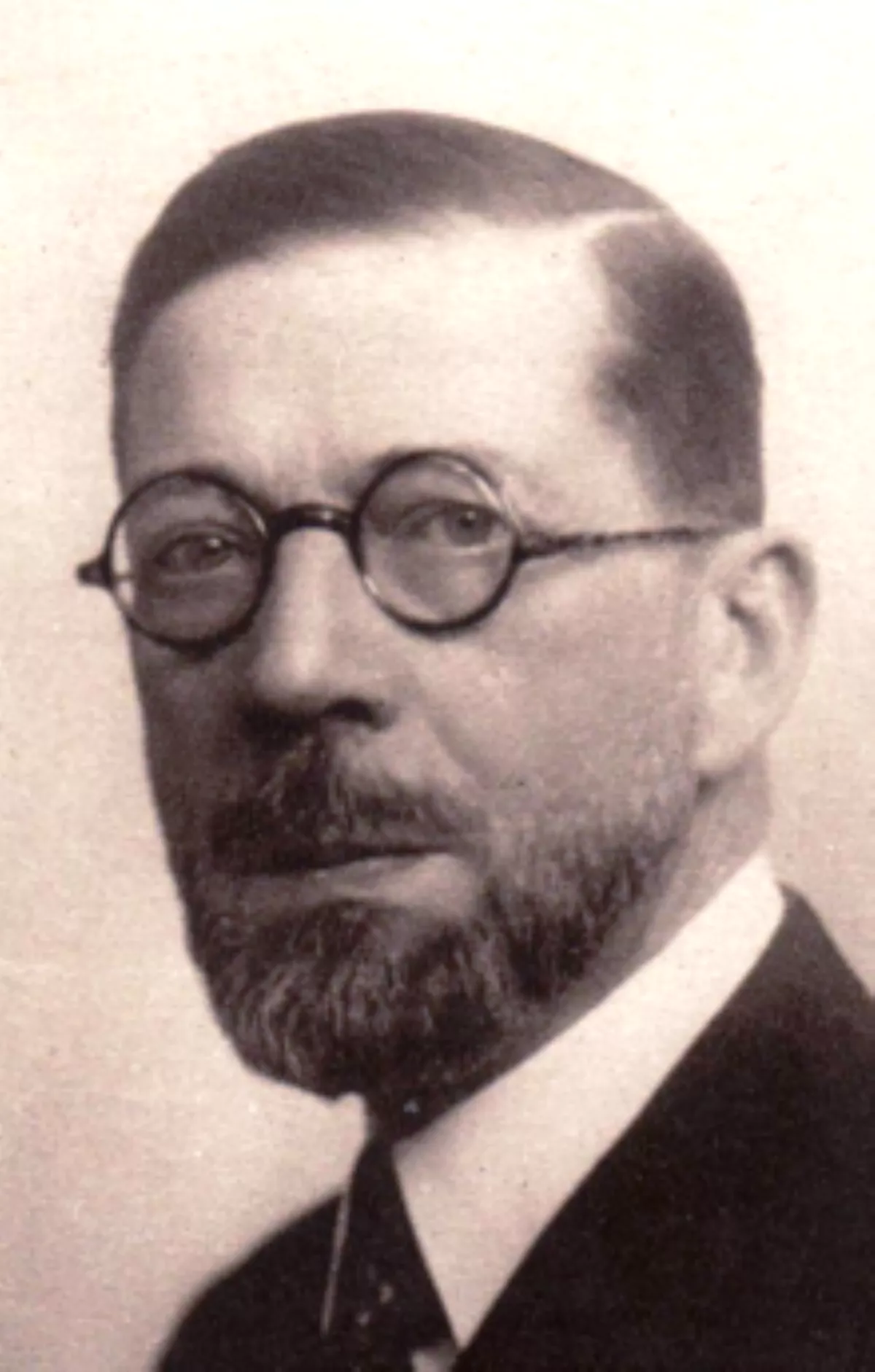
 1.
1. Fernand Gentin was a French printer and Radical politician who was a deputy from 1932 to 1942.
 1.
1. Fernand Gentin was a French printer and Radical politician who was a deputy from 1932 to 1942.
Fernand Gentin was Minister of PTT and then Minister of Health in 1938, and Minister of Commerce from 1938 to 1940.
Fernand Gentin was banned from public office after the Liberation of France.
Fernand Gentin was born on 27 September 1876 in Reims, Marne, son of a printer.
Fernand Gentin worked at the printing shop for a period, then spent ten years working among peasants before succeeding his father in the family business.
Fernand Gentin was president and chairman of the Grande Imprimerie de Troyes.
In May 1932 Fernand Gentin ran for election in the 3rd district of Troyes, and was elected in the second round.
Fernand Gentin was elected on 8 May 1932 as deputy for Aube on the Radical Republican and Radical Socialist list.
Fernand Gentin was reelected on 3 May 1936 as deputy for Aube on the Radical Republican and Radical Socialist list.
Fernand Gentin defeated the conservative Fernand Monsacre and the socialist Pierre Brossolette.
The Radicals had agreed not to oppose Rene Plard in the 1st district of Troyes, and in return Fernand Gentin was supported by the Amis du Rappel.
Fernand Gentin was Minister of Posts, Telegraphs, and Telephones from 18 January 1938 to 13 March 1938 in the 4th cabinet of Camille Chautemps.
Fernand Gentin was Minister of Health from 13 March 1938 to 10 April 1938 in the 2nd cabinet of Leon Blum.
Fernand Gentin was Minister of Commerce from 10 April 1938 to 20 March 1940 in the cabinet of Edouard Daladier.
At the annual Radical Party congress in Marseille at the end of October 1938 Fernand Gentin proposed a modern economic plan with partial funding from the state.
On 17 June 1938 Fernand Gentin announced a decree that limited the right of foreigners to engage in commerce.
Fernand Gentin sponsored the 21 April 1939 "Decree to Favor the Establishment in France of Industries of National Interest", which had resulted from lobbying by Louise Weiss and the Bonnet Committee.
Fernand Gentin visited London at the end of January 1940 and surprised his hosts by asking for removal of all obstacles to trade between Britain and France.
Fernand Gentin repeated to a parliamentary committee in February 1940 that France should not give up manufacture of civilian products for export in response to an exaggerated demand for the manufacture of armaments.
Fernand Gentin administered and gave political direction to Le Petit Troyen.
Fernand Gentin submitted to German demands that he publish their communiques, and that the paper follow their approved line.
Fernand Gentin derived from his functions as political director substantial pecuniary advantages, and he maneuvered as administrator to profit from the particular conditions created by the German occupation.