 1.
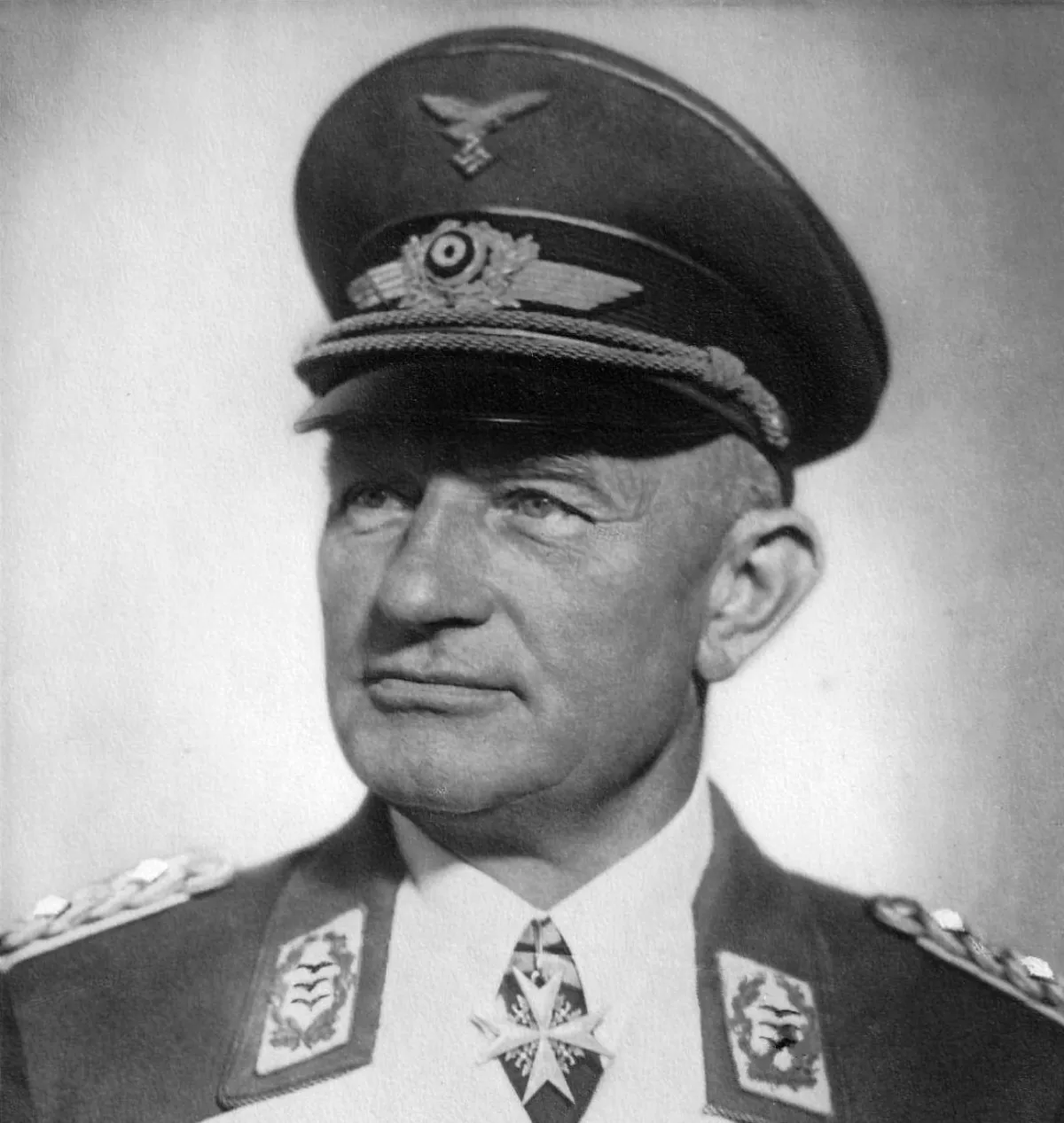
1. Friedrich Christiansen was a German general who served as commander of the German Wehrmacht in the occupied Netherlands during World War II.
 1.
1. Friedrich Christiansen was a German general who served as commander of the German Wehrmacht in the occupied Netherlands during World War II.
Friedrich Christiansen joined the Nazi Party in the interwar period, eventually rising to the rank of Korpsfuhrer of the National Socialist Flyers Corps.
Friedrich Christiansen was born in Wyk auf Fohr, Province of Schleswig-Holstein, into an old seafaring family, the son of a sea captain.
From 1915 to 1916 Friedrich Christiansen went on numerous reconnaissance and bombing missions, helping to make his unit at Zeebrugge one of the most successful in the German Naval Air Service.
On 27 April 1916, as Leutnant der Matrosen Artillerie Friedrich Christiansen was awarded the Iron Cross 1st Class and Knights Cross with Swords of the House Order of Hohenzollern.
Friedrich Christiansen claimed his first air-to-air victory 15 May 1917 by shooting down a Sopwith Pup off Dover.
Friedrich Christiansen continued to carry out reconnaissance, rescue, and bombing missions, such that by December 1917, he had completed 440 missions, including shooting down Airship C27.
On 15 February 1918 Friedrich Christiansen shot down a Curtiss H12B flying boat off Felixstowe, followed by 2 more on 24 April and 25 April.
In 1922 Friedrich Christiansen was active again in the merchant marine, as a ship's captain.
Friedrich Christiansen continued in this pursuit until 1929, when he was employed as a pilot by the Claude Dornier Company.
Friedrich Christiansen's distinguished career led him eventually to being called to a post in the Reichsluftfahrtministerium from 1933 to 1937, and in 1936 he was promoted to Generalmajor.
From 29 May 1940 until 7 April 1945 Friedrich Christiansen was Wehrmachtbefehlshaber in den Niederlanden, and until 26 June 1943 was concurrently still Korpsfuhrer of the NSFK.
Friedrich Christiansen was responsible for the food embargo in winter 1944, causing famine in western Holland resulting in the death of 22000 civilian men, women and children.
Friedrich Christiansen was sentenced to 12 years imprisonment in 1948 in Arnhem for war crimes but was released in December 1951.
Friedrich Christiansen's release from imprisonment in 1951 was an occasion for his native town, Wyk auf Fohr, to renew Christiansen's honorary citizenship and reinstate a street name in his honor, previously changed by the British military administration in 1945.