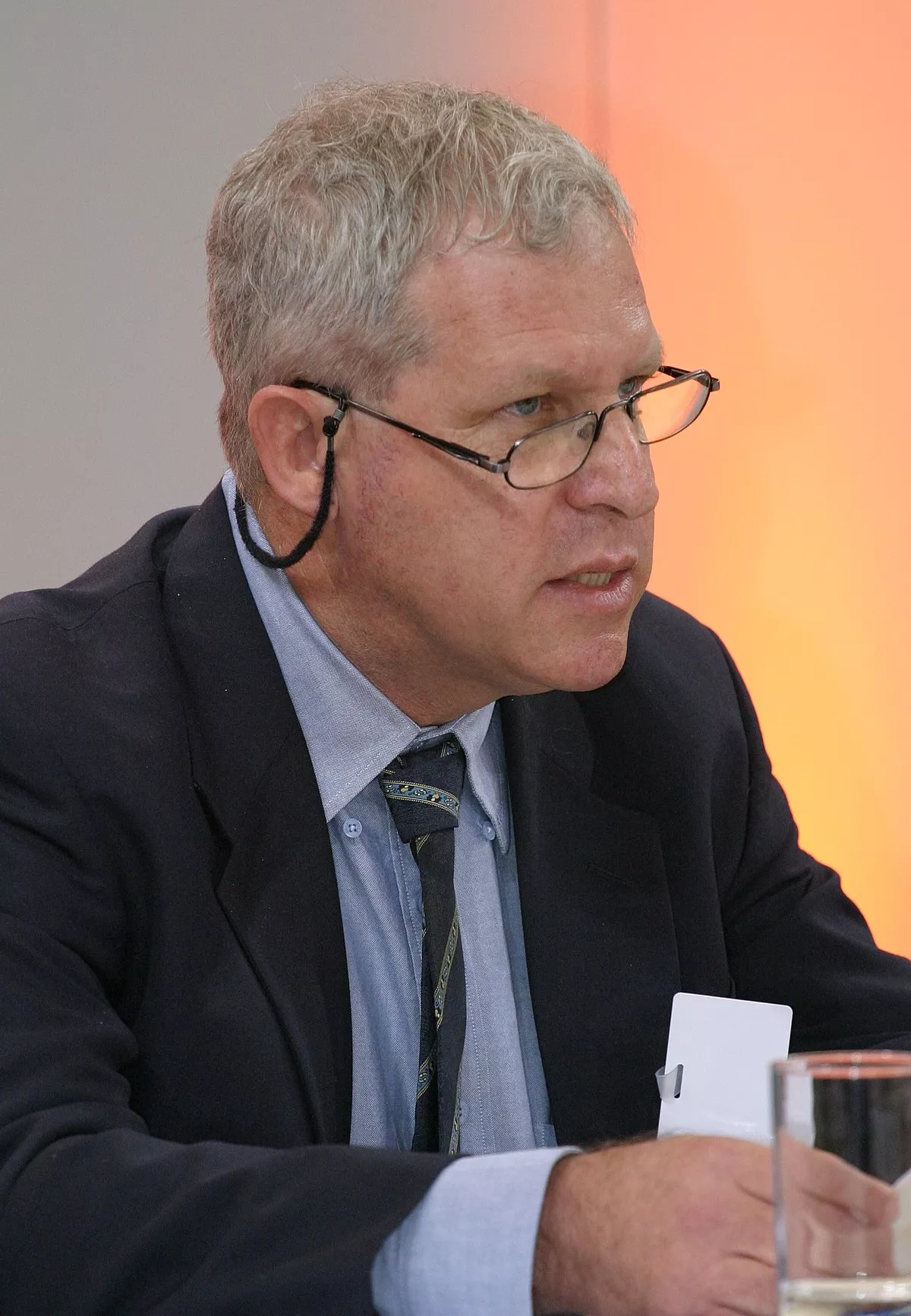
 1.
1. Giora Eiland is a retired Major General of the Israel Defense Forces and a former head of the Israeli National Security Council.
 1.
1. Giora Eiland is a retired Major General of the Israel Defense Forces and a former head of the Israeli National Security Council.
Giora Eiland joined the army in 1970, and served in the Paratroopers Brigade Battalion 890.
Giora Eiland served in a variety of roles within the brigade: as platoon leader, an operations officer, company commander, vice-commander of a battalion, commander of 50 "Baselet" Airborne Battalion and reserve commander of the Paratroopers Brigade.
In 1984 Giora Eiland completed the Advanced Infantry Course at Fort Benning, Georgia, United States.
In 1993, Giora Eiland was appointed as the head of the Paratroopers and Infantry Corps in the rank of Brigadier General.
In 1996 Giora Eiland was appointed Head of Operations Division in Operations Directorate, and in 1999 he was appointed Head of Operations Directorate in rank of Major General.
Giora Eiland represented the Israeli security forces in talks with US, Palestinian and other officials.
In 2003, with the end of his term in the Planning Directorate, Giora Eiland rejected an offer to become IDF attache in Washington, and retired from the army after 33 years of service.
Giora Eiland left the Planning Directorate and the IDF to accept, in January 2004, Sharon's offer that he head the National Security Council.
Giora Eiland was the fourth NSC head in the six years of the Council's existence, the others being David Ivri, Uzi Dayan, and Ephraim Halevy, and could not penetrate the walls around the Prime Minister's office.
However, unlike Dayan and Levy, whose terms were marked by worsening relations with Prime Minister Sharon, Giora Eiland had a constructive working relationship with the Prime Minister, despite their practical disagreements.
Giora Eiland agreed that a political initiative was needed, but objected to both the content of Sharon's proposal and the procedure for preparing and presenting it.
In 2004 Giora Eiland took part in drawing up the disengagement plan in close consultations with US Advisors among them National Security Council Middle East Advisor Elliott Abrams.
Giora Eiland shuttled with Ariel Sharon's Chief of Staff, between Washington and Jerusalem to hammer up successive drafts.
In 2006, Giora Eiland was appointed by the Chief of Staff, Dan Halutz, as the head of the examination committee of experts, to investigate the capture of the Israeli soldier Gilad Shalit by the Hamas to Gaza Strip.
In 2010, Giora Eiland headed a team of experts examining the preparation and execution of the Gaza flotilla raid.
Giora Eiland presented the report to the chief of staff, Gabi Ashkenazi on July 12,2010.
Giora Eiland provides services in various settings to foreign governments, multinational corporations, and organizations.
At the beginning of the Gaza war, Giora Eiland spoke out against an Israeli ground invasion, stating that it would be a "terrible mistake" as soldiers would have to clear every home and remove booby traps from tunnels many kilometers long, all while battling thousands of Hamas fighters.
Giora Eiland instead suggested "Israel create a humanitarian crisis in Gaza" to get the hostages back.
Giora Eiland opposed escalating the 2023 Israel-Hezbollah Conflict, predicting that Israel would not be able to defeat Hezbollah.
Since then, Giora Eiland's op-ed has been referenced in various articles, especially in articles criticizing Israel's actions in the war.
B'Tselem referred to Giora Eiland's op-ed as evidence that the humanitarian crisis in Gaza is the "intended result" of Israeli policy.
Additionally, The Times of Israel referenced Giora Eiland's op-ed in an article about an IDF soldier who died of a fungal infection acquired in Gaza.
Giora Eiland is the lead author of the controversial General's Plan.
On December 10,2024, Giora Eiland was asked whether the plan was being implemented.
Giora Eiland replied that it was not being implemented at all, and that what was being done in the Gaza Strip was the opposite of the plan.
Giora Eiland said that military pressure was being used to try to achieve the three goals of neutralizing the military capacity of Hamas, bringing home the hostages, and putting an end to the rule of Hamas in the strip, but that military pressure cannot achieve the latter two goals.
Giora Eiland said his plan, on the contrary, was to surround the northern third of the strip and implement a siege, forcing Hamas to surrender without hard fighting, and taking territory to be used as a card to play against Hamas.
Giora Eiland said the only ways to achieve the goals were economic pressure or taking territory.