 1.
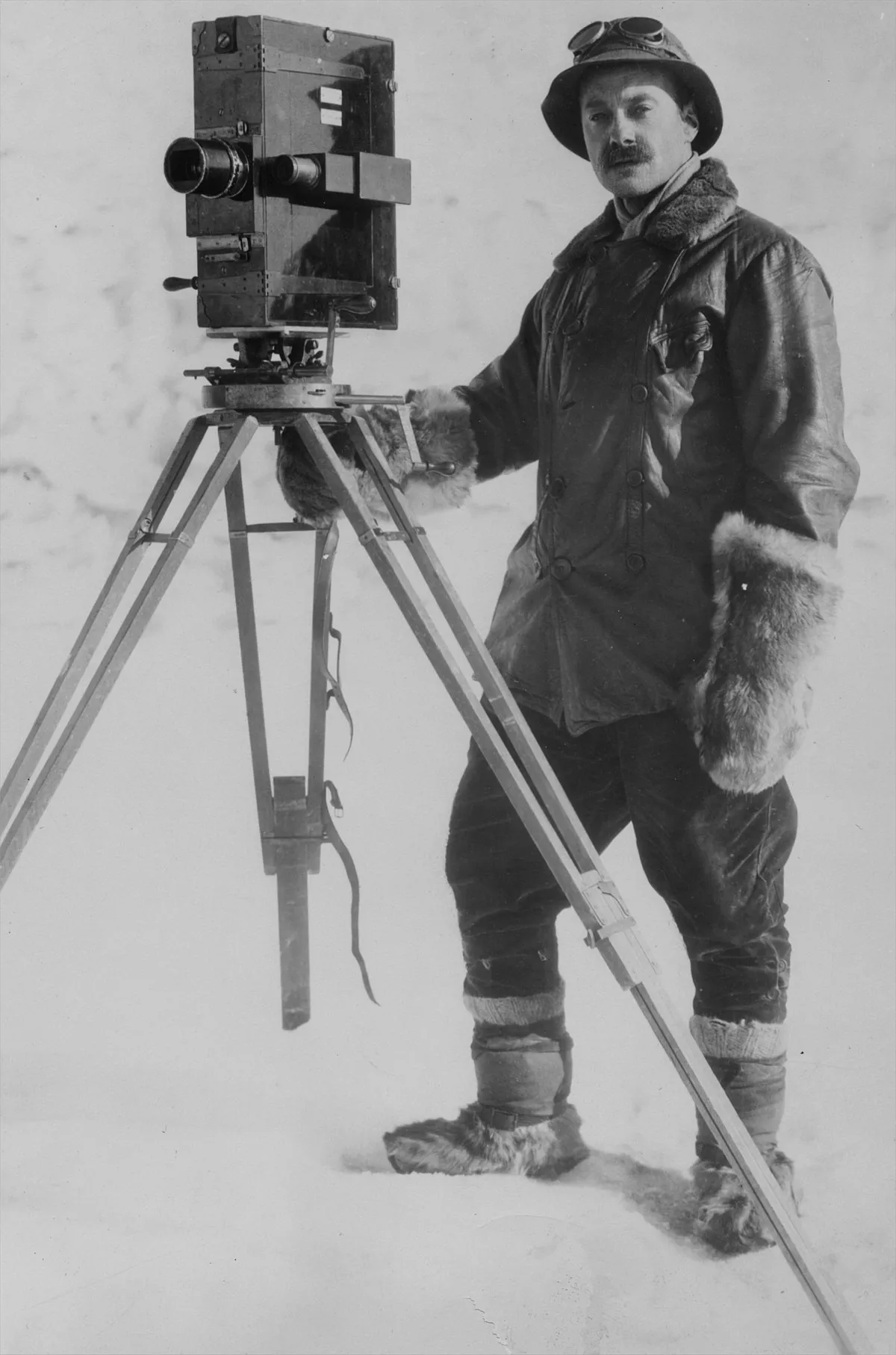
1. Herbert Ponting is best known as the expedition photographer and cinematographer for Robert Falcon Scott's Terra Nova Expedition to the Ross Sea and South Pole.
 1.
1. Herbert Ponting is best known as the expedition photographer and cinematographer for Robert Falcon Scott's Terra Nova Expedition to the Ross Sea and South Pole.
Herbert Ponting's father was a successful banker, Francis Ponting, and his mother was Mary Sydenham.
Herbert Ponting emigrated to California where he ran a fruit ranch and worked in mining.
Herbert Ponting sold his fruit farm in 1898 and, with his wife and daughter, returned to Britain to stay with his family.
Herbert Ponting's work was selected for the first San Francisco Salon; at that time he was living in Sausalito, north of San Francisco.
In 1907 Herbert Ponting returned to Europe, where he exhibited his Japanese and other photographs and continued to take stereoviews and wrote illustrated articles for magazines including Country Life, The Graphic, the Illustrated London News, Pearson's, and the Strand Magazine.
Herbert Ponting expanded his photographs of Japan into a 1910 book, In Lotus-land Japan.
Herbert Ponting had been elected a Fellow of the Royal Geographical Society in 1905.
Herbert Ponting was one of the first men to use a portable movie camera in Antarctica.
Herbert Ponting brought autochrome plates to Antarctica and took some of the first known color still photographs there.
Herbert Ponting tried to get as close as possible to these animals, both on the Terra Nova in the sea ice and later on Ross Island, and narrowly escaped death on one occasion in early 1911 when a pod of eight killer whales broke up the ice floe in McMurdo Sound on which he was standing.
Herbert Ponting illustrated the subjects of other lectures with home-made slides of photographs taken during the autumn or from printed books.
Herbert Ponting photographed other members of the shore party setting off for what was expected to be a successful trek.
Herbert Ponting's illustrated narrative would be waiting for Captain Scott to use for lectures and fundraising in 1913.
When World War I began Herbert Ponting tried, unsuccessfully, to persuade the War Office to make use of his skills as a photographer and war correspondent, but his age was cited as a reason for his being rejected for war service.
Herbert Ponting published The Great White South, the photographic narrative of the expedition, in 1921 which was a popular success, and produced two films based upon his surviving cinematograph sequences, The Great White Silence and Ninety Degrees South, the latter of which he collaborated with Evans, whom he had since made peace with.
Herbert Ponting died at his home in London in 1935; his photographs were sold to raise funds to pay for medical and other expenses.
Herbert Ponting is the author of a verse in trochaic tetrameter, "The Sleeping Bag".
Herbert Ponting was portrayed by Clive Morton in the 1948 film Scott of the Antarctic, and by Michael Tudor Barnes in the 1985 television serial The Last Place on Earth.