 1.
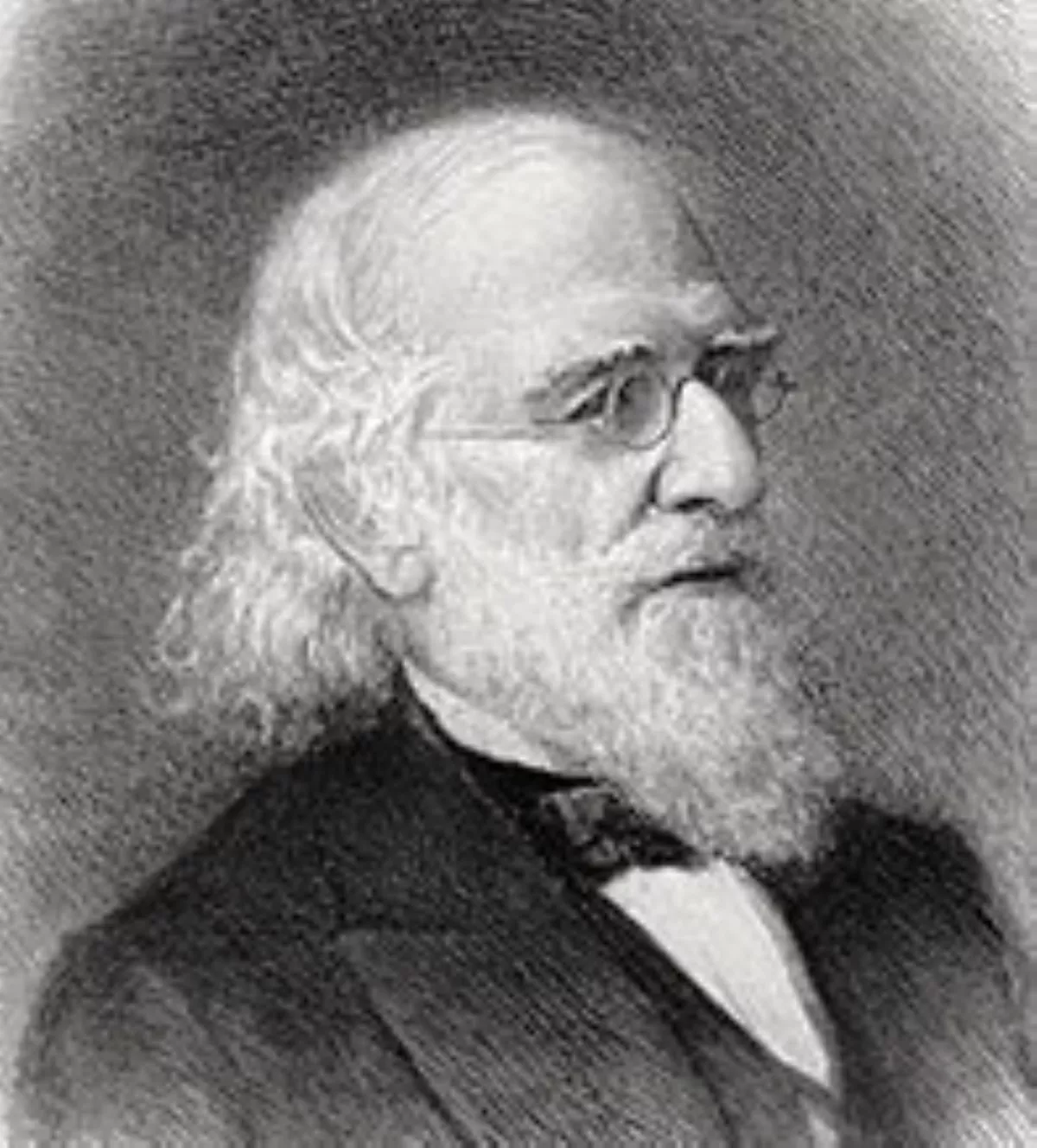
1. Isaac Lea was an American publisher, conchologist and geologist.
 1.
1. Isaac Lea was an American publisher, conchologist and geologist.
Isaac Lea authored multiple books describing the freshwater mussel genus Unio and named 1,842 species of fifty genera of freshwater and land mollusks.
Isaac Lea sparked a scientific controversy amongst geologists when he published about his discovery of fossilized footprints in Mount Carbon, Pennsylvania, that he incorrectly proposed were from a reptile from the Devonian Period over 360 million years old.
Isaac Lea served as president of the Academy of Natural Sciences of Philadelphia from 1858 to 1863 and of the American Association for the Advancement of Sciences in 1860.
Isaac Lea's parents were James J Lea, a merchant, and Elizabeth Gibson Lea.
Isaac Lea was studying to be a physician, but began working at his brother John's import business in Philadelphia at the age of 15.
Isaac Lea was close friends with Lardner Vanuxem as a child and the two developed an interest in geology and were exposed to the mineralogical collection of Adam Seybert.
Isaac Lea was born a Quaker but forsook his faith's traditional pacifism and joined the 7th Company of the 24th Pennsylvania Militia during the War of 1812.
In 1851, Isaac retired from the publishing business and made his son Henry Charles Lea a full partner and the name was changed to Lea Brothers.
Isaac Lea worked with Lardner Vanuxem during his work on the geology of New York.
In 1815, Isaac Lea joined the Academy of Natural Sciences and published his first paper on minerals found in the Philadelphia area in 1817.
Isaac Lea devoted his leisure time to natural history, both collecting objects and publishing books.
Isaac Lea was especially interested in freshwater and land mollusks.
Isaac Lea studied mollusks from the Ohio River submitted to the Academy of Natural Sciences by Major Stephen Harriman Long and shells collected by his brother near Cincinnati.
Isaac Lea described these specimens in the publication Description of Six New Specimens of the Genus Unio which he presented at the American Philosophical Society in 1827 and was the first of multiple papers on Unio.
Isaac Lea named 1,842 species of fifty genera of freshwater and land mollusks, however many of the species he described are not distinct.
In 1849, Isaac Lea presented a paper on fossilized footprints he discovered in red sandstone in Mount Carbon, Pennsylvania.
Isaac Lea contended the tracks were reptilian and that due to the strata of rock where the footprints were found, they were from the Devonian Period between 360 and 408 million years old and constituted a new species that he named Sauropus primaevus.
Isaac Lea was a member and vice-president of the American Philosophical Society and served as president of the Academy of Natural Sciences of Philadelphia, both based in Philadelphia.
Isaac Lea served as president of the American Association for the Advancement of Science in 1860.
Henry Charles Isaac Lea was an American historian, civic reformer, and political activist in Philadelphia.
Mathew Carey Isaac Lea was a lawyer as well as founder of mechanochemistry and early photographer.
Isaac Lea died on December 8,1886, in Philadelphia and was interred in Laurel Hill Cemetery.
Two slabs of rock containing the fossilized footprints and plaster casts of the footprints discovered by Isaac Lea are in the collections of the Smithsonian Institution.