 1.
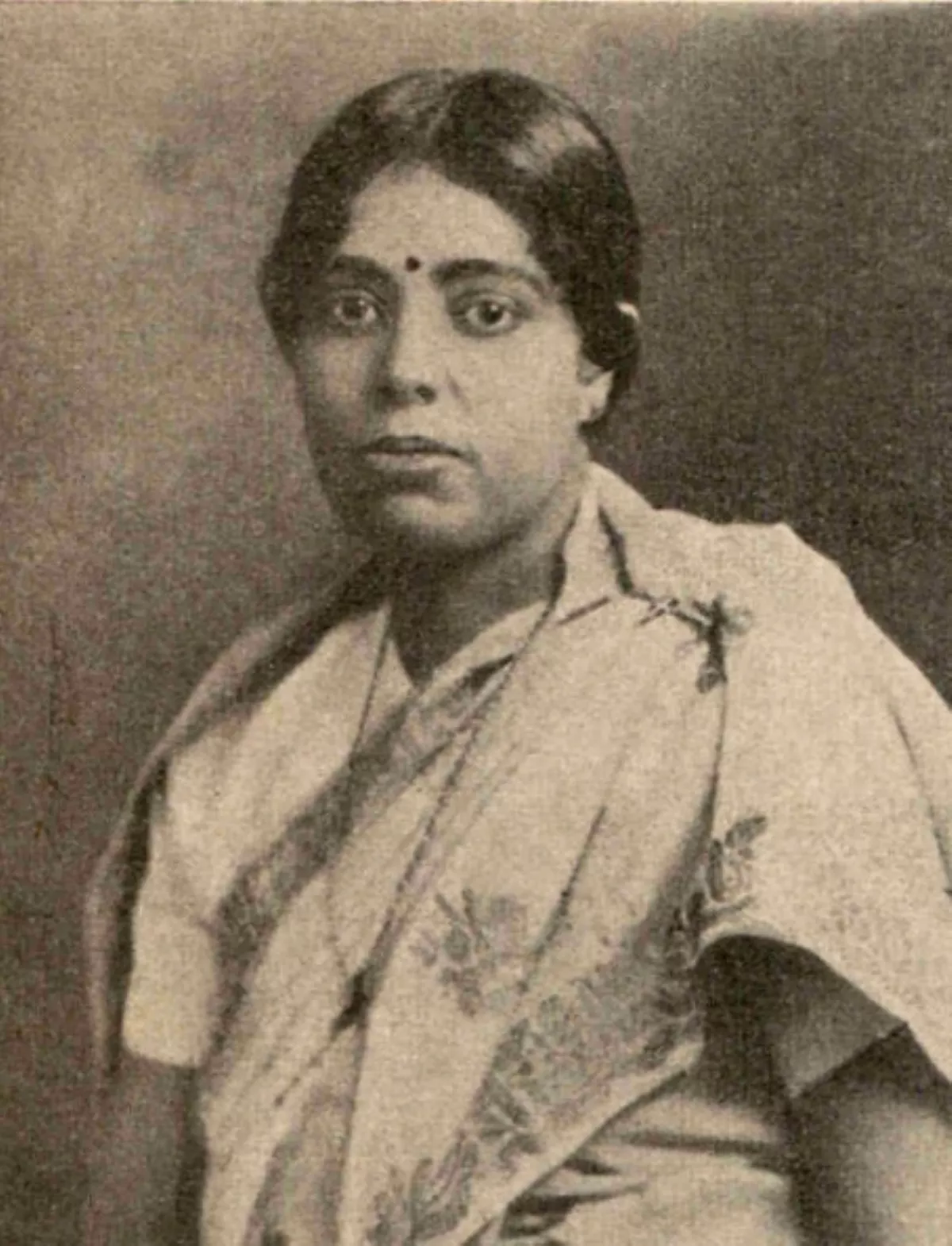
1. Edavalath Kakkat Janaki Ammal was an Indian botanist who worked on plant breeding, cytogenetics and phytogeography.
 1.
1. Edavalath Kakkat Janaki Ammal was an Indian botanist who worked on plant breeding, cytogenetics and phytogeography.
Janaki Ammal took an interest in ethnobotany and plants of medicinal and economic value from the rain forests of Kerala, India.
Janaki Ammal was born in Thalassery, Kerala on 4 November 1897.
Janaki Ammal's father was Diwan Bahadur Edavalath Kakkat Krishnan, Dy.
Janaki Ammal did her primary schooling at Sacred Heart Convent in Thalassery followed by a bachelor's degree which she obtained from Queen Mary's College, Madras.
Janaki Ammal obtained an honours degree in botany from Presidency College in Madras and then moved to the University of Michigan in 1924, earning a master's degree in botany in 1926 through the Barbour Scholarship.
Janaki Ammal returned to India to work as a professor in Women's Christian College in Madras for a few years, then returned to the University of Michigan as an Oriental Barbour Fellow and obtained a PhD in 1931.
Janaki Ammal's thesis was titled "Chromosome Studies in Nicandra Physaloides".
Janaki Ammal was invited to work as a cytologist at the Royal Horticultural Society, Wisley from 1945 to 1951.
Janaki Ammal worked briefly at Bhabha Atomic Research Centre at Trombay and then settled down in Madras in November 1970, working as an Emeritus Scientist at the Centre for Advanced Study in Botany, University of Madras.
Janaki Ammal lived and worked in the centre's Field Laboratory at Maduravoyal until her death in February 1984.
Janaki Ammal's research helped analyse the geographical distribution of sugarcane across India, and to establish that the Saccharum spontaneum variety of sugarcane had originated in India.
In 1946, Janaki Ammal became the RHS's first female scientist.
Janaki Ammal was highly respected along with her work and had people sent to her from different countries to study under her.
Janaki Ammal worked on the genera Solanum, Datura, Mentha, Cymbopogon and Dioscorea besides medicinal and other plants.
Janaki Ammal attributed the higher rate of plant speciation in the cold and humid northeast Himalayas as compared to the cold and dry northwest Himalayas to polyploidy.
Janaki Ammal advocated greatly for the preservation of native plants and due to her efforts, Silent Valley Forests was saved from a hydroelectric project.
The forest was declared a national park on 15 November 1984 but unfortunately Janaki Ammal was not around to see this triumph as she died 9 months earlier.
Janaki Ammal was elected Fellow of the Indian Academy of Sciences in 1935, and of the Indian National Science Academy in 1957.
Janaki Ammal produced many hybrid brinjal varieties.