 1.
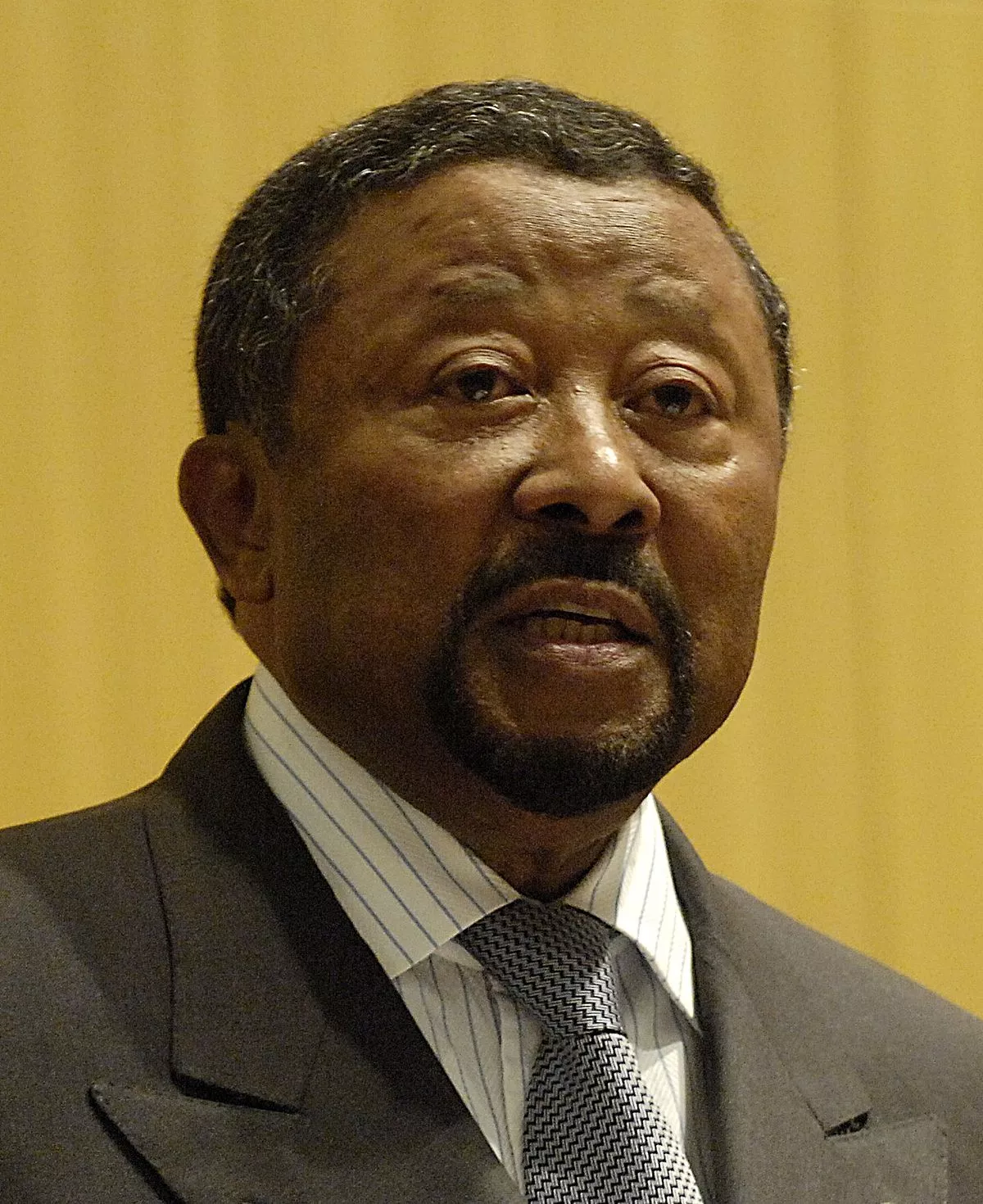
1. Jean Ping served as the Minister of State and Minister of Foreign Affairs, Cooperation and Francophonie of the Gabonese Republic from 1999 to 2008, and was President of the United Nations General Assembly from 2004 to 2005.
 1.
1. Jean Ping served as the Minister of State and Minister of Foreign Affairs, Cooperation and Francophonie of the Gabonese Republic from 1999 to 2008, and was President of the United Nations General Assembly from 2004 to 2005.
Jean Ping stood for the 2016 Gabonese presidential election against president Ali Bongo.
Jean Ping's father, Cheng Zhiping, called Wang Ping by the Gabonese, was a Chinese person from Wenzhou, Zhejiang, who was recruited as a labourer in the 1920s and became a timber harvester.
Jean Ping has a doctorate in economic science from the University of Paris 1 Pantheon-Sorbonne, which he obtained under Rene Passet in 1975.
In 1972, Jean Ping began working as an international civil servant at UNESCO in Paris.
Jean Ping served as Gabon's Permanent Delegate to UNESCO from 1978 to 1984 before becoming involved in his country's politics.
In 2004, Jean Ping was chosen to be the 59th President of the United Nations General Assembly.
Jean Ping was elected Chairperson of the Commission of the African Union in the first round in 2008.
In 1972, Jean Ping began working at UNESCO in its Sector for External Relations and Cooperation as an international civil servant.
On returning to Gabon in 1984, Jean Ping began his political career as chief of staff to Omar Bongo, President of the Gabonese Republic.
On 26 February 1990, Jean Ping was appointed Minister of Information, Postal Services, Telecommunications, Tourism, Leisure and Parastatal Sector Reform with responsibility for Parliamentary relations and government spokesman.
Jean Ping held the position only briefly before moving to the head of the Ministry of Mines, Energy and Hydraulic Resources from 29 April 1990 to June 1991, then again for nineteen months from 28 August 1992 to 24 March 1994.
On 25 March 1994, Jean Ping was given responsibility for the Ministry of Foreign Affairs and Cooperation for the first time, before becoming Deputy Minister of Finance, Economy, the Budget and Privatization on 30 October.
Jean Ping was elected to the National Assembly from Omboue in the December 1996 parliamentary election, the December 2001 parliamentary election, and the December 2006 parliamentary election.
Jean Ping was Minister of Planning, Environment and Tourism for two years from 27 January 1997 to 25 January 1999, before again taking responsibility for the Ministry of Foreign Affairs and Cooperation, joined this time by the Francophonie portfolio and with the title of Minister of State.
Jean Ping remained there until his election to Chairperson of the Commission of the African Union on 6 February 2008, a position that he held until 15 October 2012.
On 1 February 2014, Jean Ping announced his disillusionment with the ruling Gabonese Democratic Party and resigned on 19 February 2014.
Jean Ping has since been in open conflict with President Ali Bongo and focused on unifying the opposition forces in a structure called Front uni de l'opposition pour l'alternance.
At a political meeting in the city of Oyem on 25 August 2015, Jean Ping officially launched his bid to become the sole opposition candidate standing for the 27 August 2016 presidential election.
Jean Ping was supported by four other candidates who stood aside for him: Casimir Oye Mba, the former Prime Minister, Guy Nzouba-Ndama, former president of the National Assembly, Leon Paul Ngoulakia, President Bongo's cousin, and Roland Desire Aba'a Minko, an independent candidate.
Jean Ping decided to wage a peaceful struggle and continue campaigning against Ali Bongo in order to resolve Gabon's political crisis, which for months had been significantly worsening the economic crisis triggered by the fall in raw material prices in 2015.
On 15 December 2016, Jean Ping appealed to the ICC, citing crimes against humanity before and after the disputed 27 August 2016 presidential election.
Jean Ping claimed to have proof that at least 22 people were shot dead by law enforcement forces.