 1.
1. Kanhopatra was a 15th-century Marathi saint-poet, venerated by the Varkari sect of Hinduism.
 1.
1. Kanhopatra was a 15th-century Marathi saint-poet, venerated by the Varkari sect of Hinduism.
Kanhopatra died in the central shrine of Vithoba in Pandharpur.
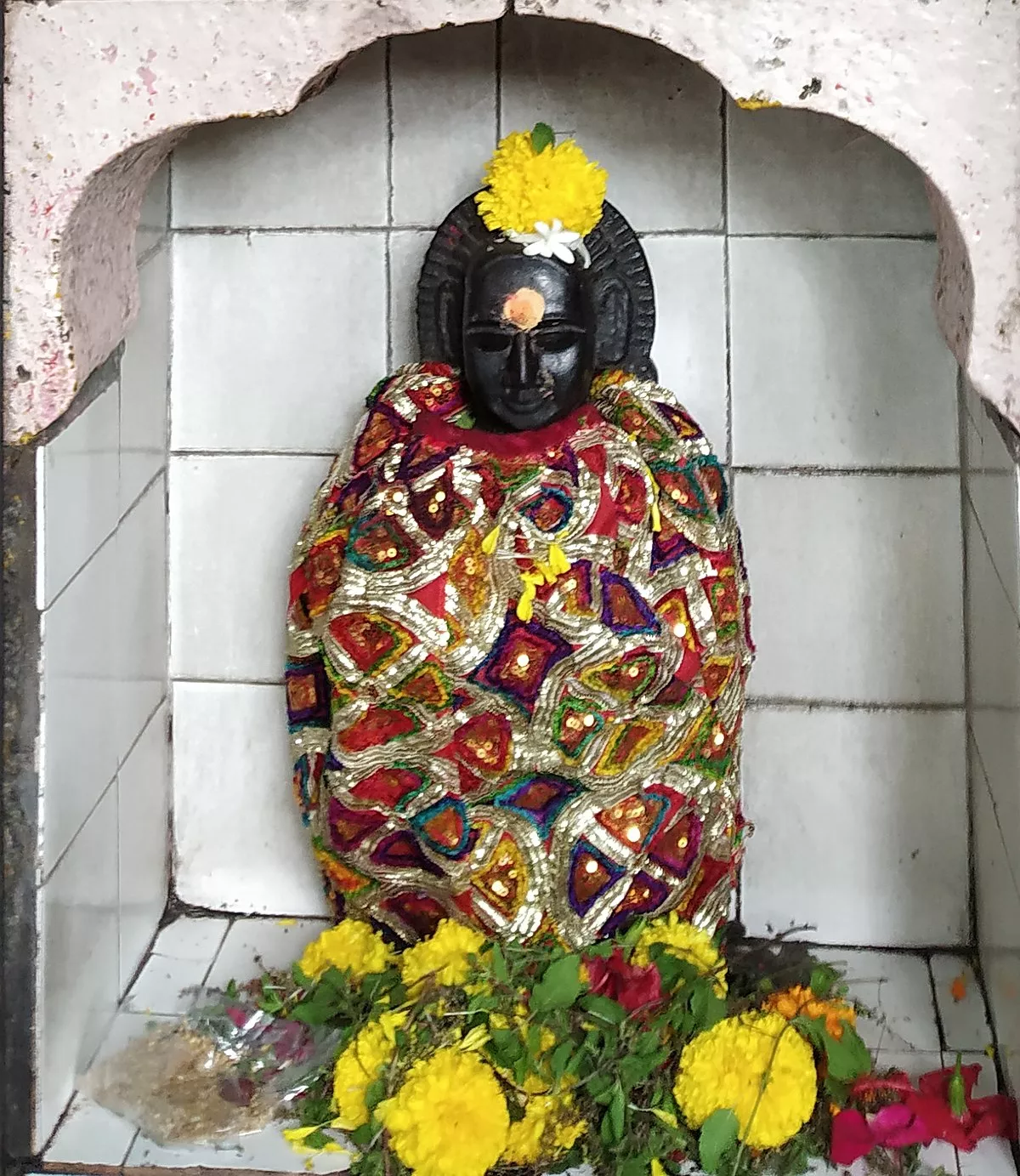
Kanhopatra is the only person whose samadhi is within the precincts of the temple.
Kanhopatra wrote Marathi ovi and abhanga poetry telling of her devotion to Vithoba and her struggle to balance her piety with her profession.
Kanhopatra is the only female Varkari saint to have attained sainthood based solely on her devotion, without the support of any guru, male Varkari saint, or parampara.
Kanhopatra's history is known through stories passed down over centuries.
Kanhopatra was a daughter of a rich courtesan and dancer named Shama or Shyama, who lived in the town of Mangalvedha, near Pandharpur, the site of Vithoba's chief temple.
Apart from Kanhopatra, Mangalwedhe is the birthplace of the Varkari saints Chokhamela and Damaji.
Kanhopatra spent her childhood in the palatial house of her mother, served by several maids, but because of her mother's profession, Kanhopatra's social status was demeaningly low.
Kanhopatra was trained in dance and song from early childhood so that she could join her mother's profession.
Kanhopatra's beauty was compared to the apsara Menaka.
Shama suggested that Kanhopatra should visit the Badshah, who will adore her beauty and gift her money and jewelry, but Kanhopatra flatly refused.
Traditional tales narrate that Shama wanted Kanhopatra to marry, but Kanhopatra longed to marry a man who was more beautiful than her.
Scholar Tara Bhavalkar states that Kanhopatra's marriage was forbidden, as it was not socially acceptable for a daughter of a courtesan to marry.
Kanhopatra fled to Pandharpur disguised as a maid, with the help of her aged maid Hausa.
Kanhopatra further asked if Vithoba would accept her as a devotee.
When Kanhopatra first saw the Vithoba image of Pandharpur, she sang in an abhanga that her spiritual merit was fulfilled and she was blessed to have seen Vithoba's feet.
Kanhopatra had found the unparalleled beauty she sought in her groom in Vithoba.
Kanhopatra "wedded" herself to the god and settled in Pandharpur.
Kanhopatra moved into a hut in Pandharpur with Hausa and lived an ascetic's life.
Kanhopatra sang and danced at the Vithoba temple, and cleaned it twice a day.
Kanhopatra gained the respect of the people, who believed her to be a poor farmer's daughter maddened by the love of Vithoba.
The soldiers of the king besieged the temple and threatened to destroy it if Kanhopatra was not handed over to them.
Kanhopatra requested a last meeting with Vithoba before being taken.
Guy Deleury deduces from the poems of Namdev and other saints, that Kanhopatra did not die but acquired the power of invisibility by embracing Vithoba's image; after this yogic "miracle", the Badshah converted to bhakti.
Kanhopatra is the only person whose samadhi is in the precincts of the Vithoba temple.
Kanhopatra is believed to have composed many abhangas, but most were not in written form: only thirty of her abhangas or ovis survive today.
Kanhopatra's style is described as unadorned by poetic devices, easy to understand, and with a simplicity of expression.
Kanhopatra speaks of her humiliation and her banishment from society owing to her profession and social stature.
Kanhopatra expresses disgust for the society which adored her as an object of beauty rather than as a human being, and abhorred her for profession.
Kanhopatra describes how she has been the object of lustful thoughts.
Kanhopatra refers to Vithoba by names such as Narayana, Krishna, Sripati and Manmatha.
Kanhopatra refers to Krishna-Vithoba as the "champion of the low", and as a mother.
Kanhopatra asserts the importance of repeating the names of God and reveals how chanting His names has helped her.
Kanhopatra hoped that her chanting would ultimately lead her to salvation.
Kanhopatra's abhangas show her concern for her body, her sense of vulnerability and her will to "remain untouched in the midst of turbulence".
Kanhopatra says, I offer my body at your feet, protect it, at least for your title.
Kanhopatra is formally included in the list of Sants, meaning saints in Marathi in the text Bhaktavijaya.
Kanhopatra is cited by the Vakari saint-poets as "an example of the real downtrodden and deserving people persons that are saved by the merciful God".
Kanhopatra was born in a household where devotion was unthinkable.
Kanhopatra is the only woman Varkari saint, who is not associated with any male Varkari saint, who has no guru, nor any parampara.
Kanhopatra is credited to have attained sainthood exclusively on the basis of her intense devotion to Vithoba, a devotion reflected in her abhangas.
Kanhopatra's life has been recounted in a 1937 Marathi film Kanhopatra written and directed by Bhalji Pendharkar.
Kanhopatra was the subject of the popular 1931 Marathi drama named Sant Kanhopatra, in which Bal Gandharva played the lead.
Kanhopatra's abhangas are still sung in concerts and on radio, and by Varkaris on their annual pilgrimage to Pandharpur.