 1.
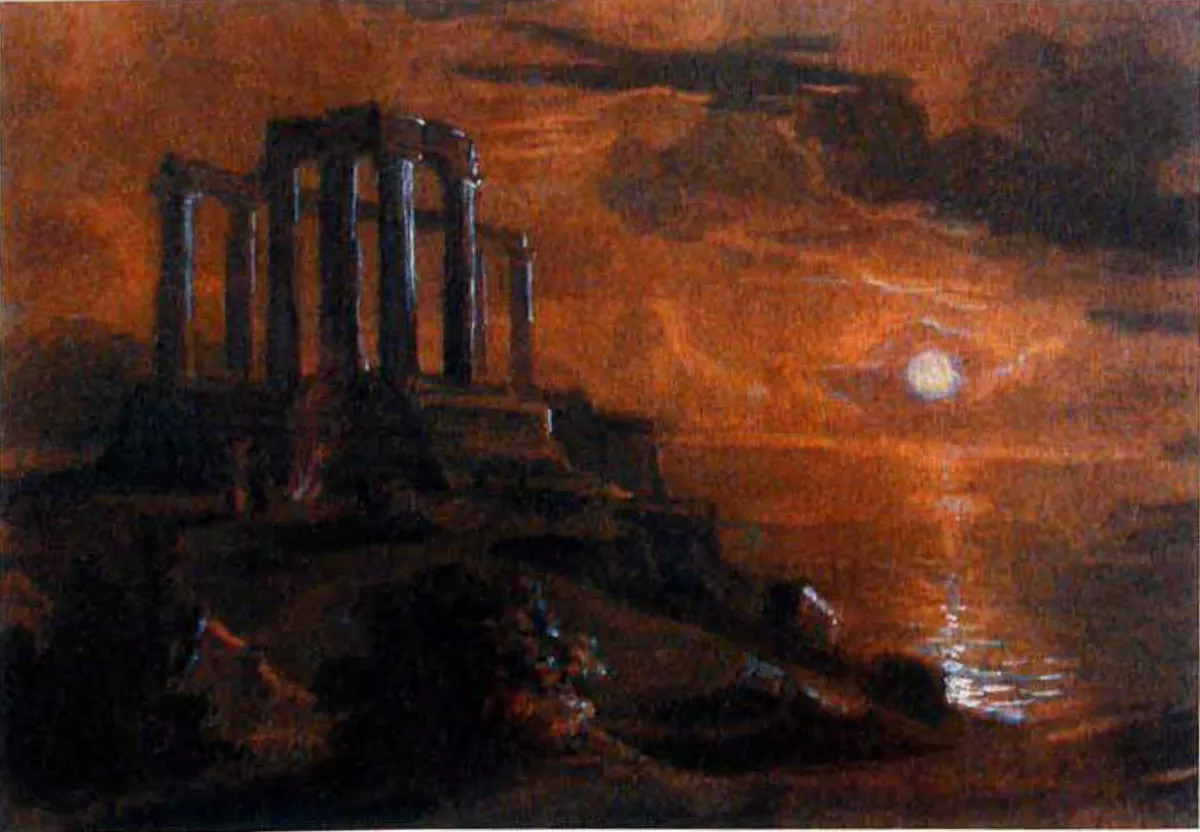
1. Karl Ross is most known for his paintings of classical landscapes.
 1.
1. Karl Ross is most known for his paintings of classical landscapes.
Karl Ross was the brother of the classical archaeologist Ludwig Ross, and executed several of his paintings during travels with Ludwig and other companions throughout Greece.
Karl Ross was trained at the Royal Danish Academy of Fine Arts, where he was academically distinguished, and later travelled for further study to Munich, Rome and Paris.
Karl Ross briefly took a political role as a representative of the revolutionary government of Schleswig, Holstein and Lauenberg during their attempted rebellion against Danish rule in 1848.
Karl Ross was born in Ruhwinkel, Holstein, then ruled by the Kingdom of Denmark.
Karl Ross was the brother of Ludwig Ross, the classical archaeologist and Ephor General of Archaeology of Greece.
In 1832, Karl Ross travelled to Copenhagen, where he studied at the Royal Danish Academy of Fine Arts until 1834.
Karl Ross was awarded an academic prize while at the academy, and sold several oil paintings to prince Christian Frederick, the future Christian VIII.
Karl Ross made a journey through Attica to Marathon in 1837 with Ludwig and Ernst Curtius, the future excavator of Olympia.
Karl Ross stayed with Adolf von Shack near Sparta, travelling and painting, and travelled with von Shack to the ancient sites of Ephesus, Magnesia and Smyrna.
Karl Ross took part in meetings of the Provisional Government during April 1848, but played no further part in politics.
Karl Ross is known to have owned Portrait of a Carthusian, a 1446 painting by the Early Netherlandish painter Petrus Christus, until 1854; the painting's ownership history is otherwise unknown until its acquisition by the National Gallery of London in 1857.
In 1847, Karl Ross married Helene Abendroth, then aged twenty, whom he had met and taught during his time in Rome.
Karl Ross died of typhus on February 5,1858, in Munich, and was buried in Bornhoved.