 1.
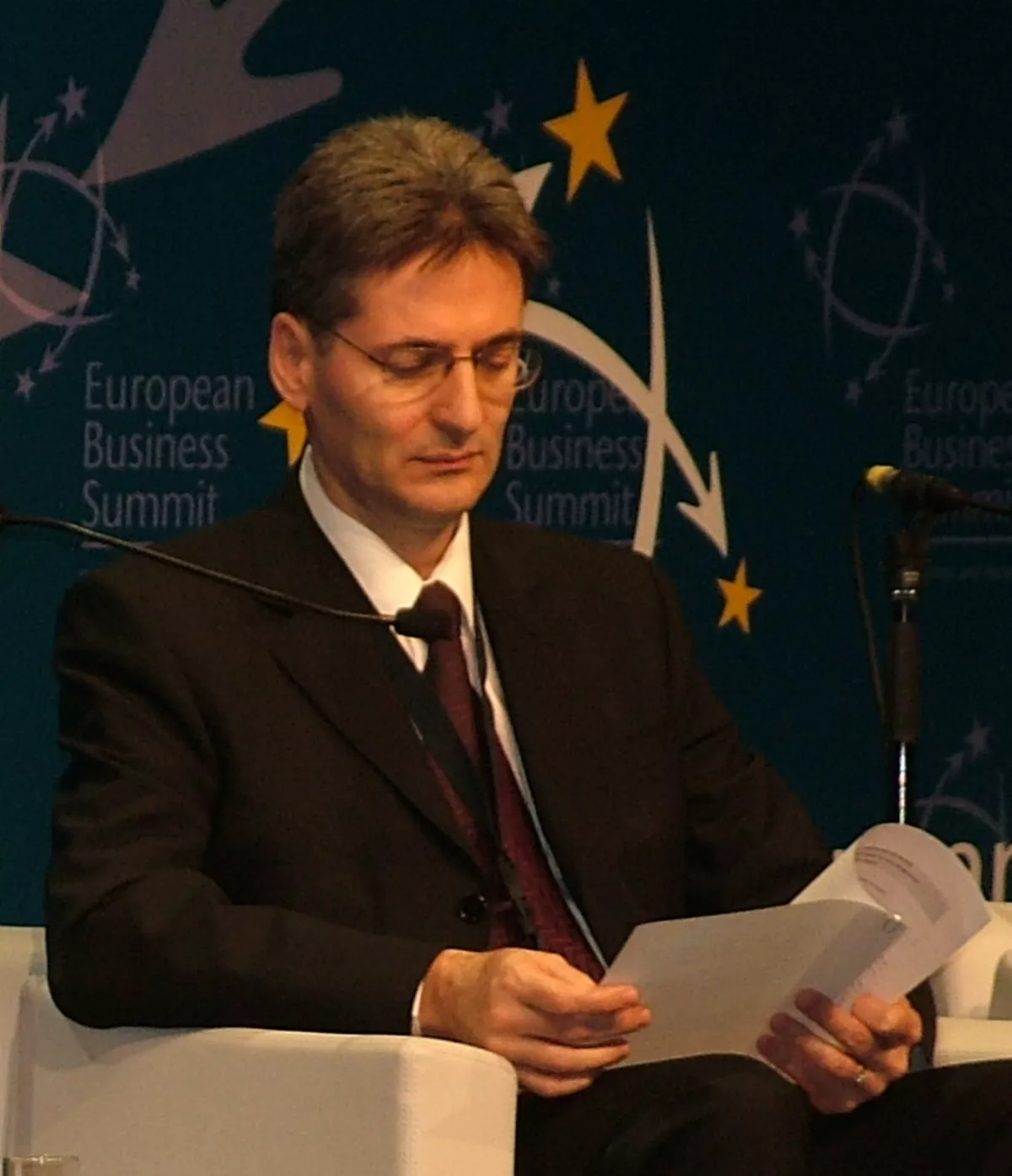
1. Leonard Orban was born on 28 June 1961 and is a Romanian independent technocrat who served as the Commissioner for Multilingualism in the European Commission, the executive body of the European Union.
 1.
1. Leonard Orban was born on 28 June 1961 and is a Romanian independent technocrat who served as the Commissioner for Multilingualism in the European Commission, the executive body of the European Union.
Leonard Orban was responsible for the EU language policy and was the first Romanian Commissioner and the first member of the Commission whose portfolio is exclusively multilingualism.
Leonard Orban was born in Brasov, central Romania, to an ethnic Hungarian father and an ethnic Romanian mother.
Leonard Orban is married and has a daughter, and his personal interests range across foreign policy, classical music, reading, and cinema.
Leonard Orban gained a bachelor's degree in engineering at the Faculty of Mechanical Engineering, Transylvania University of Brasov, and a bachelor's degree in economics at the Faculty of Management, Bucharest Academy of Economic Studies.
From 1993 to 2001, Leonard Orban served as a Parliamentary Counsellor on European and International Affairs within the Chamber of Deputies of the Romanian Parliament, where he was responsible for the European Integration Committee, as well as relations with the European Parliament.
In 1995, the Association Agreement between the EU and Romania came into force and Leonard Orban dealt with the Secretariat of the Joint Parliamentary Committee EU-Romania.
On 25 April 2005, together with the Romanian president Traian Basescu, the Romanian prime minister Calin Popescu-Tariceanu and the Romanian foreign minister Mihai Razvan Ungureanu, Leonard Orban was one of the signatories for Romania on the country's Treaty of Accession in Luxembourg.
On 30 October 2006, Leonard Orban was nominated as Romania's candidate for the European Commission.
From 1 January 2007, Leonard Orban became European Commissioner for Multilingualism for Romania in the Barroso commission.
Leonard Orban wrote numerous newspaper articles and analyses and gave several speeches on European affairs.
Leonard Orban has not joined a political party, but is of liberal political leaning.
Leonard Orban participated as an independent in the European Parliament political group Alliance of Liberals and Democrats for Europe.
Leonard Orban was responsible for the effective functioning of the European Union's extensive interpretation, translation and publication services in the 23 official languages of the Union.
Leonard Orban was responsible, alongside the President of the Commission, Barroso, and Figel to work on "intercultural dialogue", including the 2008 European Year of Intercultural Dialogue.
Administratively, Leonard Orban was in charge of the Directorate-General for Translation, the DG for Interpretation and the Office for Official Publications of the European Communities, as well as the Multilingualism policy unit in the DG for Education and Culture.
In total, Leonard Orban is responsible for overseeing 3,400 staff and approximately 1 per cent of the EU budget.
Leonard Orban was assisted by a cabinet of nine members; Patricia Bugnot was Head of Cabinet and Jochen Richter was Deputy Head.
On December 12,2006, Leonard Orban received the formal approval of the European Parliament in Strasbourg with 595 votes in favour, 16 against and 29 abstentions.
The Socialist Group voted for Leonard Orban, laying the blame for the portfolio's mandate on the President of the Commission rather than the Commissioner designate.
On 1 January 2007 he was appointed by the Council and on 22 January 2007, in a ceremony in Luxembourg, Leonard Orban was sworn in before the European Court of Justice.
Leonard Orban held the position of European Commissioner until 31 October 2009, when the remaining term of office for the Barroso Commission ends.
Leonard Orban said that he intended to spearhead the commission's work on a portfolio that has become more important with every enlargement and assured the Members of the European Parliament that his portfolio was a substantial one, covering a range of important political and managerial responsibilities.
Leonard Orban described how his portfolio would contribute to economic competitiveness, the social dimension of the EU and the intercultural dialogue and stated that it would provide a forum for European political dialogue.
Leonard Orban told the Committee that the multilingual dimension of the EU must be made mainstream in all relevant EU policies and programmes and should not be seen as a separate, isolated policy.
Leonard Orban's remit included the development of the European Indicator of Language Competence, the creation of a Business Forum on Multilingualism and Juvenes Translatores, a translation contest between schools from all over Europe as part of the events marking the 50th anniversary of the Treaty of Rome.
Leonard Orban intended to contribute to the 2008 European Year of Intercultural Dialogue, where multilingualism played a fundamental part.
Leonard Orban defended Romania's accession to the EU, believing that Romania can only gain from its entry and stressing the importance of a post-accession strategy for his country.