 1.
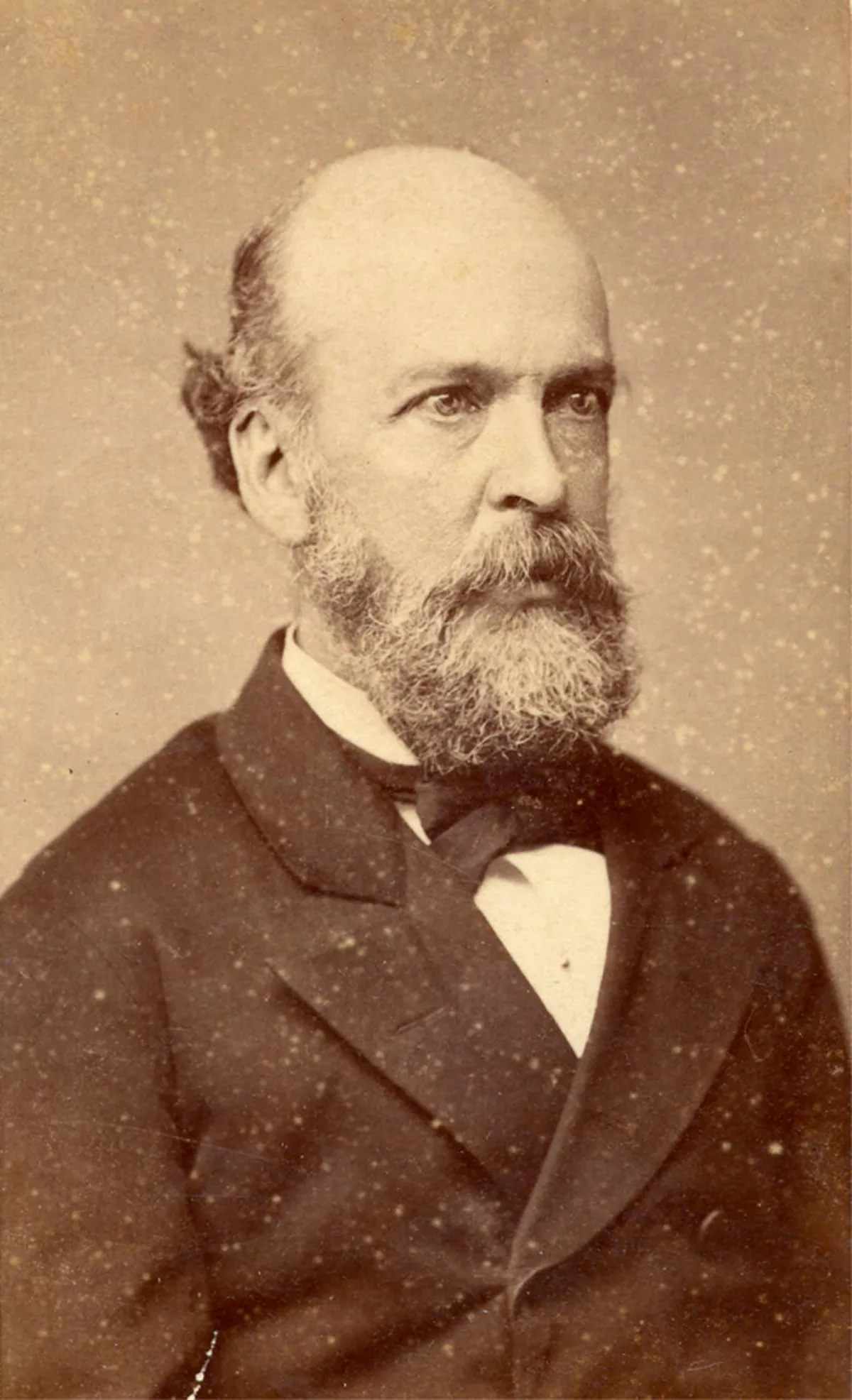
1. Liborio Zerda was a Colombian physician and Muisca scholar.
 1.
1. Liborio Zerda was a Colombian physician and Muisca scholar.
Liborio Zerda was contemporaneous with other Muisca scholars, and influenced by them; Joaquin Acosta and Ezequiel Uricoechea.
Liborio Zerda analysed the work done by Jose Domingo Duquesne on the Muisca numerals and published in 1883 his major work El Dorado about the mythical El Dorado, that he situated not in Lake Guatavita as is currently accepted to have been the site of the inauguration of the new zipa, but in the Siecha Lakes in the Chingaza Natural National Park.
Liborio Zerda taught at the Colegio del Rosario in Bogota for 60 years and died on 9 November 1919 in the Colombian capital.
Liborio Zerda was born on 10 July 1830,1833 or 1834 in the capital of the then Republic of New Granada, Bogota.
Liborio Zerda attended the Colegio de San Bartolome, a strict school that prohibited their students to walk on the streets at night, enter houses with a bad reputation, playing games or read obscene books.
Liborio Zerda studied Medicine at the Universidad Central in the capital, graduating in 1853.
Liborio Zerda became a medical practitioner in Bogota right after finishing his studies and in 1854 gained his specialisation in surgery and military medicine.
In 1859 Liborio Zerda joined the Sociedad de Naturalistas Neogranadinos, which was founded by Muisca scholar Ezequiel Uricoechea.
In 1865 Liborio Zerda founded the Escuela de Medicina Privada, precursor of present-day private medicine schools.
Liborio Zerda published about the chemical analysis, mainly of salt, common on the Altiplano Cundiboyacense, with works titled Analisis de sal gema, sal compactada, sal cristalizada y de agua de las principales fuentes salinas de la Republica, Determinacion de la presencia del iodo en el pescado del rio Funza, Analisis quimico y estudio de las aplicaciones medicinales de varias aguas minerales naturales and Analisis sobre muestras de hulla de la Sabana de Bogota, Zipaquira y Riohacha.
In 1891 Liborio Zerda wrote the Catalogo de la coleccion mineralogica and published about snake venom.
Liborio Zerda wrote about ions, electrons and radium and the illnesses flies spread.
Liborio Zerda died on 9 November 1919 in his city of birth Bogota.
The interests of the intellectual Liborio Zerda were not restricted to the natural sciences.
Liborio Zerda published papers about the history of the Muisca, their habits, traditions and religion.
Liborio Zerda analysed the work by Jose Domingo Duquesne who in 1795 had written about the language and numerals of the Muisca.
The Chibcha language was almost extinct by the late 19th century and the revival of it by Liborio Zerda has aided in later analyses of the language.
Liborio Zerda stated that the frog represented the times of draught on the Altiplano.
Liborio Zerda theorised that the well-known publication of Duquesne was merely a summary of the larger work Anillo astronoomico de los moscas.
Liborio Zerda did not analyse the work done on the Muisca calendar by famous naturalist Alexander von Humboldt, who met Duquesne in Colombia in the early 19th century.
Liborio Zerda wrote about a stone that represented the calendar, a similar stone as the Choachi Stone, which was found later.
Deeply influenced by the ethnological works of Lubbock, De Mortillet and Broca, Liborio Zerda proposed a long chronology of the history of the Muisca.
Liborio Zerda defended the period of Spanish conquest to educate the primitive Muisca to a higher level.
Liborio Zerda proposed the sacred Siecha Lakes were the actual site of El Dorado, later found to have been Lake Guatavita.
Liborio Zerda's research revealed the diet of the Muisca people was formed by the deer species Cervus virginianus, Cervus mexicanus and Cervus simplicicomis, and fish from the Funza and other rivers.
In 1885, Liborio Zerda described a mummy of a young girl, found in a cave on the Toquilla paramo within the municipality of Aquitania, at 4,000 metres altitude.
Liborio Zerda wrote about Cuchavira, god of the rainbow of the Muisca.