
Logo
facts about louis beel.html

34 Facts About Louis Beel

facts about louis beel.html1.

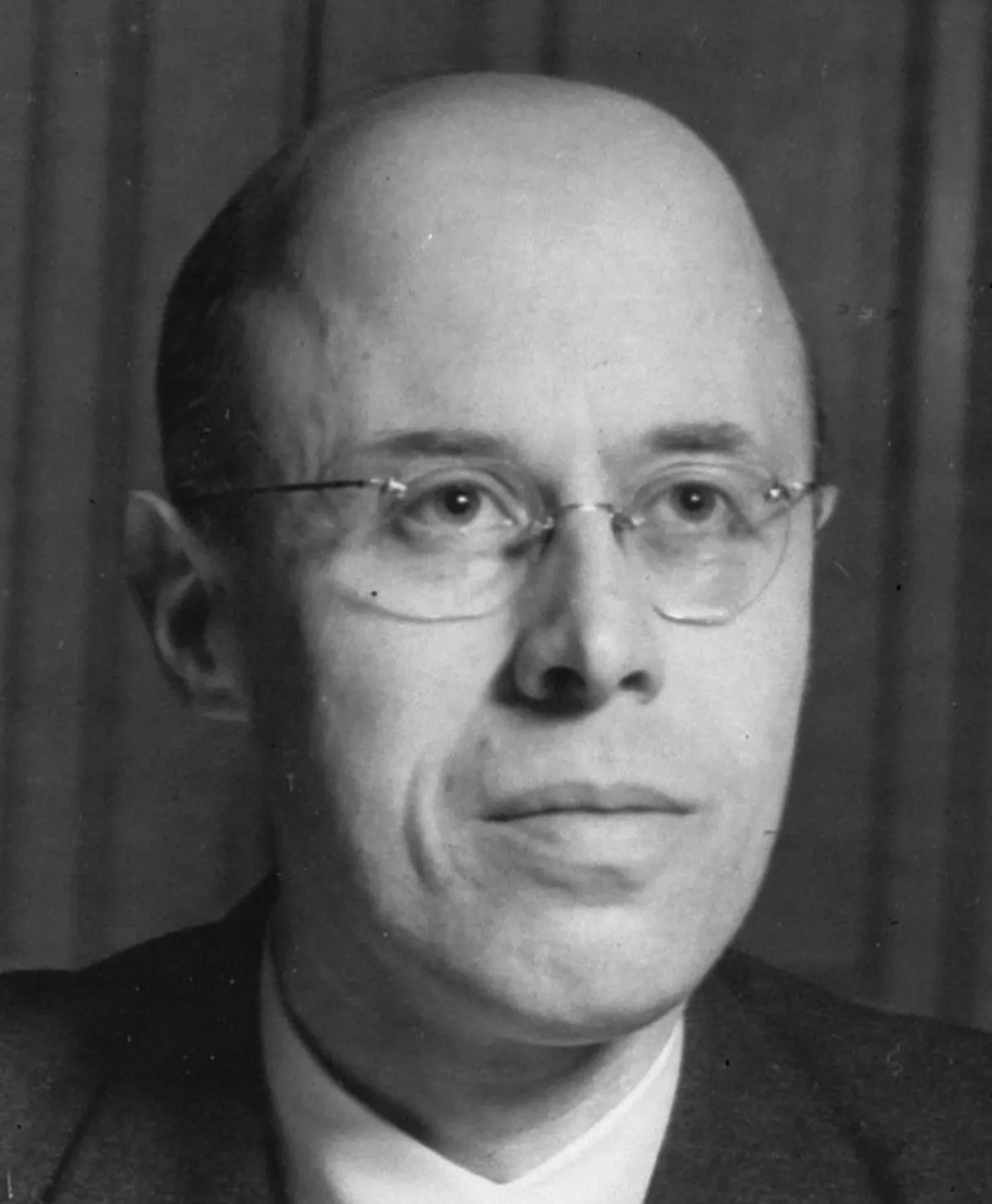
Louis Joseph Maria Beel was a Dutch politician of the Roman Catholic State Party and later co-founder of the Catholic People's Party and jurist who served as Prime Minister of the Netherlands from 3 July 1946 until 7 August 1948 and from 22 December 1958 until 19 May 1959.

2.

Shortly before the end of the War, Louis Beel was appointed as Minister of the Interior in the Gerbrandy III cabinet, the last government-in-exile taking office on 23 February 1945.

3.

In September 1948, Louis Beel was nominated as the next high commissioner of the Dutch East Indies, serving from 29 October 1948 until 18 May 1949 and worked as a professor of administrative law and public administration at his alma mater and the Catholic Economic University from October 1949 until December 1951.

4.

On 7 July 1956 Louis Beel, resigned after his appointment to lead a special commission investigating a political crisis concerning the royal family.

5.

In February 1958, Louis Beel was nominated as a Member of the Council of State taking office on 1 April 1958.

6.

Louis Beel left office a second time following the installation of the De Quay cabinet on 19 May 1959.

7.

Louis Beel continued to be active in politics and in July 1959 was nominated as the next vice-president of the Council of State, serving from 1 August 1959 until 1 July 1972.

8.

Louis Beel retired from active politics at 70 and became active in the public sector as a non-profit director and served on several state commissions and councils on behalf of the government.

9.

Louis Beel was known for his abilities as an efficient manager and effective consensus builder.

10.

Louis Beel was granted the honorary title of minister of state on 21 November 1956 and continued to comment on political affairs as a statesman until he was diagnosed with leukemia in August 1976, dying six months later at the age of 74.

11.

Louis Beel holds the distinction as the only prime minister to have served two non-consecutive terms after World War II and because of his short terms in office his premiership is therefore usually omitted both by scholars and the public in rankings but his legacy as a minister in the 1940s and 50s and later as vice-president of the Council of State continue to this day.

12.

Louis Joseph Maria Beel was born on 12 April 1902 in Roermond, a town with a bishop's see in the province of Limburg, in the very south of the Netherlands.

13.

Louis Beel grew up in a predominantly Roman Catholic community and went to school at the famous Bisschoppelijk College of Roermond.

14.

Louis Beel graduated in 1920 and found work as clerk-volunteer at the municipality of Roermond.

15.

Louis Beel moved to its capital, the town of Zwolle, and left his place of birth Roermond.

16.

In 1928 Louis Beel obtained his master's degree in law at Radboud University Nijmegen.

17.

Louis Beel continued his part-time lecturing at the Katholieke Leergangen, he published regularly in the legal press and in 1935 he obtained his doctorate in law at the Radboud University Nijmegen.

18.

At the time of his resignation as a municipal Civil servant in 1942, Louis Beel was Director of Social Affairs and Deputy Town Clerk.

19.

Louis Beel resigned because he opposed the German occupation of the Netherlands.

20.

Louis Beel became the spokesman of a group of prominent citizens in Eindhoven, who had resisted the Germans during the war.

21.

Louis Beel was urged to accept the function of adviser to the Military Administration, the temporary government in the liberated southern part of the Netherlands under Supreme Headquarters Allied Expeditionary Force.

22.

Louis Beel was promptly appointed Minister of the Interior in the third Gerbrandy cabinet.

23.

Louis Beel moved with his family from Eindhoven to Wassenaar, a villadom close to The Hague, the government's residence.

24.

The KVP won again and Louis Beel was asked to form a new cabinet.

25.

Louis Beel, stationed in Batavia, was not in favour of such an agreement because of his suspicions - later proven to be right - that the new Republic did not want the establishment of a federal state, as was planned in the Dutch decolonisation policy.

26.

Louis Beel returned to his home at the end of May 1949 and a few months later he accepted a professorate in administrative law at his Alma Mater in Nijmegen, one of his early ambitions.

27.

Louis Beel held the function of Minister of the Interior in the next Drees cabinet after the elections of 1952.

28.

In July 1956 Louis Beel asked that he be allowed to resign from government to become, as a private citizen, chairman of a committee of three "wise men" that was requested by Queen Juliana and the Consort Prince Bernhard of Lippe-Biesterfeld to help solve problems pertaining to the royal family.

29.

Three months later Louis Beel was appointed Minister of State, a prestigious title of honour.

30.

In 1958 after an interlude of eighteen months without a public office, Louis Beel was appointed member of the Council of State.

31.

Whereas other political leaders, who had come forward after the war, one by one left the political scene and the "participation-democracy" of the New Left movement created a new type of politician, Louis Beel retained in the authority of the Council of State a great influence on government.

32.

Louis Beel owed his role to the way he performed his high office as well to his position of confidence with the royal family.

33.

Louis Beel retired with his mentally handicapped eldest daughter and her attendant to the quiet village of Doorn.

34.

On 11 February 1977 Louis Beel died in the University Hospital Utrecht from leukemia.