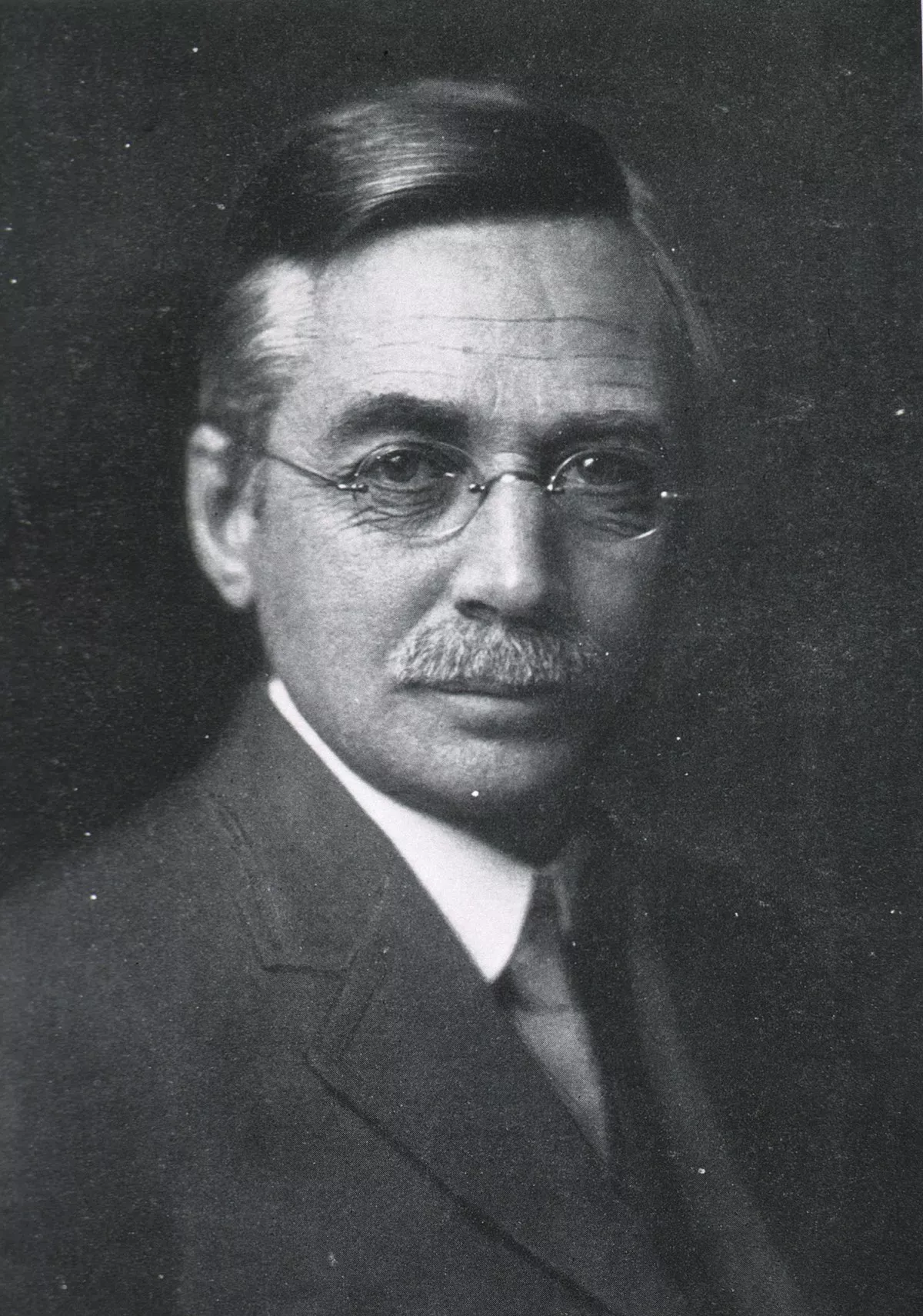
 1.
1. Ludvig Hektoen was an American pathologist known for his work in the fields of pathology, microbiology and immunology.
 1.
1. Ludvig Hektoen was an American pathologist known for his work in the fields of pathology, microbiology and immunology.
Ludvig Hektoen was the founding editor of the Archives of Pathology and Laboratory Medicine in 1926 and edited several other medical journals.
Ludvig Hektoen was knighted to the Order of St Olav in 1929, and in 1933, he became professor emeritus of pathology at the University of Chicago.
At the age of 14, Hektoen enrolled in Luther College in Iowa, during which time he developed a friendship with Johan K Schreiner, a Norwegian physician who inspired him to pursue medicine.
Ludvig Hektoen then enrolled in the College of Physicians and Surgeons in Chicago.
Ludvig Hektoen graduated with an MD in 1887 as valedictorian of his class.
Later that year, Ludvig Hektoen placed first in an exam for an internship at the Cook County Hospital in Chicago.
Ludvig Hektoen began work as an intern in the fall of 1887.
Ludvig Hektoen began working as a pathologist at Cook County Hospital in 1889.
Ludvig Hektoen served as president of many professional societies, including the Chicago Medical Society from 1919 to 1921, the American Association of Immunologists in 1927, and the Society of American Bacteriologists in 1929.
Ludvig Hektoen served as a member of the National Advisory Health Council from 1934 to 1938, chaired the United States National Research Council from 1936 to 1938, and from 1937 to 1944 was executive director for the National Advisory Cancer Council.
Ludvig Hektoen was editor of the Journal of Infectious Diseases from 1904 to 1941, and in 1926 was the founding editor of the Archives of Pathology, continuing in this role until 1950.
Ludvig Hektoen edited the Transactions of the Chicago Pathological Society and the Proceedings of the Institute of Medicine of Chicago, and wrote editorials for the Journal of the American Medical Association.
Ludvig Hektoen was a prolific writer, publishing over 300 medical papers on diverse subjects.
Ludvig Hektoen proposed in 1907 that the "possible danger" of blood transfusions "can be avoided by the selection of a donor whose corpuscles are not agglutinated by the serum of the recipient and whose serum does not agglutinate the corpuscles of the latter".
Ludvig Hektoen conducted research into measles, tuberculosis and poliomyelitis and the use of blood cultures for diagnosis.
In 1891, during a brief stay in Europe, Ludvig Hektoen married Ellen Strandh.
Ludvig Hektoen died in Chicago on July 5,1951, from complications of diabetes.