 1.
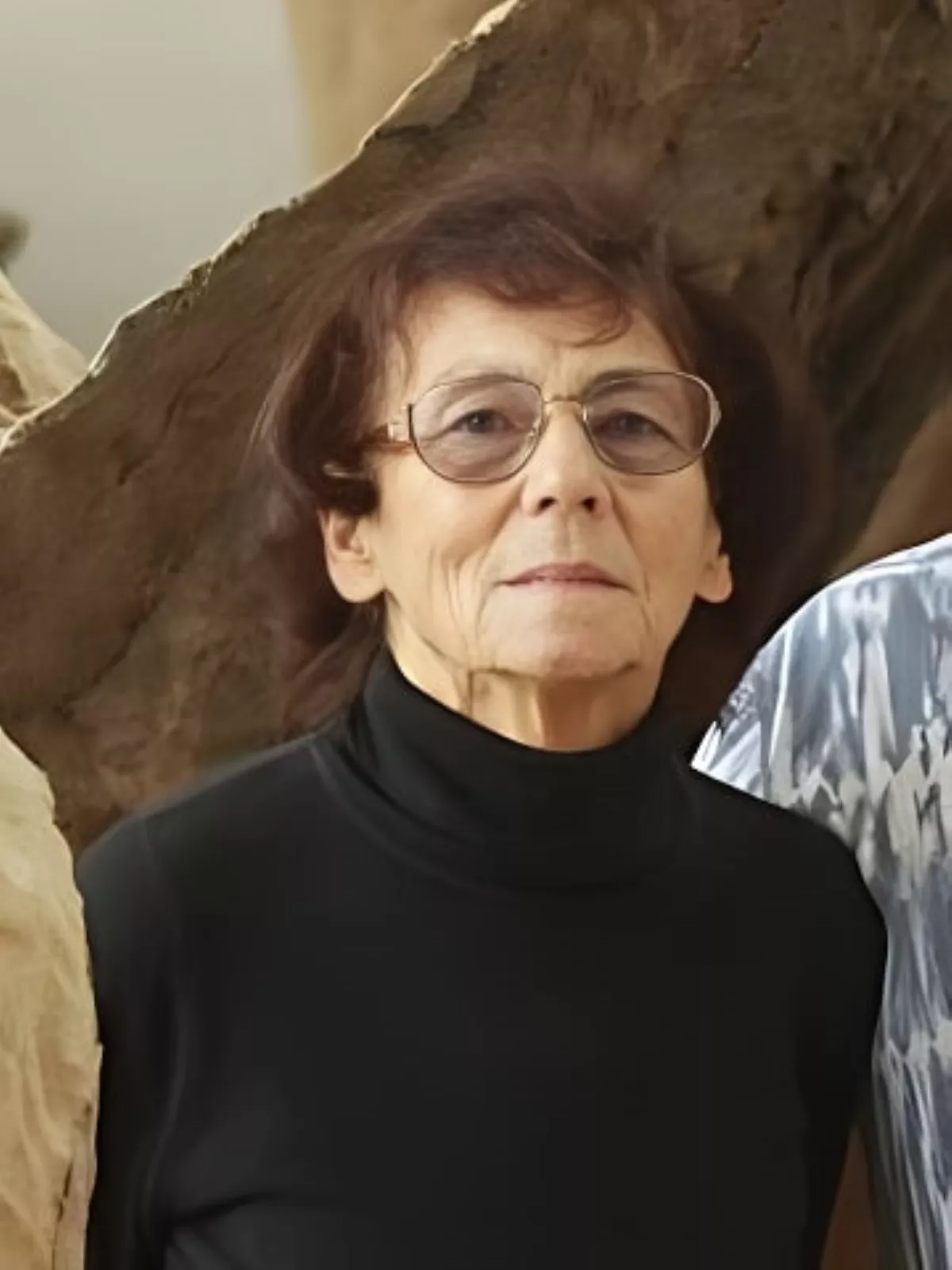
1. Magdalena Abakanowicz worked as a professor of studio art at the University of Fine Arts in Poznan, Poland, from 1965 to 1990, and as a visiting professor at University of California, Los Angeles in 1984.
 1.
1. Magdalena Abakanowicz worked as a professor of studio art at the University of Fine Arts in Poznan, Poland, from 1965 to 1990, and as a visiting professor at University of California, Los Angeles in 1984.
Magdalena Abakanowicz was born to a noble landowning family in Falenty, near Warsaw, before the outbreak of World War II.
Magdalena Abakanowicz received first international recognition following her participation in the first Biennale Internationale de le Tapisserie in Lausanne, Switzerland, in 1962.
Magdalena Abakanowicz's most celebrated works emerged in the 1960s with her creation of three-dimensional fiber works called Abakans.
Marta Magdalena Abakanowicz was born to a noble landowning family in the village of Falenty, near Warsaw.
Magdalena Abakanowicz's family endured the war years living on the outskirts of Warsaw and became part of the Polish resistance.
Magdalena Abakanowicz completed part of her high school education in Tczew from 1945 to 1947, after which she went to Gdynia for two additional years of art school at the Liceum Sztuk Plastycznych in that city.
In 1950, Magdalena Abakanowicz moved back to Warsaw to begin her studies at the Academy of Fine Arts there, the leading art school in Poland.
Magdalena Abakanowicz found the climate at the Academy to be highly "rigid" and overly "conservative".
Magdalena Abakanowicz's Abakans were included in a group exhibition titled, Wall Hangings, organised in 1969 at the Museum of Modern Art in New York by Mildred Constantine, curator of architecture and design, and the textile designer Jack Lenor Larsen.
In October 2023, Magdalena Abakanowicz's pioneering textile art served as inspiration for the latest collection from the Alexander McQueen fashion house, which debuted at the Paris Fashion Week.
One of Magdalena Abakanowicz's most unusual works is titled War Games, which is a cycle of monumental structures made up of huge trunks of old trees, with their branches and bark removed.
Magdalena Abakanowicz's final round of work includes a project called Agora, which is a permanent installation located at the southern end of Chicago's Grant Park, next to the Roosevelt Road Metra station.