 1.
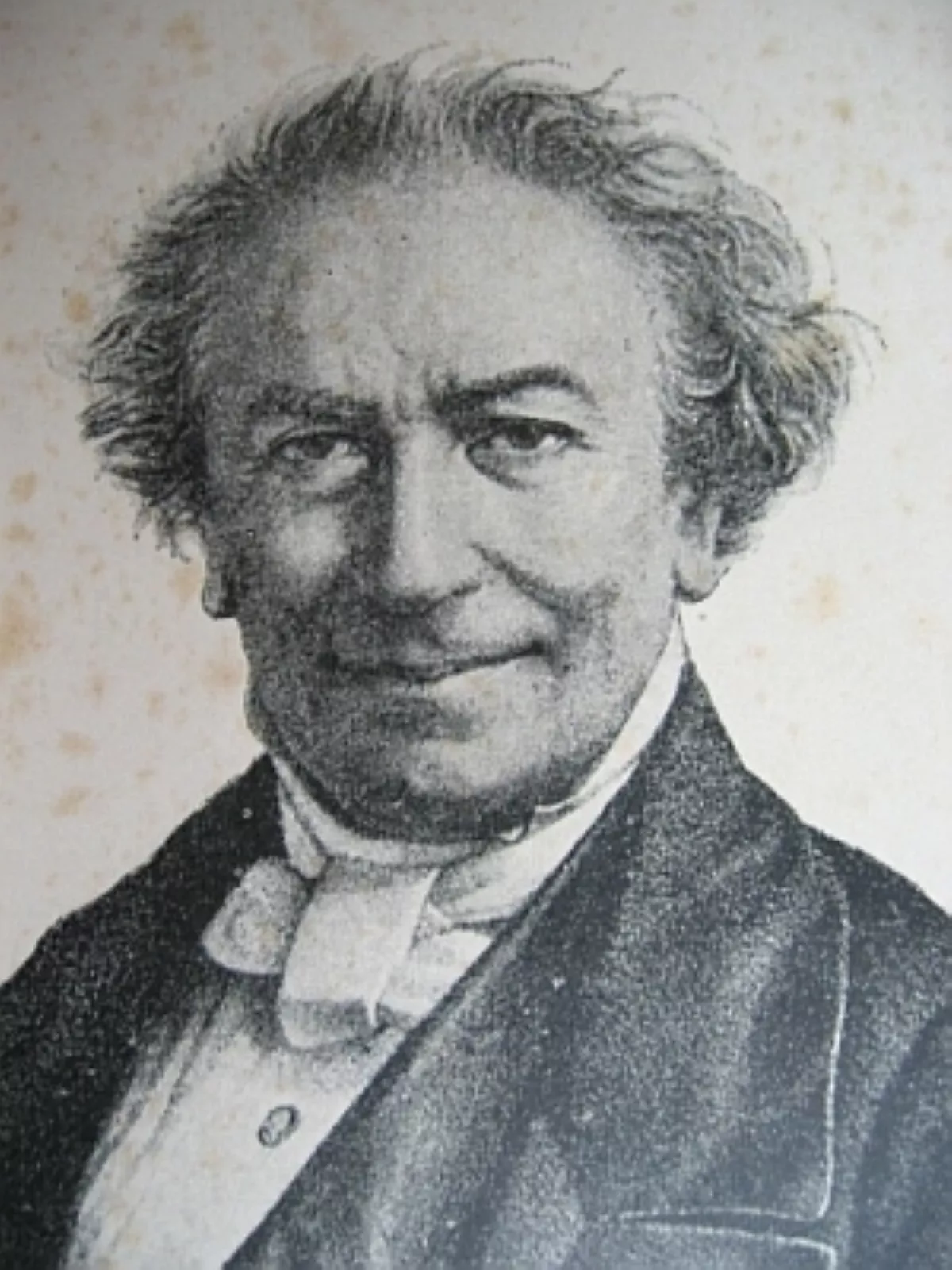
1. Jean-Baptiste-Ambroise-Marcellin Jobard was a Belgian lithographer, photographer and inventor of French origin.
 1.
1. Jean-Baptiste-Ambroise-Marcellin Jobard was a Belgian lithographer, photographer and inventor of French origin.
Marcellin Jobard was born in Baissey, in the Haute-Marne area of France.
Marcellin Jobard married Marguerite Prudent, daughter of the village prevot.
Marcellin Jobard spent six or seven years in Langres at the same school that Denis Diderot had attended, then continued his education at the Lycee imperial de Dijon, where he attended classes given by Joseph Jacotot.
Towards the end of his life, Marcellin Jobard developed an enthusiasm for spiritualism and in his final years, he appears to have lost his mind.
In 1820 Marcellin Jobard founded a sizable lithographic establishment, employing Jean Baptiste Madou.
Marcellin Jobard travelled to Britain in 1833 where he met Charles Babbage and then campaigned for the railway to be introduced into Belgium.
In 1841 Marcellin Jobard proposed in his newspaper adding what he called "extra emotional typographic characters" which may be considered precursors to present-day emoticons and emojis.
In 1839 Marcellin Jobard was appointed Commissioner for the Belgian Government at the French industrial exhibition in Paris, where he met Francois Arago, Louis Daguerre, baron Pierre-Armand Seguier amongst many other intellectuals and industrialists.
Marcellin Jobard was appointed Director of the Musee Royal de l'Industrie in Brussels in 1841, where he developed his ideas of museology which already then met modern-day requirements for conservation, cataloguing, study and popularization.
Ingenious and imaginative, Marcellin Jobard registered 73 patents in lighting, heating, food supply, transport, ballistics and other areas.
Marcellin Jobard published numerous works and articles on industrial property, earning him a reputation as the greatest campaigner for intellectual property rights in the nineteenth century.
Marcellin Jobard developed an economic and social theory that he called "Monautopole" and that he defined as "from monos, alone, autos, oneself and poleo, dealing".
Marcellin Jobard's writings earned him the praise of the future Napoleon III, Victor Hugo and Hugues Felicite Robert de Lamennais.