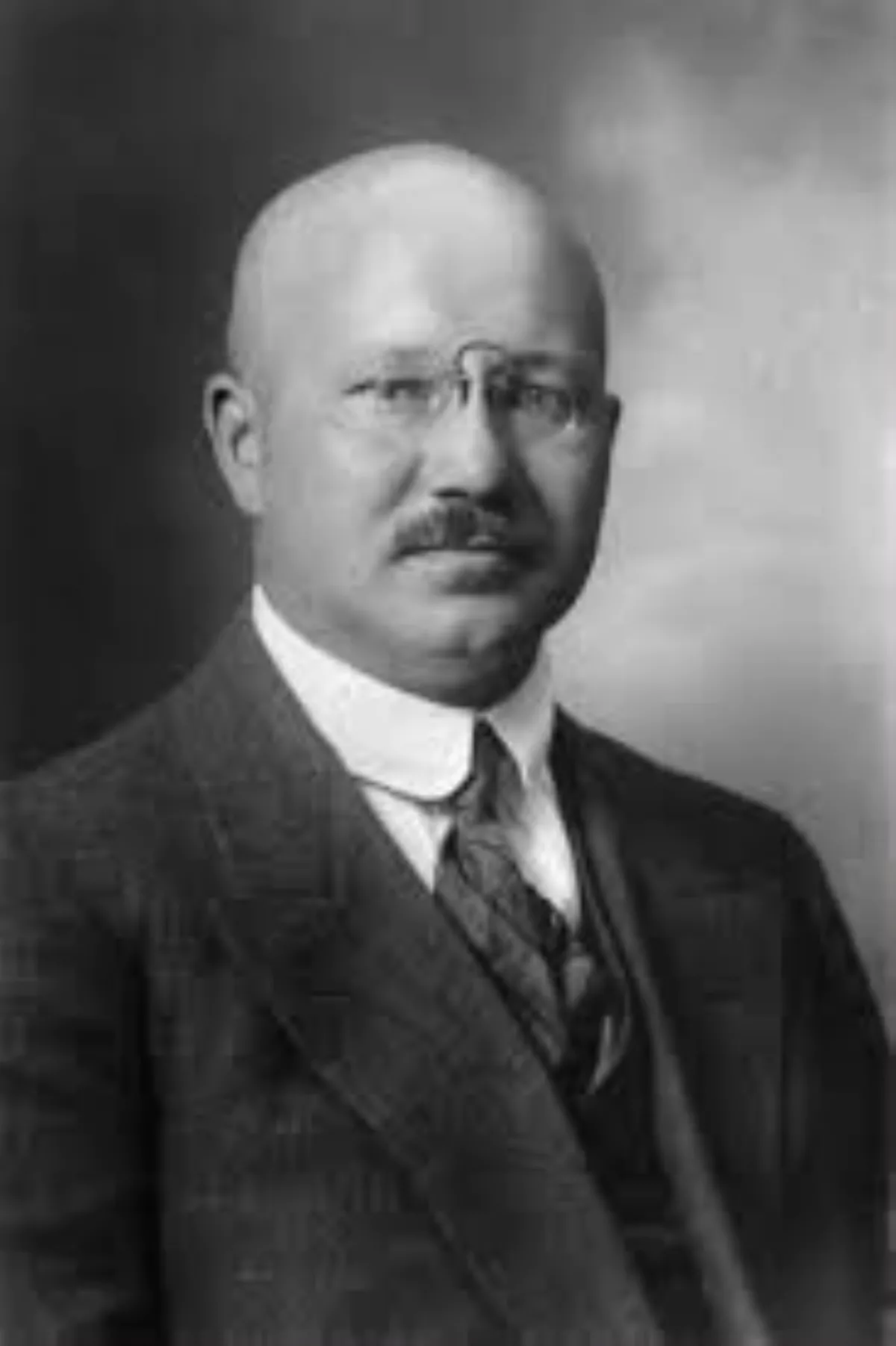
 1.
1. Otto Strandman was a key figure in composing the radical land reform law and the 1920 Constitution.
 1.
1. Otto Strandman was a key figure in composing the radical land reform law and the 1920 Constitution.
Otto Strandman served as Minister of Agriculture, Minister of Justice, Minister of Finance, Minister of Foreign Affairs and Minister of War.
Otto Strandman was a diplomat, serving as the Estonian envoy in Warsaw, Poland, and in Paris, France.
Otto Strandman was born in the village of Vandu, Undla Parish.
Otto Strandman's father, Hans Strandman, was a schoolteacher, and Otto was his third child.
Otto Strandman was first educated by his father, until he began his studies at the municipal school of Rakvere in 1886, and later at Emperor Alexander State High School in Tallinn and the 5th and the 7th High School in Saint Petersburg.
Otto Strandman graduated as an extern in 1896 after his exams in the Estonian Governorate High School of Tallinn.
Otto Strandman became known for his eloquence and was elected to be a member of Tallinn city council from 1904 to 1905.
Otto Strandman was active in Estonian national organizations and became an activist on self-government reform, where he supported national autonomy in the Baltic governorates.
Otto Strandman was among the politicians who were supposed to compose the draft of self-government reform, but in the course of the 1905 Revolution, Otto Strandman, like many other Estonian activists, was forced to flee abroad.
Otto Strandman returned to the Russian Empire in 1906, but he was banned from living in the Baltic governorates for three years, forcing him to live in Narva and Saint Petersburg.
Otto Strandman returned to Estonia in 1909 and worked as an attorney, defending participants of the 1905 Revolution.
Otto Strandman was a keen supporter of free speech in the media.
Otto Strandman was again elected to the Tallinn City Council and, in the summer of 1917, to the Estonian Provincial Assembly, where he was part of the leftist Estonian Radical Socialist Party, led by Juri Vilms.
Otto Strandman served as the Chairman of the assembly between 25 October 1917 and 27 November 1918, although with periods of non-activity in between, due to the October Revolution and German occupation.
Otto Strandman became one of the leaders of the Estonian Radical Socialist Party, which in 1919 would merge with the Social Travaillist Party to form the centre-left Estonian Labour Party.
Otto Strandman was however arrested by Germans in the summer of 1918.
Otto Strandman became the first Prime Minister of the country on 8 May 1919, and additionally Minister of War.
Otto Strandman's first cabinet was a centre-left coalition with the Estonian People's Party and the Estonian Social Democratic Workers' Party.
The Estonian People's Party left the coalition in September, and Otto Strandman's cabinet resigned on 18 November 1919, being in office for half a year.
The Estonian Labour Party's Ants Piip then headed a one-party minority government between 26 October 1920 and 25 January 1921, where Otto Strandman served as both Minister of Foreign Affairs and Minister of Justice.
Otto Strandman went on to serve as the first speaker of the Riigikogu between 4 January and 18 November 1921.
Otto Strandman supported building the economy on agriculture rather than transit between Russia and Europe, regarding Denmark as a model agricultural country.
In May 1924, Otto Strandman didn't blame his predecessor Georg Vestel for deliberately creating hyperinflation, only for sheer optimism about his policies.
Otto Strandman remained active in parliamentary politics and became known for his eloquence.
From 1927 to 1929, Otto Strandman served as Estonian envoy to Poland, with additional accreditation to Czechoslovakia and Romania, residing in Warsaw.
Otto Strandman's cabinet remained in office until 12 February 1931.
From 1933 to 1939 Otto Strandman was envoy of Estonia to France, Belgium, Spain and the Holy See, residing in Paris.
In 1938, Otto Strandman became a judge at the Permanent Court of International Justice in The Hague.
In 1939, Otto Strandman returned to Estonia, but retired from public life due to ill health.
In 1941 however, Otto Strandman received a formal notice to appear at the local headquarters of the NKVD.
Otto Strandman was on the board of the Estonia Society and Tallinn Savings and Loans Society.
Otto Strandman was a member of the Estonian Students' Society since 1899, and received honorary doctorates from the University of Tartu in 1928 and Warsaw University in 1930.
Otto Strandman renounced all honours and awards that had been given to him.