 1.
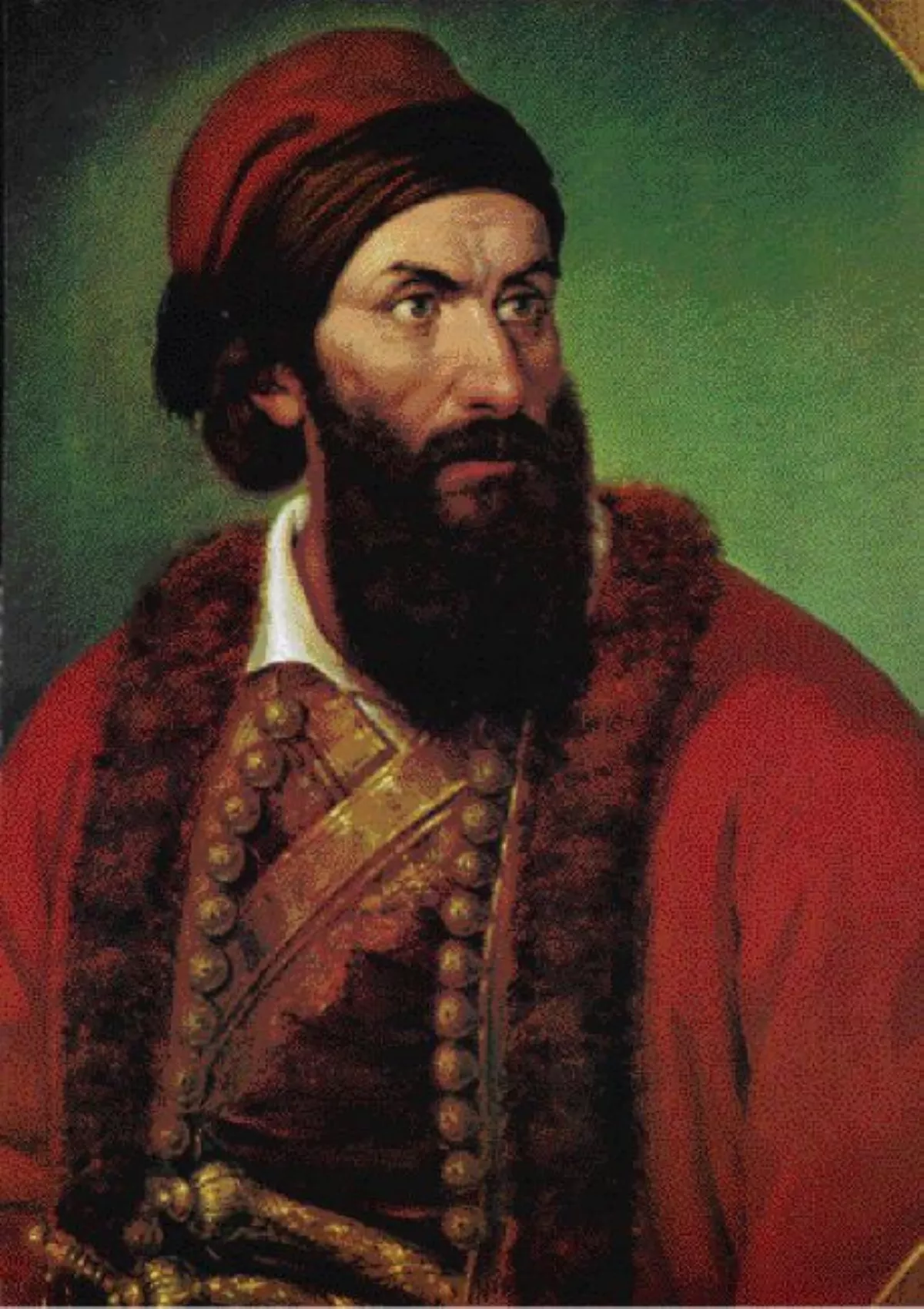
1. Grigorios Dimitrios Dikaios-Flessas, popularly known as Papaflessas, was a Greek priest and government official who became one of the most influential figures during the Greek War of Independence.
 1.
1. Grigorios Dimitrios Dikaios-Flessas, popularly known as Papaflessas, was a Greek priest and government official who became one of the most influential figures during the Greek War of Independence.
The prefix in the name Papaflessas indicates his status as a cleric since the word means 'priest' in Greek.
Papaflessas served as Minister of Internal Affairs and Chief of Police in the government of Alexander Mavrokordatos.
Papaflessas was killed during the Battle of Maniaki on May 20,1825, fighting against the forces of Ibrahim Pasha at Maniaki, Messinia.
Grigorios Papaflessas was born Georgios Flessas or Flesias in 1788 in the village of Poliani in Messinia.
Papaflessas's father was Demetrios G Flessas, son of the klepht Georgios Dimitriou Flessas, and his mother, the second wife of Dimitrios, was Konstantina Andronaiou from Dimitsana.
Papaflessas blessed a marriage of Mr Zervas to his niece who was engaged to another man.
Papaflessas soon argued with his superiors and the monastery's administration.
Papaflessas came into conflict with a local Turkish authority over the boundaries of the monastery property and even used armed men to protect his claims.
Armed Poliani fighters delayed the soldiers and Papaflessas was able to leave his homeland, saying as he did so that he would return either a bishop or a pasha and deal with them.
Papaflessas went to the island of Zakynthos, a haven for Greeks from the mainland who were under death sentence by the Turks.
Papaflessas obtained a reference letter from the Archbishop of Christianoupolis.
Papaflessas arrived in Constantinople with the goal of studying Ancient Greek and theology and to become an archbishop in the patriarchy of Agia Sofia.
Papaflessas was sent to the northern part of the Ottoman Empire to inspire and spread hope among his countrymen for the nation's independence from the Turks.
Papaflessas traveled to several areas seeking support for a revolution against the Ottoman Empire.
In January 1821 meetings took place with Papaflessas recounting his supplies and assurances of support coming from Russia.
Papaflessas felt safer to first approach farmers and peasants, and the poor class of people who were easily magnetized by his speeches looked upon him as the messiah of their freedom.
Papaflessas immediately called his brothers and Nikitas Flessa, the oldest brother, received the ammunitions.
Papaflessas gathered about 400 men with mules and donkeys from the Poliani area and went to Almyros Kalamata.
Papaflessas sent 45,000 grosia to Mavromichalis who accepted it but still did not sign the proper papers.
Papaflessas wanted half of the supplies in the boat to have them as reserves to fight the Greeks when they started the revolution against the Turks.
Papaflessas arranged his men to cover various strategic positions in the area.
In 1823, Papaflessas was named the Minister of Internal Affairs and the Chief of Police by the government of Prince Alexander Mavrokordato under the name Gregorios Dikaios, the name he had when he was in Filiki Etairia.
Papaflessas instituted many reforms, established the mail system and built schools in various towns.
Papaflessas created the title of Inspector General for schools and he was the first to establish a political conviction certificate to be given to the friends of the government.
Papaflessas took part in many battles against the Turks and he sided with the government when the civil war started in 1824.
Papaflessas took part in the campaign in Messinia and the rest of the Peloponnese to suppress the rebels against the Government.
When Ibrahim Pasha invaded the Peloponnese in 1825, Papaflessas was still Minister of Internal Affairs.
Papaflessas was the most unprincipled man of the party of the Moreot chiefs.
Papaflessas gathered 3,000 poorly armed men and went to the province of Pylia, Messinia, searching for the best spot to face Ibrahim's army coming out of the city of Pylos.
Papaflessas selected the hills of Maniaki in order for him to have a better view of the enemy's movements and there Papaflessas established three lines of defence.
Papaflessas knew that in choosing to face Ibrahim he would die on the battlefield.
Papaflessas's defenses were ultimately broken by the heavy bombardment of Ibrahim's artillery and the repeated attacks of his infantry and cavalry.
Papaflessas remains a key revolutionary figure in Greek history and places and events have been named in his honour.