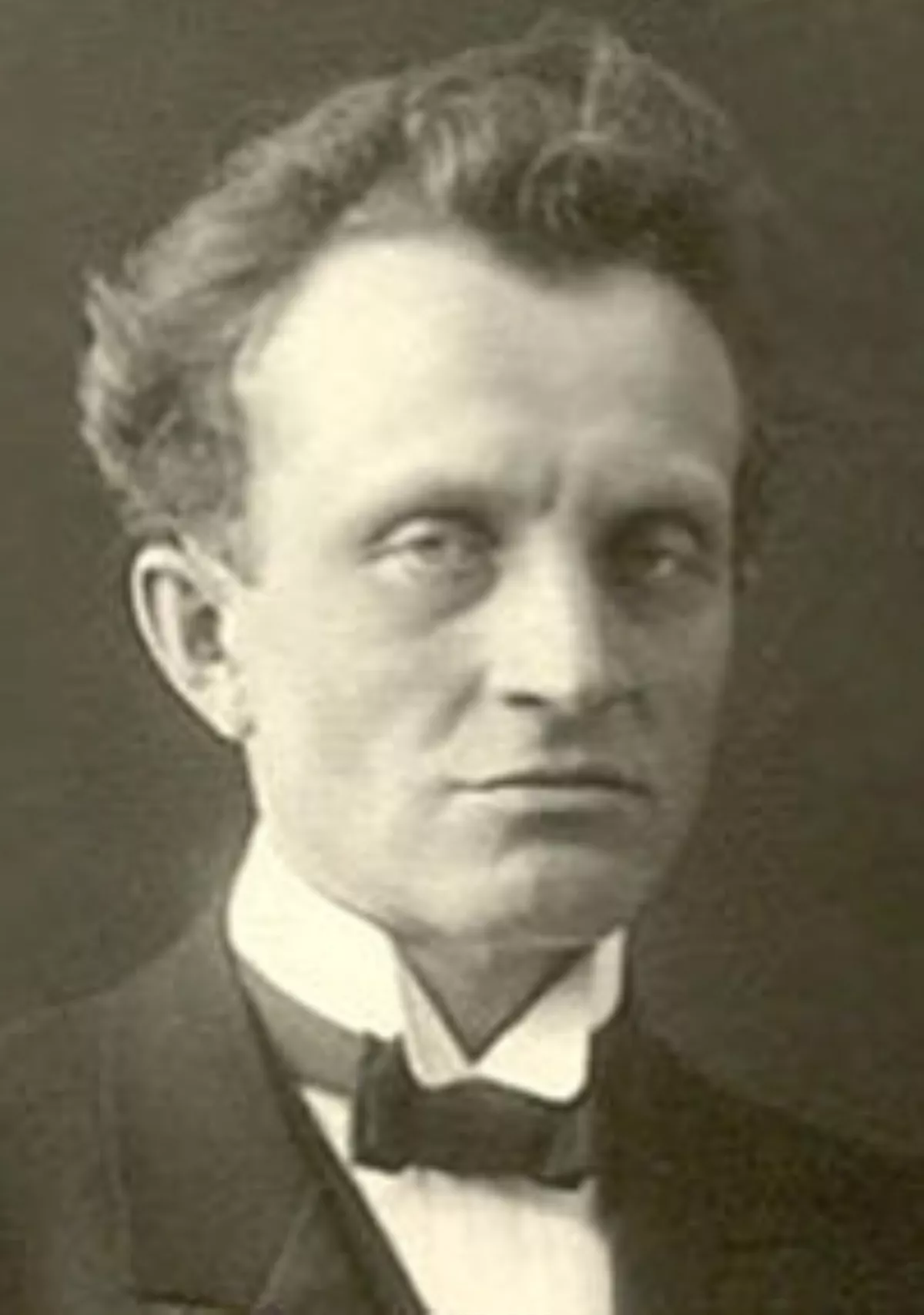
 1.
1. Rudolf Tobias's compositions include among others piano works, string quartets and an oratorio, Des Jona Sendung.
 1.
1. Rudolf Tobias's compositions include among others piano works, string quartets and an oratorio, Des Jona Sendung.
Rudolf Tobias was born in Selja, Kaina Parish, on the island of Hiiumaa.
Rudolf Tobias was the son of local parish clerk Johannes Tobias and his wife Emilie.
In 1889 Rudolf Tobias entered Tallinn Nicolai High School, where he passed the tutor's exam and studied both organ and music theory with Ernst Reinicke, the Tallinn Cathedral organist.
In 1893 Rudolf Tobias furthered his studies at the Saint Petersburg Conservatory, where he studied organ with Louis Homilius and composition with Nikolai Rimski-Korsakov.
In 1897 Rudolf Tobias graduated from conservatory with two special subjects, presenting as his graduate work the cantata "Johannes Damascenus".
In 1904 Rudolf Tobias moved to Tartu and worked as a music teacher in numerous schools and worked as a tutor.
Rudolf Tobias began working as a musical journalist during this period and joined the literary group Noor Eesti.
In 1910 Rudolf Tobias moved to Berlin, where he worked as both an organist and journalist.
Rudolf Tobias was released from service for medical reasons in 1916 and he returned to work in the Royal Academy of Music.
Rudolf Tobias died of pneumonia in Berlin, Germany, on 29 October 1918.
Rudolf Tobias's youngest daughter, Helen, born seven months after his death, became a composer.
Rudolf Tobias was buried in the Friedhof Wilmersdorf cemetery in Berlin.
Rudolf Tobias was engraved on the front side of the Estonian 50 krooni bill used between 1994 and 2010.