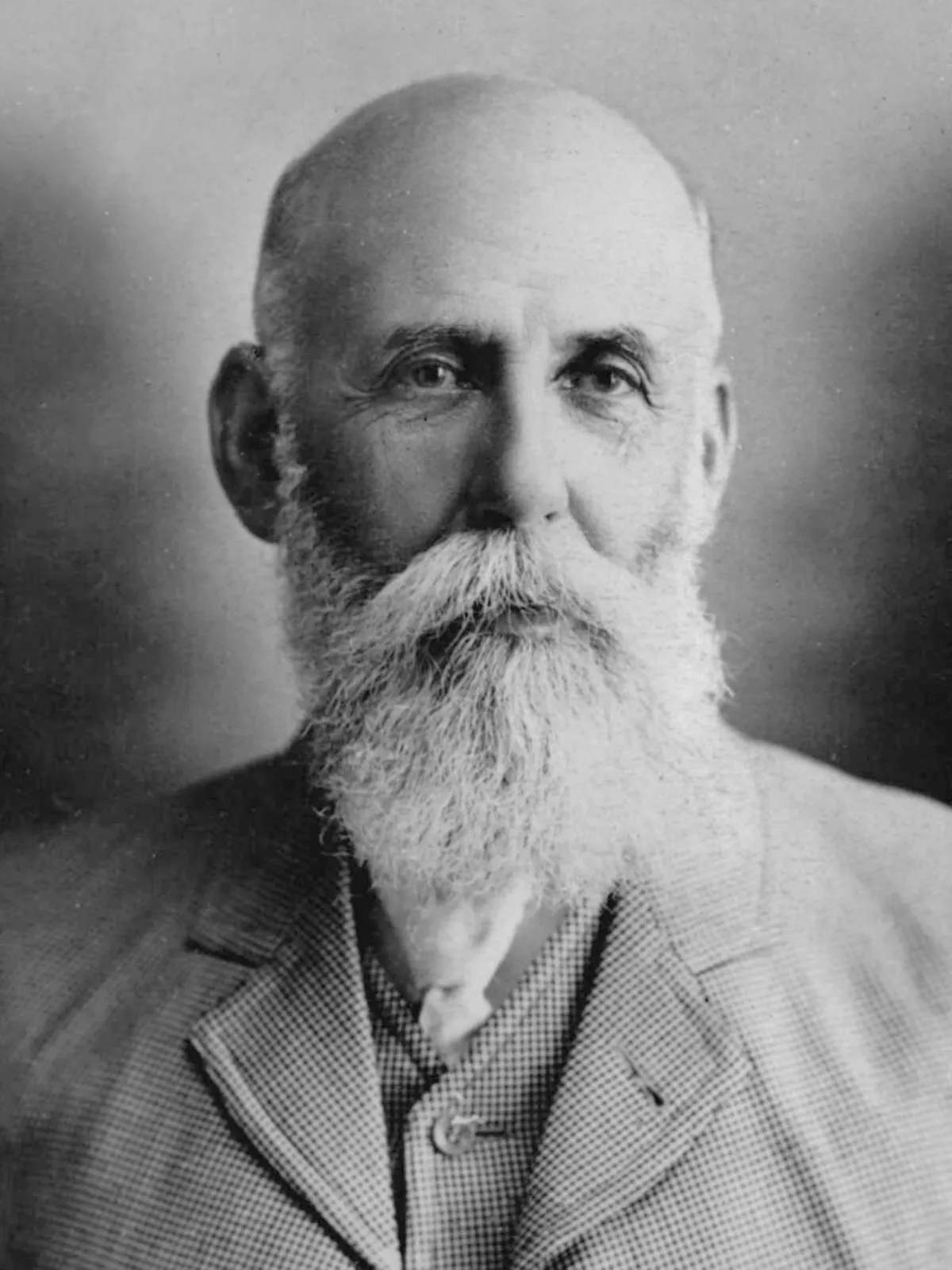
 1.
1. Thomas Cheeseman was a naturalist who had wide-ranging interests, such that he even described a few species of sea slugs.
 1.
1. Thomas Cheeseman was a naturalist who had wide-ranging interests, such that he even described a few species of sea slugs.
Thomas Cheeseman came to New Zealand at the age of eight with his parents on the Artemesia, arriving in Auckland on 4 April 1854.
Thomas Cheeseman started studying the flora of New Zealand, and in 1872 he published an accurate and comprehensive account of the plant life of the Waitakere Ranges.
Thomas Cheeseman published papers almost every year until his death.
When Thomas Cheeseman's research began, the botany of New Zealand was quite poorly known.
Thomas Cheeseman sometimes travelled with his friend Mr J Adams, of the Thames High School, after whom he named the species Senecio adamsii and Elytranthe adamsii.
Thomas Cheeseman published in the Transactions of the Linnean Society a full account of the flora of Rarotonga, the chief island of the Cook Islands.
Thomas Cheeseman married Rosetta Keesing, of a notable Jewish family of Auckland city, in November 1889.
In some of his publications, Thomas Cheeseman speculated as to the possible origins of the New Zealand sub-Antarctic flora.
Thomas Cheeseman had written an early paper on the naturalised plants of the Auckland Provincial District.
Thomas Cheeseman donated his own herbarium of the flowering plants and vascular cryptogams to the Auckland Institute.
Thomas Cheeseman published 83 articles in the Transactions of the Royal Society of New Zealand.
Thomas Cheeseman named ten sea snails, half of which have become synonyms.
Thomas Cheeseman was a Fellow of the Linnean Society of London, and the Zoological Society.
Thomas Cheeseman was made a Corresponding Membership of the Botanical Society of Edinburgh, and awarded the Gold Linnean Medal of the Linnean Society, the botanical equivalent to a Nobel Medal, in 1923.
Thomas Cheeseman served as the President of the New Zealand Institute from 1911 to 1913.