 1.
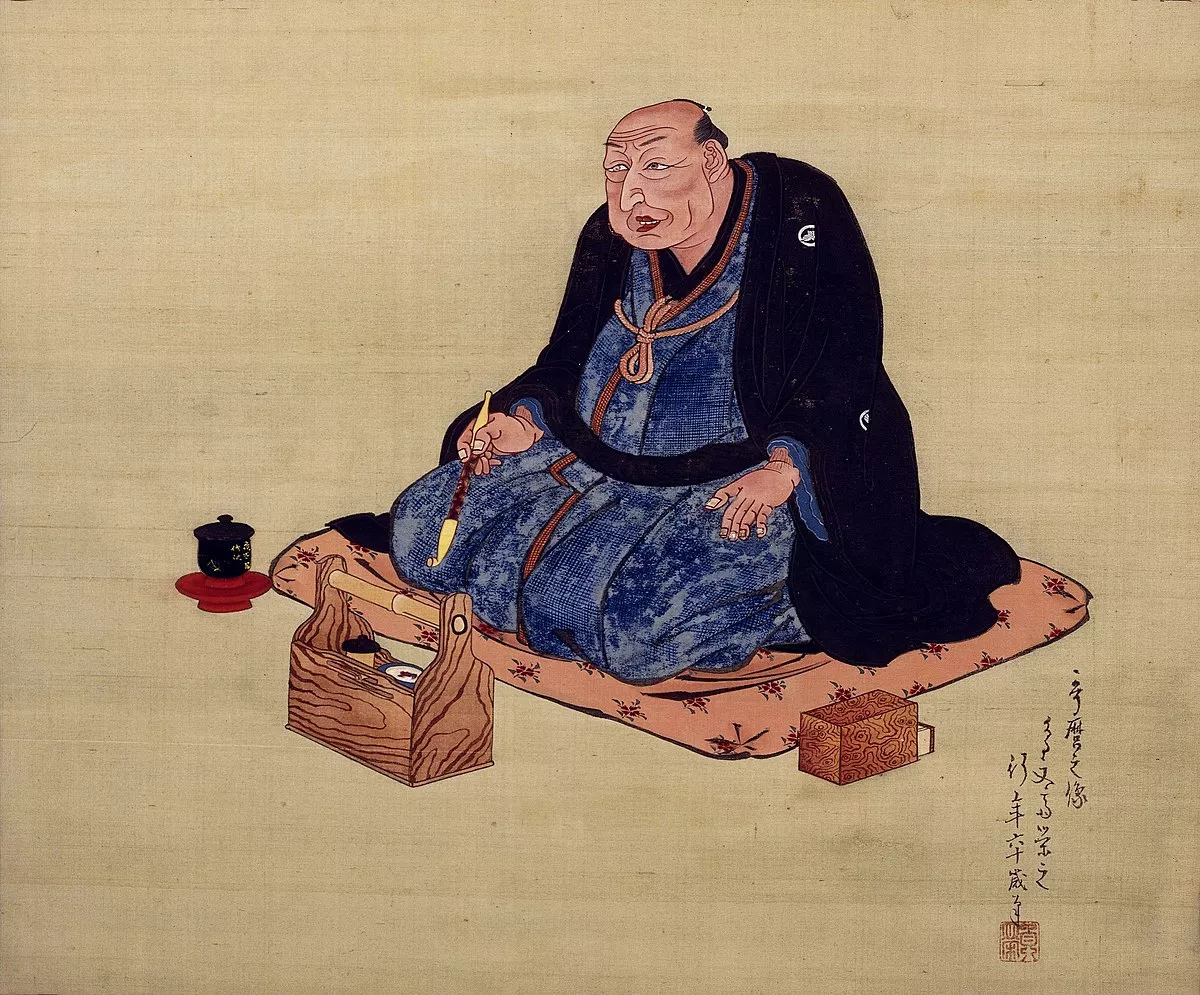
1. Utamaro is one of the most highly regarded designers of ukiyo-e woodblock prints and paintings, and is best known for his bijin okubi-e "large-headed pictures of beautiful women" of the 1790s.
 1.
1. Utamaro is one of the most highly regarded designers of ukiyo-e woodblock prints and paintings, and is best known for his bijin okubi-e "large-headed pictures of beautiful women" of the 1790s.
Utamaro's work began to appear in the 1770s, and he rose to prominence in the early 1790s with his portraits of beauties with exaggerated, elongated features.
Utamaro produced over 2000 known prints and was one of the few ukiyo-e artists to achieve fame throughout Japan in his lifetime.
Utamaro's work reached Europe in the mid-nineteenth century, where it was very popular, enjoying particular acclaim in France.
Utamaro influenced the European Impressionists, particularly with his use of partial views and his emphasis on light and shade, which they imitated.
Kiyonaga was the pre-eminent portraitist of beauties during the 1780s, and the tall, graceful beauties in his work had a great influence on Utamaro, who was to succeed him in fame.
Apparently, Utamaro married, although little is known about his wife and there is no record of their having had children.
Sometime during his childhood Utamaro came under the tutelage of Sekien, who described his pupil as bright and devoted to art.
Utamaro's students included haiku poets and ukiyo-e artists such as Eishosai Choki.
Per custom, he distributed a specially made print for the occasion, in which, before a screen bearing the names of his guests, is a self-portrait of Utamaro making a deep bow.
Utamaro seems to have become a principal artist for the Tsutaya firm.
Utamaro then went on to produce several series of well-known works, all featuring women of the Yoshiwara district.
Tsutaya Juzaburo died in 1797, and Utamaro thereafter lived in Kyuemon-cho, then Bakuro-cho, and finally near the Benkei Bridge.
Utamaro was apparently very upset by the loss of his long-time friend and supporter.
In 1804, Utamaro ran into legal trouble over a series of prints of samurai warriors, with their names slightly disguised; the depiction of warriors, their names, and their crests was forbidden at the time.
In probably the most famous case of censorship of the Edo period, Utamaro was imprisoned in 1804, after which he was manacled along with Tsukimaro, Toyokuni, Shuntei, Shun'ei, and Jippensha Ikku for fifty days and their publishers subjected to heavy fines.
Utamaro was given the Buddhist posthumous name Shoen Ryoko Shinshi.
Utamaro had a number of pupils, who took names such as Kikumaro, Hidemaro, and Takemaro.
Utamaro is known primarily for his bijin-ga portraits of female beauties, though his work ranges from kacho-e "flower-and-bird pictures" to landscapes to book illustrations.
Utamaro experimented with line, colour, and printing techniques to bring out subtle differences in the features, expressions, and backdrops of subjects from a wide variety of class and background.
Utamaro produced more than two thousand prints during his working career, amongst which are over 120 bijin-ga print series.
Utamaro made illustrations for nearly 100 books and about 30 paintings.
Utamaro created a number of paintings and surimono, as well as many illustrated books, including more than thirty shunga books, albums, and related publications.
Utamaro's work appeared from at least 60 publishers, of which Tsutaya Juzaburo and Izumiya Ichibei were the most important.
Utamaro succeeded in capturing the subtle aspects of personality and the transient moods of women of all classes, ages, and circumstances.
Kitagawa Utamaro's work is known worldwide, and he generally is regarded as one of the half-dozen greatest ukiyo-e artists of all time.
Utamaro appears to have achieved a national reputation at a time when even the most popular Edo ukiyo-e artists were little known outside the city.
On rare occasions Utamaro signed his work "the genuine Utamaro" to distinguish himself from these imitators.
Forgeries and reprints of Utamaro's work are common; he produced a large body of work, but his earlier, more popular works are difficult to find in good condition.
French artist-collectors of Utamaro's work included Monet, Degas, Gauguin, and Toulouse-Lautrec.
Utamaro had an influence on the compositional, colour, and sense of tranquility of the American painter Mary Cassatt's work.
The only surviving official record of Utamaro is a stele at Senko-ji Temple, which gives his death date as the 20th day of the 9th month of the year Bunka, which equates to 31 October 1806.
Utamaro has gained general acceptance as one of the form's greatest masters.
James A Michener re-evaluated the development of ukiyo-e in The Floating World of 1954, in which he places the 1790s as "the culminating years of ukiyo-e", when "Utamaro brought the grace of Sukenobu to its apex".