 1.
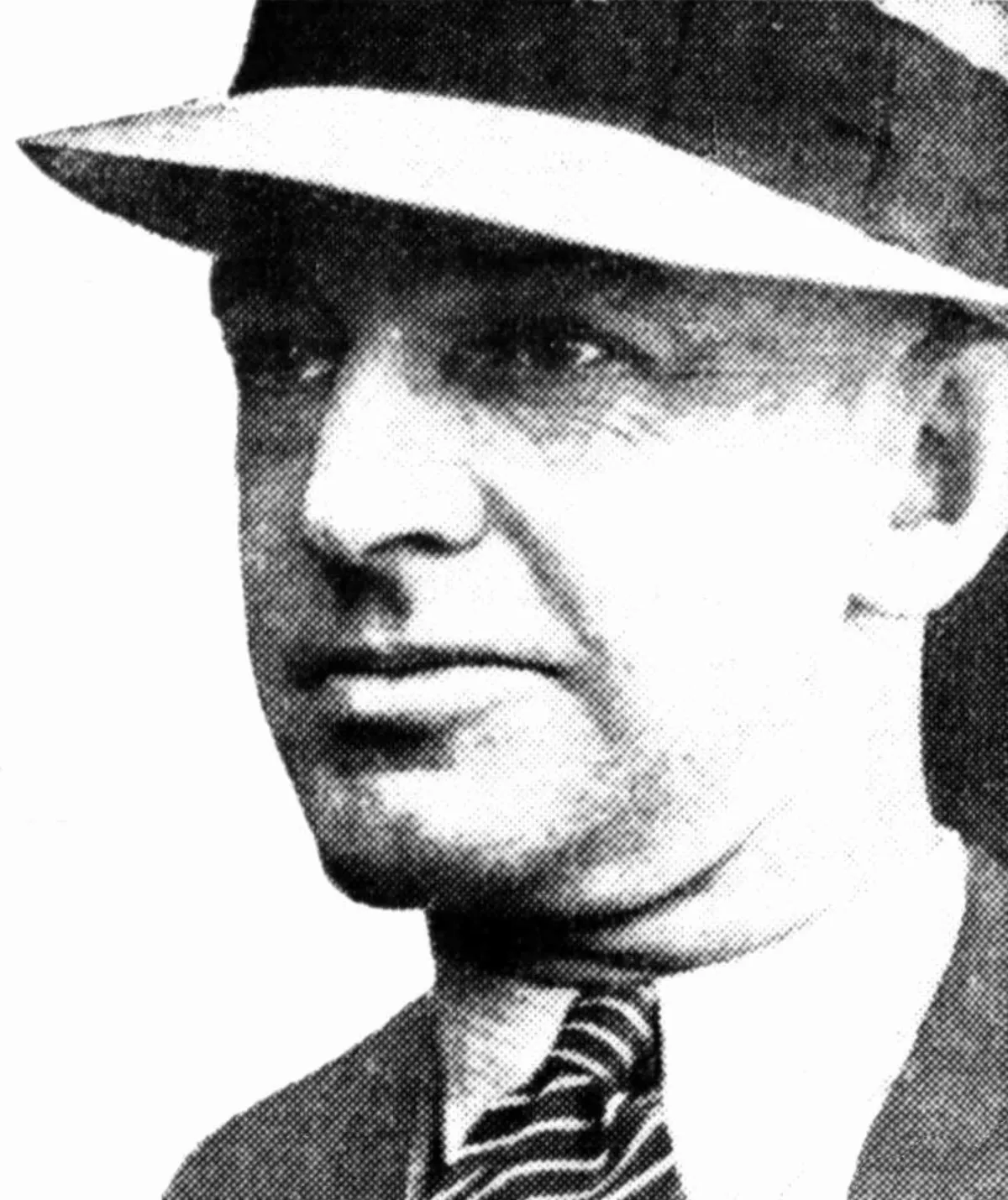
1. Virgil Reilly, was an Australian cartoonist, comic book artist and illustrator.
 1.
1. Virgil Reilly, was an Australian cartoonist, comic book artist and illustrator.
Virgil Gavan Reilly was born on 29 November 1892 at Charlton in the mallee country of north-west Victoria, the son of John Gavan Reilly and Mayne, the second-born of five children in the family.
Virgil Reilly's father was the local postmaster who wrote poetry.
Virgil Reilly began to develop his artistic skills after he fractured his back.
Virgil Reilly "took up drawing" to relieve the boredom while he was recuperating in bed.
Virgil Reilly answered the newspaper's advertisement "for an artist who could do likenesses", which essentially involved court work, sketching defendants and witnesses.
Virgil Reilly worked for Truth for about two years, but he "eventually got sacked" because his drawings were "too refined" for Norton.
From about 1910 Virgil Reilly worked as a commercial artist for a motion picture advertising firm in Melbourne.
Virgil Reilly contributed drawings for the printed programs of charity events in Melbourne during the war-years.
From early in his career Reilly signed his artworks with a distinctive signature, 'Virgil'.
In Sydney Virgil Reilly was engaged by Fordyce Wheeler, the advertising manager of Sun Newspapers Ltd.
In December 1924 Virgil Reilly lodged a patent in the United States Patent Office for an "optical apparatus for use in the hand reproduction of drawings, photographs, and other illustrations or designs".
From about January 1924 Virgil Reilly began to contribute drawings to Smith's Weekly, the independent Sydney tabloid newspaper which gave prominence to cartoons and illustrations in its pages.
In 1933, during divorce proceedings, Virgil Reilly stated that his wife Dorothy had been the inspiration for his drawings and "almost invariably was his model".
From February 1928 Virgil Reilly began a collaboration with poet and journalist Kenneth Slessor, who worked for Smith's Weekly, with Virgil Reilly's drawings presented alongside Slessor's poetry.
The partnership between Slessor and Virgil Reilly was maintained on a semi-regular basis until November 1933.
Many of Slessor's poems were social observations with a focus on women, which was a perfect fit with Virgil Reilly's preferred output during that period.
Virgil Reilly occasionally drew cartoons of political and social criticism for Smith's.
An article in March 1933 reporting on the persecution of Jews in the early months of Nazi Germany incorporated an illustration by Virgil Reilly, depicting a German soldier seated on a large helmet, with crushed Jewish corpses beneath.
In May 1934 Virgil Reilly drew a cartoon satirising the British Royal family.
Virgil Reilly claimed that sometimes all that remained of his wages was nine shillings a week.
Virgil Reilly petitioned for divorce on the ground of adultery, with Wheeler named as the co-respondent, and the matter came before the Divorce Court on 19 December 1933.
The counsel for Mrs Virgil Reilly requested that the period for making the divorce absolute be shortened to three months, stating "that Wheeler desired to marry" his client, but the judge refused the request.
In September 1934 Virgil Reilly became engaged to Ruth 'Petah' King, a business-woman with a hosiery and lingerie shop in the Imperial Arcade.
In December 1934 Virgil Reilly participated in the inaugural exhibition by the Painter-Etchers and Graphic Art Society.
In 1938 Virgil Reilly left Smith's Weekly and joined the staff of Frank Packer's company, Consolidated Press, which published The Daily Telegraph and The Australian Women's Weekly.
In January 1938 a full-page 'Virgil Reilly girl' drawing was used in the launch of the Daily Telegraph Home Magazine, a new supplement to the Monday edition of the newspaper.
In March 1938 an article by Virgil Reilly entitled 'How I Judged a Beauty Contest' was published in the Home Magazine, illustrated by a detailed drawing by the artist, based on a "South Coast beauty contest" he had recently judged.
From February 1938 until September 1941 Virgil Reilly was amongst a select number of artists whose paintings were regularly used to illustrate the cover of the Australian Women's Weekly.
The cover of the 21 October 1939 issue of the Australian Women's Weekly, in the early months of the Second World War, was one of Virgil Reilly's patriotic cover designs.
Virgil Reilly commented on the meaning of the image: "My idea was to show the Australian woman representing the home and family with her protectors, the three armed forces of the Commonwealth".
Virgil Reilly's painting inspired an Australian stamp design, issued in four denominations in July 1940.
The column continued until June 1940, though Virgil Reilly's contributions ceased after February 1940.
From December 1939 until January 1941 Virgil Reilly produced a regular set of themed cartoons for the Sunday Telegraph.
Between January 1941 to June 1941 a cartoon feature by Reilly entitled 'The Virgil Girl' was regularly published in the Sunday Telegraph.
In May and June 1941 'The Virgil Reilly Girl' appeared as painted images in the colour pictorial section of the Sunday Telegraph.
Virgil Reilly later claimed, "we got broken up because my wife started to associate with a man".
Virgil Reilly went to a hotel and Petah lived at Meudon Flats in Elizabeth Bay.
In September 1941 Virgil Reilly again accused Petah of seeing the man; the couple had "another violent row" and Virgil Reilly left the home.
Virgil Reilly challenged his eviction notice and in January 1943 the magistrate in the Paddington Court denied the agent's application.
In March 1943 details of Virgil Reilly's failing second marriage were again made public when he filed a suit for the restitution of his marriage, and then a week later submitted a petition for the dissolution of the marriage, alleging his wife's adultery "with a man named Farmer".
At that time Virgil Reilly was still living at Cambrian Place and was described as an artist "well known throughout Australia for his renditions of slinky cuties in diaphanous garb".
Gavan Virgil Reilly was killed in December 1942 during an attack on a Japanese defensive position at Sanananda Point near Buna in New Guinea.
Virgil Reilly was initially informed that his son had died in an ambush from a sniper's bullet.
Gavan Virgil Reilly had been badly wounded by machine-gun fire during an advance against a heavily-defended Japanese position.
Virgil Reilly wrote an article for the issue, recording his impressions and observations of the young men serving on the naval vessels.
From about May 1947 to January 1948 Virgil Reilly illustrated the 'Chesty Bond' advertising cartoon-strip, created in 1940 by his colleagues from the Smith's Weekly days, artist Syd Miller and advertising man Ted Moloney.
In September 1950 in Sydney, Virgil Reilly married Florence Shanahan, formerly of Adelaide.
In 1950 Virgil Reilly began to illustrate the comic-book Silver Flash and his Frog-men for Invincible Press.
Virgil Reilly illustrated a number of issues of the Combat comic series for Calvert Publishing in the mid-1950s.
In 1955 and 1956, Virgil Reilly illustrated two bushranger biographies written by the author and popular historian, Frank Clune, Martin Cash and Captain Melville.
In 1958 Virgil Reilly won the inaugural Walkley Award for the 'Best Piece of Creative Artwork or Cartoon' for an illustration published in Sydney's Daily Mirror newspaper.
Virgil Reilly's award-winning artwork was a sentimental drawing commemorating Legacy Week, showing the ghost of a soldier embracing his schoolgirl daughter who is laying a wreath to his memory.
Florence Virgil Reilly died on 8 June 1972 in the Royal North Shore Hospital in St Leonards, Sydney, aged 67 years.