 1.
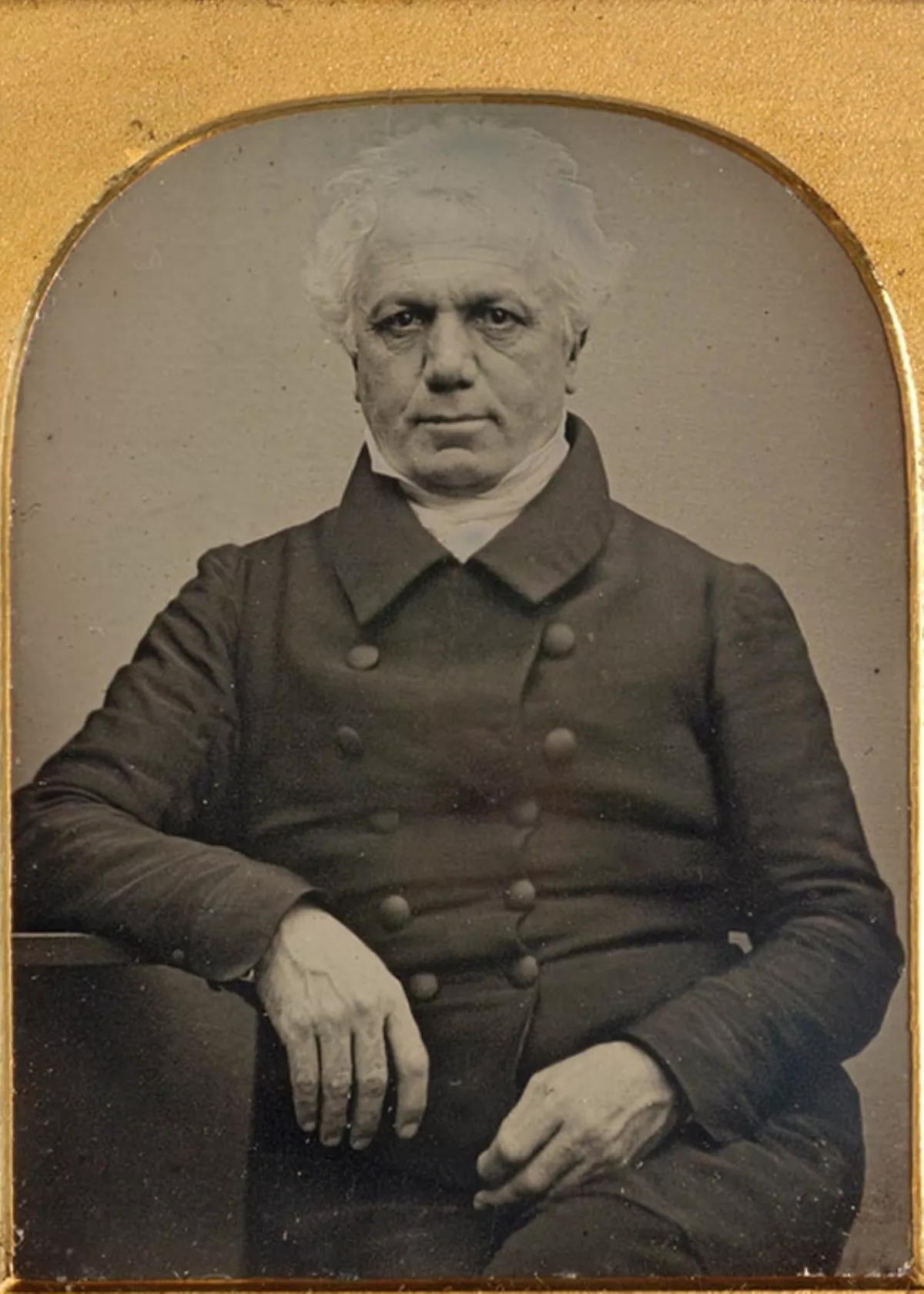
1. William Bland was a prominent public figure in the colony of New South Wales.
 1.
1. William Bland was a prominent public figure in the colony of New South Wales.
William Bland was convicted of murder in 1813 after killing a crewmate in a duel in Bombay.
William Bland was sentenced to penal transportation, initially to Van Diemen's Land and then to New South Wales, where he was assigned to work at the Castle Hill Lunatic Asylum.
William Bland received a pardon in 1815 owing to the lack of qualified medical practitioners in the colony.
William Bland developed new surgical techniques and improvised surgical instruments, publishing papers in The Lancet and later in the Australian Medical Journal.
William Bland was the founding president of the Australian Medical Association in 1859 and had a long association with the Benevolent Society.
Outside of medicine William Bland was a co-founder of the Sydney Mechanics' School of Arts and served terms as treasurer and president of Sydney College, a forerunner to the University of Sydney.
William Bland was an inventor, receiving a patent for a fire suppression device and designing an experimental steam-powered airship.
William Bland became politically active shortly after his arrival in New South Wales and in 1818 was sentenced to a year in prison for libelling Governor Lachlan Macquarie.
William Bland aligned himself with other emancipists and supported William Wentworth's calls for representative government and expanded civil rights for ex-convicts.
William Bland served multiple terms in parliament where he supported land reform and opposed the interests of the Squattocracy.
William Bland was granted a state funeral upon his death in 1868.
William Bland is the namesake of Bland Shire and the former Division of Bland in federal parliament.
William Bland's grandfather Robert Bland was an attorney-at-law at King's Lynn.
William Bland had at least three siblings, an older brother and two sisters.
William Bland's brother Robert was a clergyman, poet and teacher at Harrow School, while his sister Sophia married John Benjamin Heath, a governor of the Bank of England.
William Bland was likely to have been educated at a public school, possibly at the Merchant Taylors' School, Northwood.
On 7 April 1813, William Bland shot and killed Robert Case, the ship's purser on Hesper, in a duel on Cross Island in Bombay Harbour.
William Bland arrived in Hobart as a convict in January 1814, transported with his co-offender Randall.
William Bland was almost immediately granted his freedom by Macquarie and in September 1814 was appointed as the medical superintendent of the Castle Hill Lunatic Asylum.
William Bland was granted some nearby government land for his own use.
The appointment of convicts to government positions was not uncommon at the time due to a shortage of qualified individuals; the colony's principal surgeon D'Arcy Wentworth and assistant surgeon William Bland Redfern were ex-convicts.
William Bland was treasurer from 1835 to 1844 and in 1845 became president, an office he held when the buildings were sold to the University of Sydney in 1853.
William Bland suggested that an organised association should be formed, and that it should appoint a parliamentary agent for New South Wales.
William Bland was an elected member of the NSW Legislative Council twice for the City of Sydney and after the introduction of responsible government was appointed to the NSW Legislative Council.
William Bland challenged Lowe to a duel but Lowe avoided it.
William Bland accepted an invitation to preside and received a deserved ovation.
William Bland resigned on 21 March 1861 and an ensuing attempt to procure an annuity for him was defeated in the Legislative Council.
In 1843, William Bland claimed that JR Hancorn had laid claim to an invention of his, the means for the prevention of spontaneous combustion, which he claimed to have invented in 1839.
William Bland sought to put forward a solution to the problem of managing ascents and descents that did not require releasing gas or jettisoning ballast.
William Bland proposed that the gondola or "car" be fitted with "sliding ballast", which the operator would move to the front, back or centre of the airship to effect an ascent or descent.
In June 1859, William Bland gave an address to the Royal Society of New South Wales titled "On Atmotic Navigation", which was one of the first lectures on aviation in Australia.
William Bland continued to lobby for the Ship to be trialled up until his death in 1868.
William Bland wrote letters to US President Abraham Lincoln, King Victor Emmanuel II of Italy, and Tsar Alexander II of Russia, and proposed to the Colonial Office that the first Ship to be constructed should be named in honour of Queen Victoria.
In 1866, William Bland sent copies of his pamphlet to George Campbell, 8th Duke of Argyll, the president of the newly formed Aeronautical Society of Great Britain, requesting that the Ship be given a trial.
William Bland died intestate in Sydney on 21 July 1868 of pneumonia, and was accorded a State Funeral.
William Bland was later engaged to Thomas Hassall, the son of another missionary, before beginning a relationship with Bland.
Only a few months into his first marriage, William Bland discovered that his wife had committed adultery with Richard Drake, an East India Company officer.
William Bland initially sought a duel with Drake, who went into hiding and eventually fled the colony.
William Bland placed an advertisement in the Sydney Gazette "cautioning the public" against extending any credit to his wife.
William Bland had a collection of pets which included a spaniel, a one-eyed magpie, a cockatoo and several snakes.
In February 1846, William Bland married Eliza Smeathman, the widow of his close friend Charles Smeathman who had frequently acted as coroner.
An electoral division in the first federal parliament, the Division of William Bland, was named after him.