 1.
1. Wilopo held various other positions during his career, including as Minister of Labor, Minister of Economic Affairs, speaker of the Constitutional Assembly, and chairman of the Supreme Advisory Council.
 1.
1. Wilopo held various other positions during his career, including as Minister of Labor, Minister of Economic Affairs, speaker of the Constitutional Assembly, and chairman of the Supreme Advisory Council.
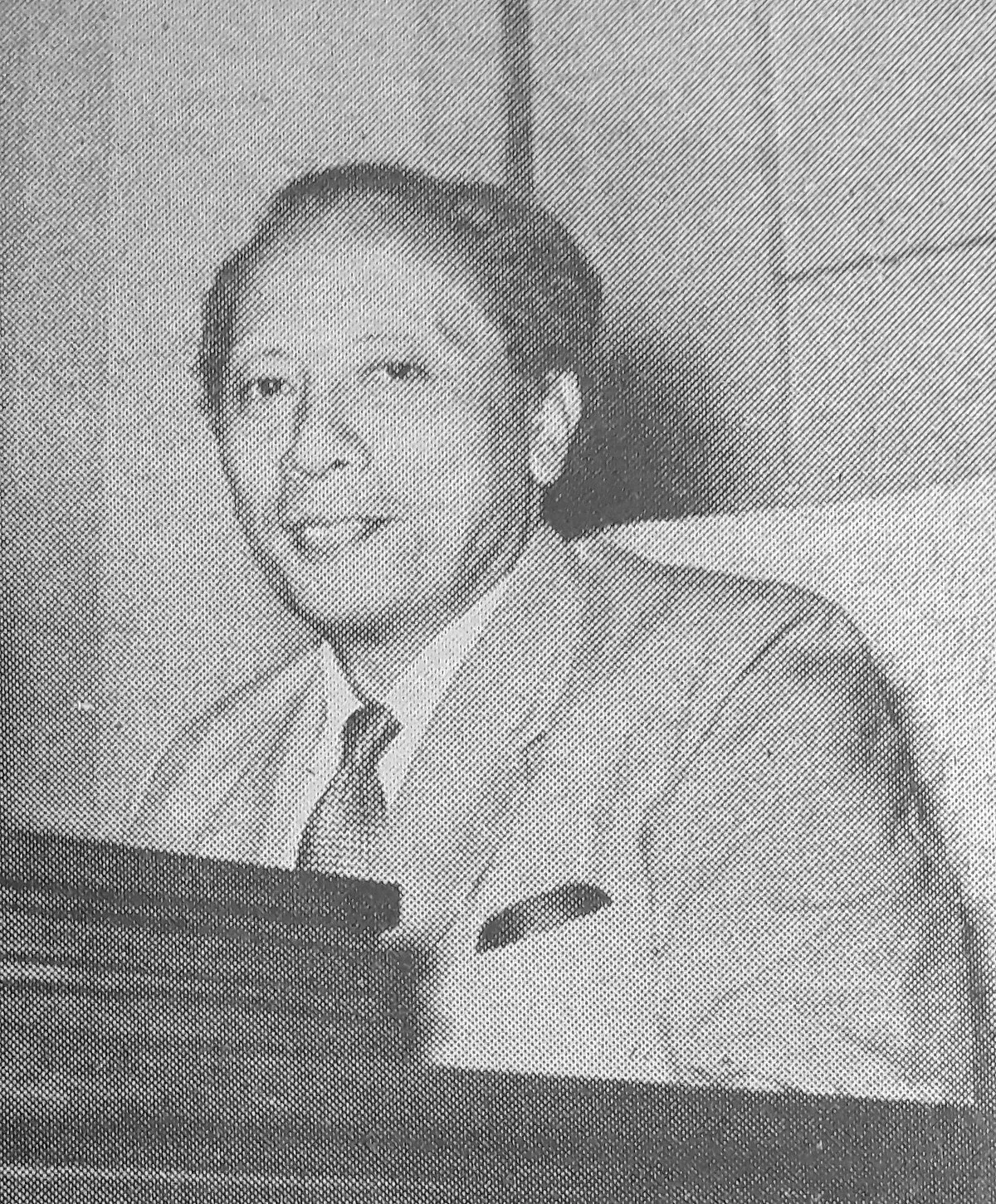
Wilopo emerged as a leader in the Indonesian National Party and became Minister of Economic Affairs in the Soekiman Cabinet.
In 1952, following a foreign policy debacle, the Soekiman Cabinet fell and Wilopo was appointed formateur of a new cabinet by President Sukarno.
Wilopo opted to form a new cabinet consisting of pro-Western technocrats with unity, a common policy orientation, and the support of the PNI and Masyumi Party, even though both parties were unenthusiastic partners.
Wilopo's premiership was marked by a succession of crises, including an economic crisis and a show of force by the Indonesian Army, which opposed his cabinet's demobilization scheme, culminating in the downfall of his cabinet over a land dispute in North Sumatra.
Wilopo was born to a modest family in Central Java.
Wilopo's father was a man named Soedjono Soerodirjo, but he was raised by his uncle, a man known as Mantri Guru Prawirodiharjo.
Wilopo wouldn't know of his real father until he reached adulthood.
Wilopo could have continued his education at the Europese Hogere School, but he didn't because he wanted to continue his education at the Opleiding School Voor Inlandsche Ambtenaren.
At AMS, Wilopo took part in exact sciences and physics.
Wilopo received a scholarship to make ends meet during his life in Yogyakarta.
Wilopo joined the Jong Java youth organization around this time.
Wilopo continued his education at the Technische Hoge School in Bandung.
Wilopo moved to Jakarta and continued his studies at the Rechts Hoge School.
Wilopo later became the minister of trade and industry during the Sukiman Cabinet.
From 1955 to 1959, Wilopo served as the Speaker of the Constitutional Assembly of Indonesia.
Wilopo later became head of the Commission of Four, a part of the Corruption Eradication Team, with his service beginning in June 1970.
Herbert Feith, an Australian scholar on Indonesian politics, notes that Wilopo was widely considered fair-minded and sympathetic to the plight of the working classes, working carefully towards his goals.
Wilopo began a relationship with Sumikalimah until they got married in October 1917.