 1.
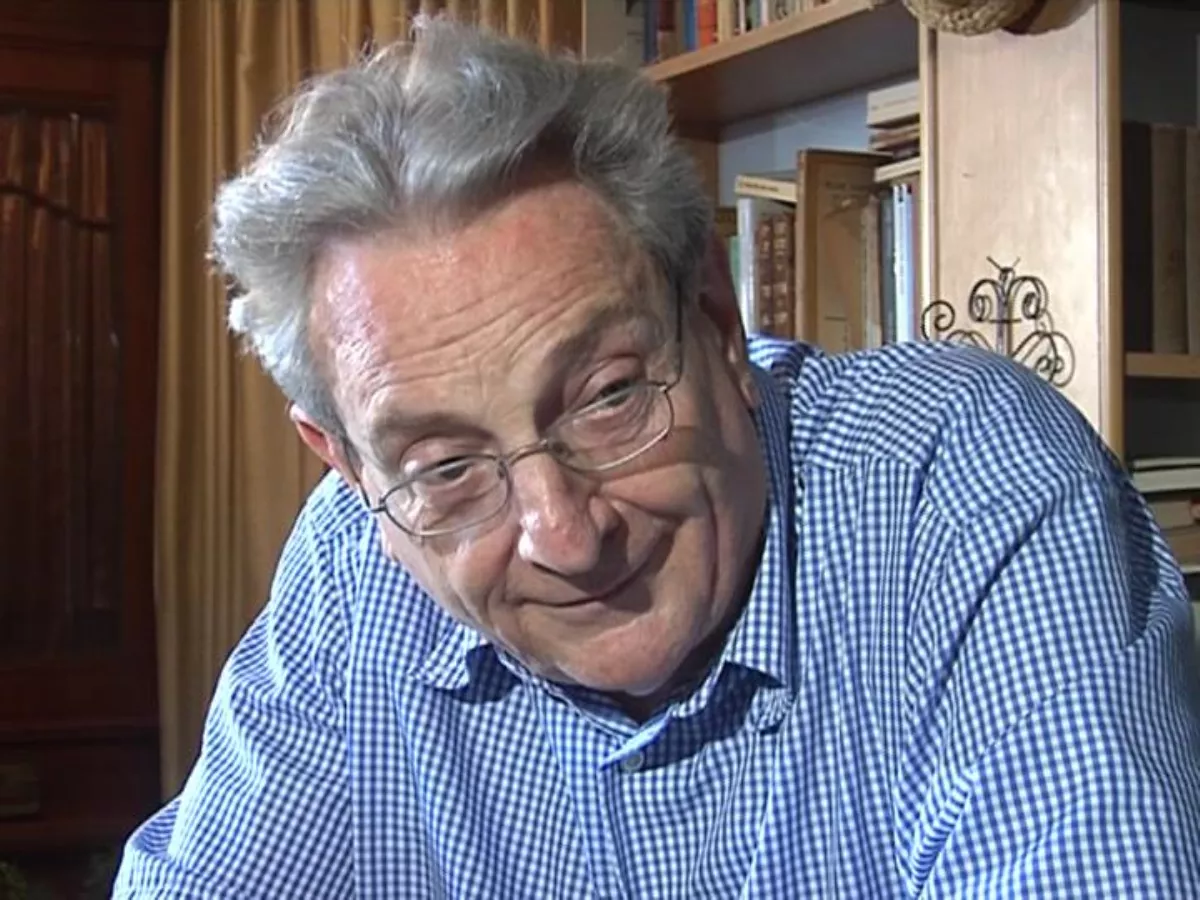
1. Yehuda Elkana was a historian and philosopher of science, and a former president and rector of the Central European University in Budapest, Hungary.
 1.
1. Yehuda Elkana was a historian and philosopher of science, and a former president and rector of the Central European University in Budapest, Hungary.
Yehuda Elkana's family escaped the gas chambers when the Nazis transferred them to Austria as corvee labourers for the reconstruction of war-torn cities.
Yehuda Elkana took up residence in Kibbutz HaZore'a, but health problems impeded Elkana from performing physical tasks.
Yehuda Elkana taught at Gymnasia Rehavia while undertaking his Master's degree, which meant that it took him 11 years to complete it.
Yehuda Elkana then obtained a PhD from Brandeis University with a thesis on On the Emergence of the Energy Concept in 1968, under the supervision of Stephen Toulmin; a dissertation which formed the basis for his book, The discovery of the conservation of energy.
Yehuda Elkana taught at Harvard University, and was a Fellow of the Center for Advanced Study in the Behavioral Sciences, Stanford University, a Visiting Fellow at All Souls College, Oxford, a visiting researcher at the Einstein Papers Project at Caltech and was Director of the Cohn Institute for the History and Philosophy of Science and Ideas at Tel Aviv University from 1981 to 1991.
Yehuda Elkana led this special program for fostering excellence until 1994.
Yehuda Elkana was a permanent fellow at the Institute for Advanced Study, Berlin.
Yehuda Elkana was a corresponding member of the International Academy for the History of Science as well as, since 1997, member of the Science Board of Advisors of the Collegium Helveticum in Zurich.
Yehuda Elkana was a co-founder and editor of the scientific journal Science in Context.
In 1999, Yehuda Elkana began his tenure as president and rector of the Central European University, succeeding Josef Jarab.
The third rector of the university in nine years, Yehuda Elkana held the post until being replaced in August 2009 by John Shattuck.
Early in his tenure, Yehuda Elkana came under fire for his handling of the dismissal of the head of the Program for Gender and Culture and the firing of a part-time professor in that program.
Yehuda Elkana oversaw the reorganization of the department of environmental sciences, halving the ratio of students to professors by both decreasing the number of students within the program and hiring additional professors.
In 1988, in an article published in Haaretz, Yehuda Elkana challenged the role of memories of the Holocaust, which he called 'the central axis of our national experience,' in Israeli identity.
Yehuda Elkana criticized the custom of repeatedly taking schoolchildren to Yad Vashem.