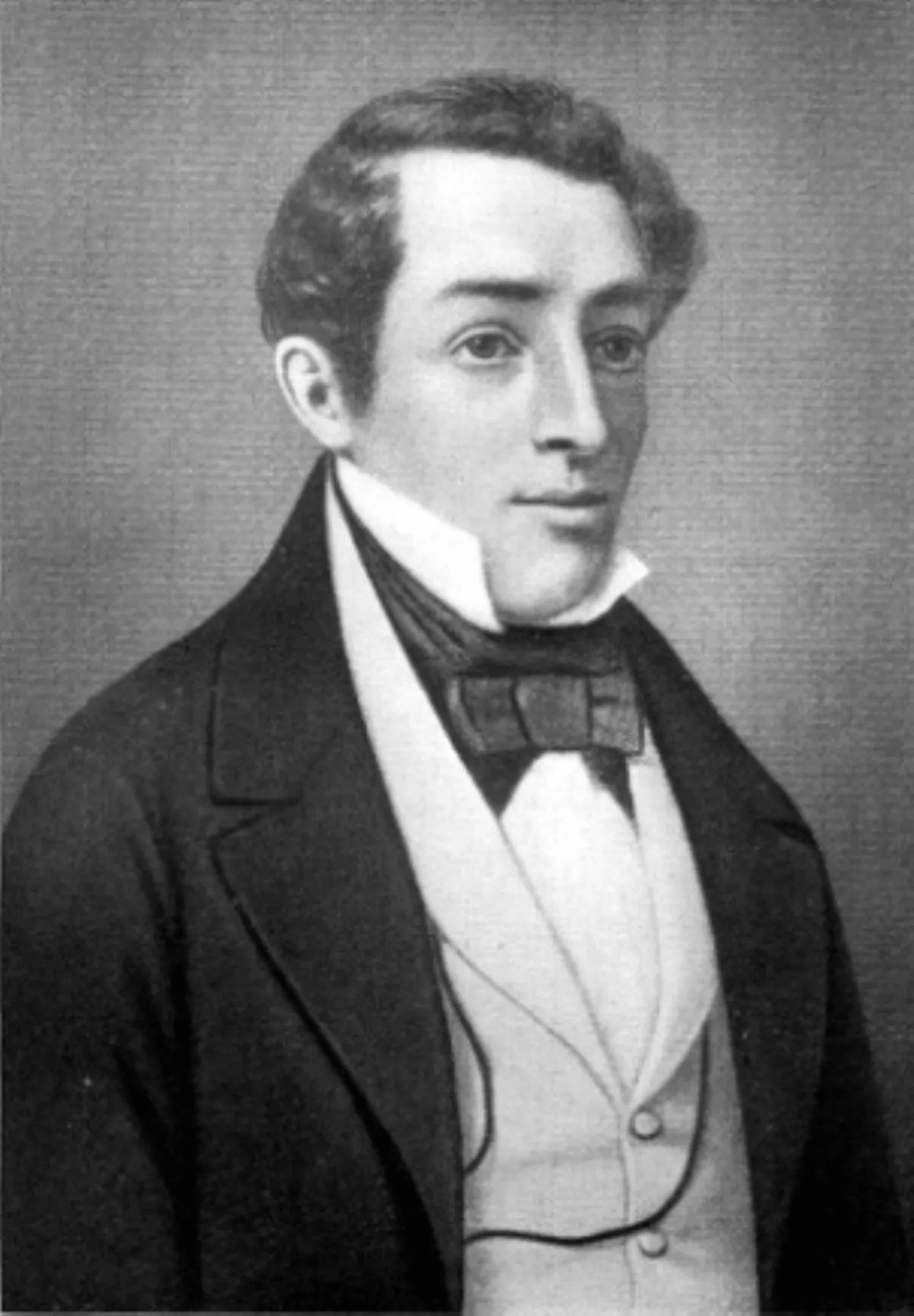
 1.
1. Claudio Linati was an Italian painter and lithographer who studied under Jacques-Louis David in Paris and established the first lithographic press in Mexico.
 1.
1. Claudio Linati was an Italian painter and lithographer who studied under Jacques-Louis David in Paris and established the first lithographic press in Mexico.
Claudio Linati co-founded and edited El Iris, a periodical that published the first political cartoons in Mexico, and was forced to leave the country for his political activism.
Claudio Linati is known for his hand-colored book illustrating costumes of different types of people in Mexico.
Claudio Linati's father, count Filippo Linati, was active in the politics of his time.
At the age of seventeen Claudio Linati joined the Society of Engravers of Parma, designing and engraving the portrait of the famous artist-priest Andrea Amoretti, co-worker of Giambattista Bodoni.
Claudio Linati studied lithography, a recently invented technique for printing images.
Claudio Linati studied in the Paris studio of fellow-Italian Gioacchino Giuseppe Serangeli.
In 1821 Claudio Linati was in Barcelona, leading the Migueletes militia.
On 9 April 1824 Claudio Linati was tried in absentia and sentenced to death by the Supreme Court of Parma for conspiracy against the government.
Claudio Linati was commissioned to survey the coast of Mexico and find an anchorage for the ships and machines of mining companies.
Claudio Linati arrived at Alvarado, Veracruz, Mexico on 6 March 1825.
On 22 September 1825 Claudio Linati moved to Veracruz to study lithography.
Claudio Linati set up a school, with pupils who included Jose Gracida and Ignacio Serrano.
Not long after arriving Claudio Linati made a lithograph of a map of Texas by Fiorenzo Galli.
Claudio Linati had come to Mexico to observe a newly independent country and to "civilize" and politicize its people.
Claudio Linati was one of the editors of the weekly El Iris.
Claudio Linati was sure there would be another attempt by Spain to conquer Mexico.
Claudio Linati took the Yorkino position that the people were sovereign, and only federalism could protect individuals and the nation against the depredations of the army and the priests.
Claudio Linati was opposed to strong central authority and in favor of greater education in citizenship and the discipline of military service.
The political comments caused the closure of the paper and forced Claudio Linati to leave the country in 1826.
Claudio Linati was given a passport to return to Europe on 27 September 1826.
Claudio Linati then embarked on the American ship Dawn for Antwerp, which he reached on 15 March 1827.
Claudio Linati went on to Brussels and began work on an illustrated book about Mexico.
In 1830 Claudio Linati was one of the members of the Paris-based Giunta Liberatrice Italian.
Claudio Linati arrived in Tampico, Tamaulipas, Mexico, and three days later died from yellow fever on 11 December 1832.
Claudio Linati is remembered for his liberal revolutionary ideals and his artistic and historical legacy.
Claudio Linati was always interested in the manners and customs of the countries he visited.
Claudio Linati hated England and the English, called the French servile cattle for their submission to tyranny, and said Spain was in a condition of priestly anarchy.
Claudio Linati is renowned for his 1828 Civil, Military and Religious Costumes of Mexico.
Claudio Linati represents Moctezuma as a strong and dignified ruler holding his scepter as a symbol of power.
Claudio Linati compares the cruelty of the Aztec priests to the cruelty of the Roman Catholic Inquisition, both examples of the evils of superstition.
Claudio Linati praises the ethnic diversity of Mexico, but writes that the indigenous people must abandon their languages and some of their customs.
Claudio Linati praises the role the Creoles played in the revolution, but makes much of Italian volunteers such as Count Giuseppe Stavoli and General Vicente Filisola who had helped in the fight for freedom, and who are depicted in several illustrations.
Claudio Linati depicts the liberal heroes Jose Maria Morelos and Guadalupe Victoria.