 1.
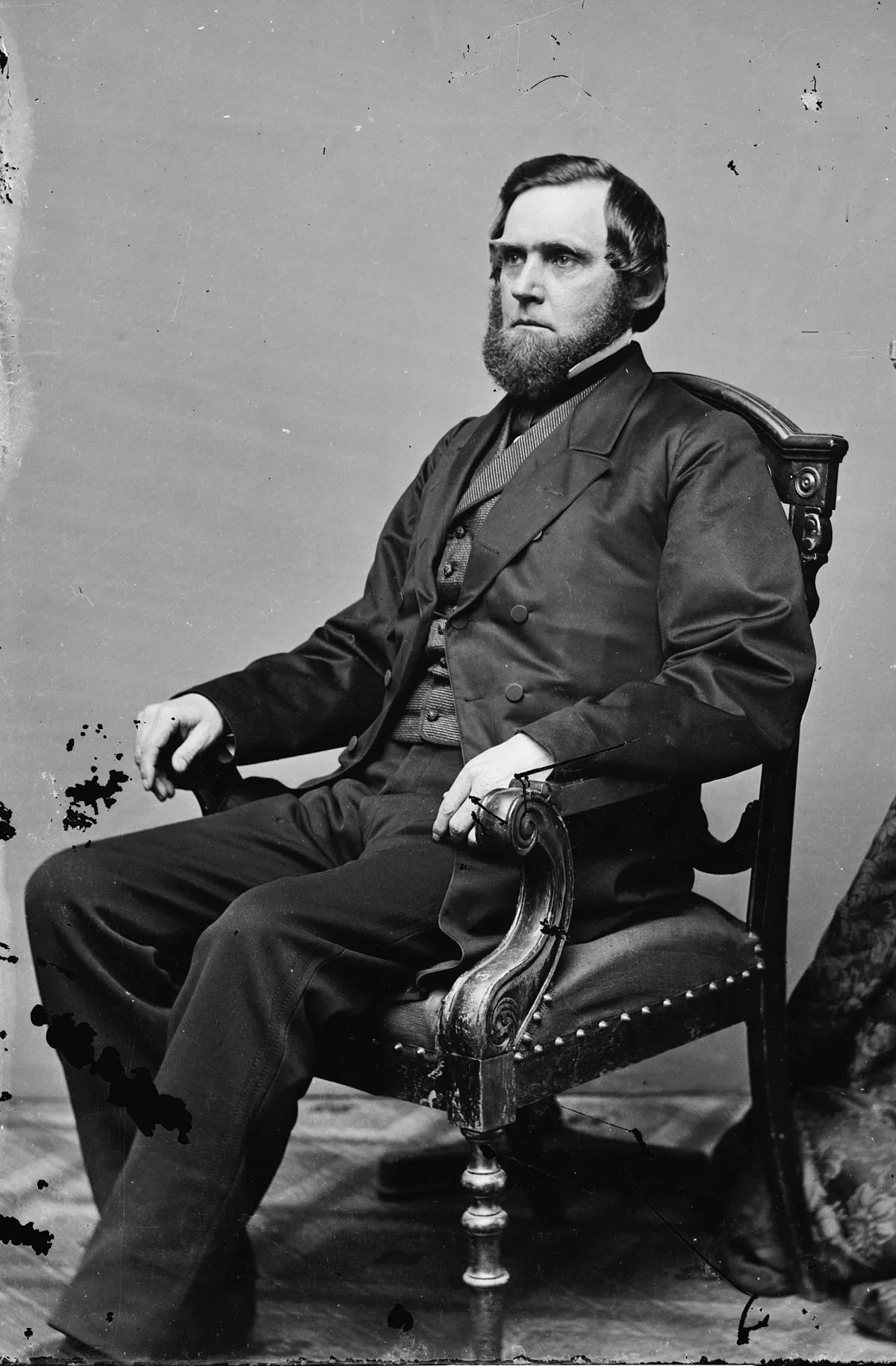
1. Henry Emerson Etheridge was an American politician and a member of the United States House of Representatives for Tennessee's 9th congressional district from 1853 to 1857, and again from 1859 to 1861.
 1.
1. Henry Emerson Etheridge was an American politician and a member of the United States House of Representatives for Tennessee's 9th congressional district from 1853 to 1857, and again from 1859 to 1861.
Emerson Etheridge served one term in the Tennessee House of Representatives and one term in the Tennessee Senate.
One of the most powerful and eloquent speakers of his day, Etheridge was one of the few Southern congressmen to oppose the expansion of slavery and denounce Southern secession on the eve of the Civil War.
Emerson Etheridge was offered the party's nomination for governor in 1878, and ran unsuccessfully for Congress in 1884.
Emerson Etheridge worked as the Surveyor of Customs at Memphis in the early 1890s.
Emerson Etheridge was born in Currituck County, North Carolina, the son of Thomas and Elizabeth Emerson Etheridge.
Emerson Etheridge married Fannie N Bell and they had three children: a son, a daughter, and a third child who died in infancy in 1854.
Emerson Etheridge was appointed Clerk of the Tennessee House of Representatives in 1843 and was elected to Weakley's seat in the Tennessee House in 1845.
Emerson Etheridge sought the open seat, and running virtually unopposed, was easily elected to the Thirty-third Congress in 1853.
Emerson Etheridge entered Congress at a time of growing sectional tension between the North and South over the issue of slavery.
Emerson Etheridge was one of nine Southern representatives to vote against the Kansas-Nebraska Act in 1854, his main concern being the act's repeal of the Missouri Compromise.
Emerson Etheridge was the only Southern representative to support an 1857 House resolution condemning the repeal of the Missouri Compromise.
Emerson Etheridge endorsed the centrist campaign of fellow Tennessean John Bell in the 1860 presidential election.
Emerson Etheridge threw his support behind Andrew Johnson, who had by then been appointed Military Governor of Tennessee.
Emerson Etheridge turned against the Lincoln Administration after Lincoln issued the Emancipation Proclamation, as he considered its issuance a betrayal of his promise to Southern Unionists not to tamper with slavery.
Emerson Etheridge considered several measures passed by Brownlow and his supporters in the state legislature tyrannical, especially attempts to deny ex-Confederates the right to vote.
Emerson Etheridge campaigned for reelection to Congress in 1865, but so strong was his criticism of Brownlow and Lincoln that he was arrested by military authorities for "attempting to incite the people of Tennessee to reinaugurate revolution and bloodshed" and "insulting the revered memory of Abraham Lincoln," and jailed in Columbus, Kentucky, until after the August election.
In spite of the wide margin, Emerson Etheridge's campaign boosted the statewide opposition to Brownlow, which eventually led to the fall of the Radical administration and the restoring of voting rights to ex-Confederates in 1870.
Emerson Etheridge was elected to the Tennessee Senate in 1869, representing the 22nd district.
Emerson Etheridge spent much of his term calling for the repudiation of the state's debt, which was getting out of control.
Emerson Etheridge moved to Memphis in 1871 after his term in the state senate had ended.
Emerson Etheridge endorsed Horace Greeley for president in 1872, but declined to campaign for him as an elector.
Emerson Etheridge abused the Democracy, Conservatism, Radicalism, funders, the press, the leaders of both parties," and "hurled his invectives and abuse at the world generally.
Emerson Etheridge ran on the Republican ticket for state senator, but was defeated by the Democratic candidate, William A Milliken.
Emerson Etheridge's nomination was controversial, as one delegate recalled his attacks on the Republican Party in the late 1860s, and others pointed out that Etheridge's calls for repudiating the state debt ran counter to the party's platform.
Emerson Etheridge became active in the Prohibition movement in the early 1880s, and helped organize the state's Prohibition ticket in 1882.
In 1888, Etheridge served alongside Hugh B Lindsay as an at-large elector for the Republican presidential candidate, Benjamin Harrison.
Emerson Etheridge remained in this position until he resigned in March 1894.
Emerson Etheridge died in Dresden on October 21,1902.
Emerson Etheridge is interred at Mount Vernon Cemetery near Sharon.