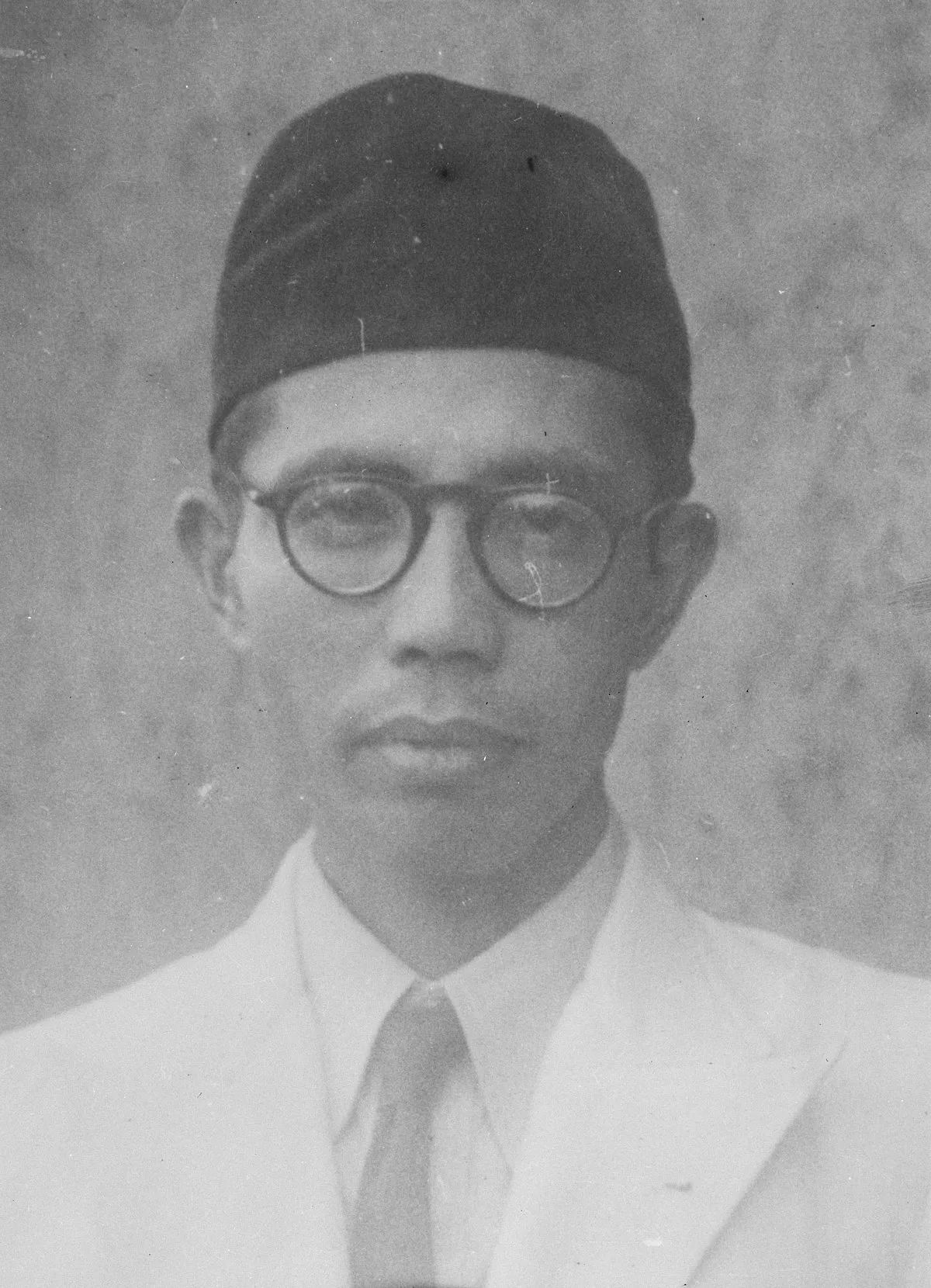
 1.
1. Jusuf Wibisono was an Indonesian politician and economist.
 1.
1. Jusuf Wibisono was an Indonesian politician and economist.
Jusuf Wibisono joined Masyumi during the Indonesian National Revolution, and became a leading member within the party despite disagreements with other party leaders such as Mohammad Natsir.
Jusuf Wibisono was an ardent opponent of the Communist Party of Indonesia, and he attempted to organize the Masyumi to work with President Sukarno during the late 1950s to oppose the communists.
Jusuf Wibisono died in 1982 at Dr Cipto Mangunkusumo Hospital.
Jusuf Wibisono was born on 28 February 1909 in Magelang, today in Central Java, as the third child of four children.
Jusuf Wibisono then continued to the Rechtshogeschool in Batavia, graduating with a Meester in de Rechten in 1941, shortly before the Japanese invasion of the Dutch East Indies.
Jusuf Wibisono had begun to work at the colonial government before completing his law degree, first at the economic department and then in the central statistics office.
Jusuf Wibisono became a commercial judge during the Japanese occupation of the Dutch East Indies.
Jusuf Wibisono was later appointed Junior Minister of Prosperity in the Third Sjahrir Cabinet.
Jusuf Wibisono was a critic of the Natsir Cabinet, despite Mohammad Natsir being in the same party.
Jusuf Wibisono was then appointed as minister of finance in Soekiman's cabinet, announced on 26 April 1951.
Jusuf Wibisono later served in the bank's council of advisors in-between his ministerial tenures.
Jusuf Wibisono was noted for his relatively lax approach to finances compared to his predecessor Sjafruddin Prawiranegara.
Jusuf Wibisono was replaced by Sumitro Djojohadikusumo in the succeeding Wilopo Cabinet.
Between his first and second tenures, Jusuf Wibisono worked at a Dutch car importer.
Jusuf Wibisono accepted a job as a chairman of a Japanese bank, under the condition that his name not be listed on the bank's board register.
Jusuf Wibisono made public statements calling for the increase of the work day, and was briefly examined by prosecutors after criticizing members of the First Ali Sastroamidjojo Cabinet.
Jusuf Wibisono returned to his post as finance minister in the Second Ali Sastroamidjojo Cabinet.
Disbursements to politically affiliated businesses continued, and in one case in July 1956, Jusuf Wibisono provided favors for a Nahdlatul Ulama-affiliated business to ensure Sjafruddin Prawiranegara's reappointment as governor of Bank Indonesia.
Jusuf Wibisono announced a reduction of 30 percent in the government headcount, to be implemented in stages, and the program was not executed during his tenure.
Jusuf Wibisono resigned on 9 January 1957 and was replaced with Djuanda Kartawidjaja.
Jusuf Wibisono himself was not involved, and once released wanted to condemn the actions of Natsir and others, but after discussions the party and its members elected to not issue any support or denouncements.
Jusuf Wibisono was willing to give significant concessions such as increasing President Sukarno's power to do this, but he was sidelined and instead the party under the new leadership of Prawoto Mangkusasmito opted to form a united front with other Islamic parties.
Masyumi was eventually dissolved in 1960, and Jusuf Wibisono joined the People's Representative Council of Mutual Assistance in 1960 under the umbrella of SBII, which had by then separated from Masyumi.
Jusuf Wibisono cut ties with nearly all Masyumi leaders except Soekiman, but Wibisono was still arrested in late 1963 or early 1964 under conspiracy charges and was imprisoned for nearly three years without trial.
Alongside Soekiman, Jusuf Wibisono considered establishing their own political party which would be founded on Islam but which "mustn't be too religious".
Jusuf Wibisono died on 15 June 1982 at Dr Cipto Mangunkusumo Hospital in Jakarta.