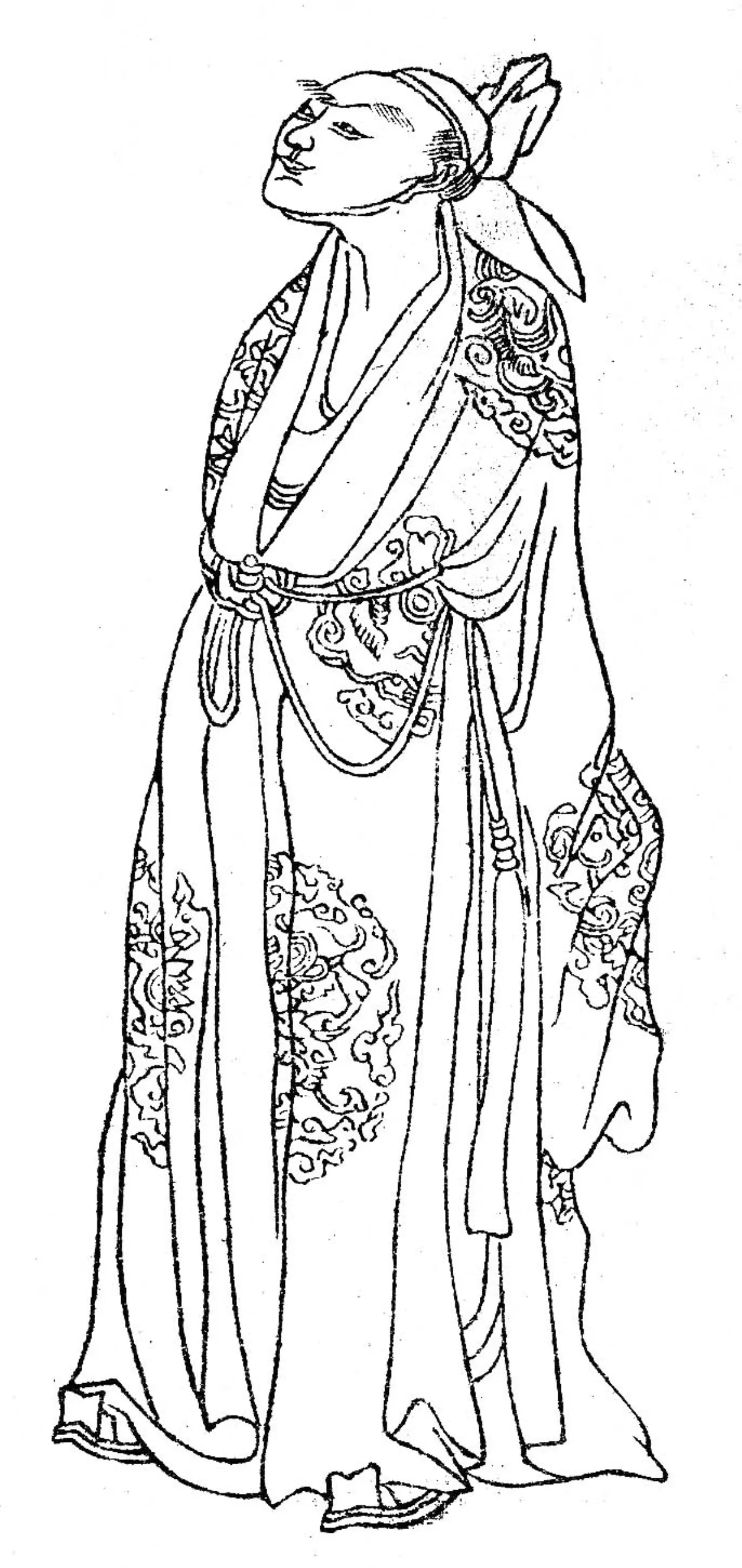
 1.
1. Li He was prevented from taking the imperial examination due to a naming taboo.
 1.
1. Li He was prevented from taking the imperial examination due to a naming taboo.
Li He died very young, and was noted for his sickly appearance.
Li He was a diligent poet, going out on journeys during the day and, when a line of poetry came to him, jotting it down, and completing the poems when he arrived home in the evening.
Li He was among the Tang poets most admired by Mao Zedong.
Li He was known as Guicai by contrast of his morbid poetic style to Li Bai's Tiancai and Bai Juyi's Rencai.
Li He's family were of distant royal descent, but his branch's fortunes had declined early on, and by Li He's time they were of low rank.
Li He served only three years, in the low-ranking office of Fenglilang before returning to his hometown.
Li He is described as having a very sickly appearance: he was supposedly very thin, had a unibrow, and let his fingernails grow long.
Li He died a low-ranking and poor official in 816 or 817, at the age of 26 or 27.
The Short Biography of Li He describes him as a diligent poet, who carried an old brocade bag around with him, and when a line of poetry came to him he would jot it down and put it in this bag.
Li He's poetry is unique, filled with fantastic and unusual imagery, which is where he gets his nickname "Guicai".
Li He gave eerie descriptions of the world of ghosts in his poems "Qiu lai" and "Shen xian qu".
Li He frequently combined colour and feeling imagery in his poetry, as can be seen in his poems "Tianshang yao" and "Qin wang yin jiu".
Li He was one of a group of Tang poets frequently quoted in the lyrics of Song-era musicians such as Zhou Bangyan.