 1.
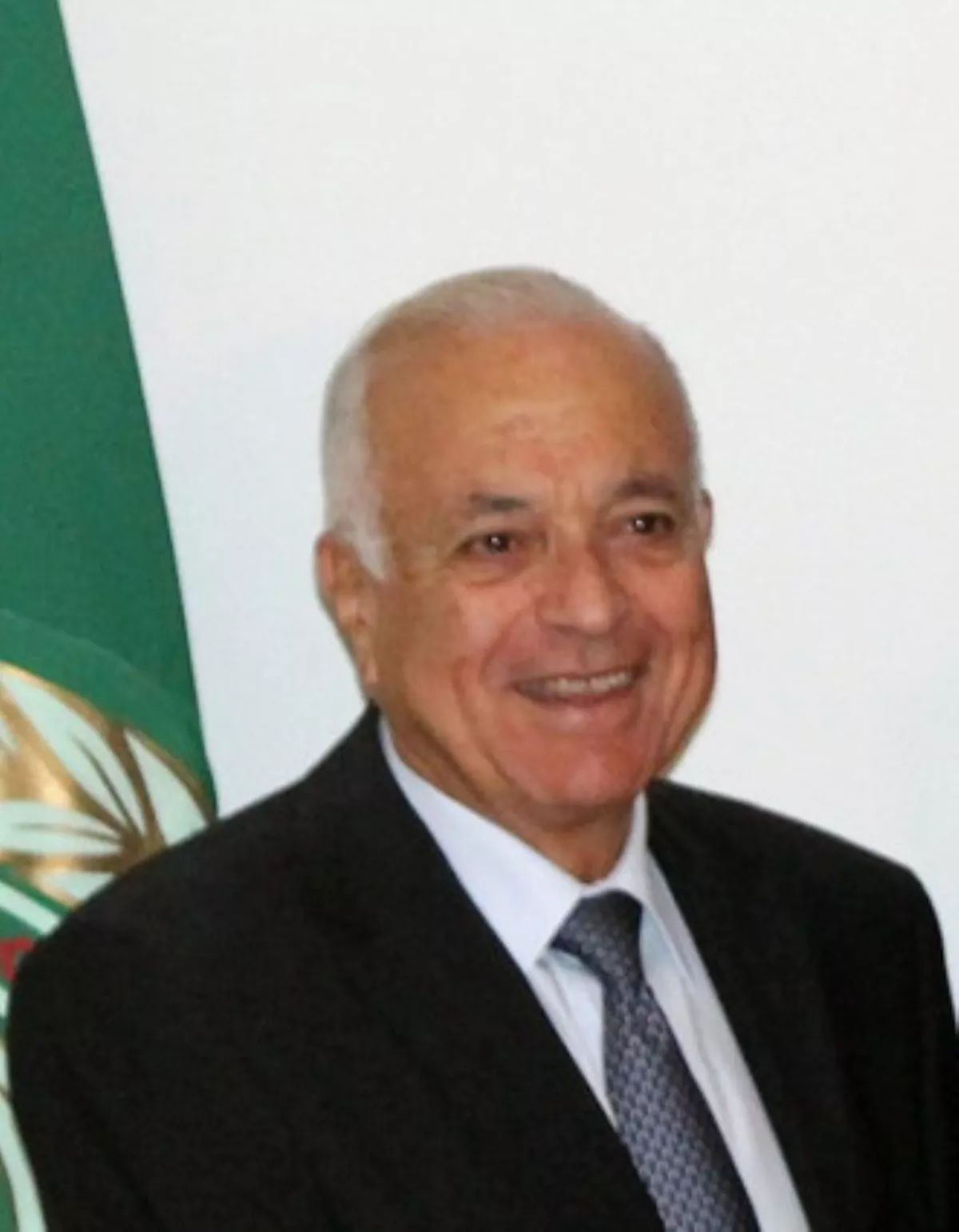
1. Nabil Elaraby was an Egyptian politician and diplomat who was the 7th Secretary General of the Arab League from 1 July 2011 to 3 July 2016.
 1.
1. Nabil Elaraby was an Egyptian politician and diplomat who was the 7th Secretary General of the Arab League from 1 July 2011 to 3 July 2016.
Nabil Elaraby served as one of the liaisons between the protesters and the government during the 2011 Egyptian protests, and played a key role in pressing for the removal of President Hosni Mubarak.
Nabil Elaraby served on the United Nations Compensation Commission in Geneva from 1999 to 2001, and was a member of the International Court of Justice from 2001 to February 2006.
Nabil Elaraby was honored with the Grand Cordon of the Order of the Arab Republic of Egypt and as the Grand Officier of the Order of the Republic of Tunisia.
Nabil Elaraby was legal adviser and director in the Legal and Treaties Department of the Ministry of Foreign Affairs from 1976 to 1978 and then Ambassador to India from 1981 to 1983.
Nabil Elaraby then returned to his previous post at the Foreign Ministry from 1983 to 1987.
Nabil Elaraby was legal adviser to the Egyptian delegation to the Camp David Middle East peace conference in 1978, head of the Egyptian delegation to the Taba negotiations from 1985 to 1989, and Agent of the Egyptian Government to the Egyptian-Israeli arbitration tribunal from 1986 to 1988.
Nabil Elaraby was appointed by the Egyptian Minister of Justice to the list of arbitrators in civil and commercial affairs in Egypt in 1995.
Nabil Elaraby was Egypt's top negotiator at the Taba Summit in 2001.
In 1968, Nabil Elaraby was an Adlai Stevenson Fellow in International Law at the United Nations Institute for Training and Research.
Nabil Elaraby was appointed a Special Fellow in International Law at UNITAR in 1973, and was legal adviser to the Egyptian delegation to the United Nations Geneva Middle East peace conference from 1973 to 1975.
Nabil Elaraby was Egypt's Deputy Permanent Representative to the United Nations in New York from 1978 to 1981, the Permanent Representative to the UN Office at Geneva from 1987 to 1991, the Permanent Representative to the UN in New York from 1991 to 1999, a member of the International Law Commission of the United Nations from 1994 to 2004, President of the Security Council in 1996, and vice-president of the General Assembly in 1993,1994 and 1997.
Nabil Elaraby was a commissioner at the United Nations Compensation Commission in Geneva from 1999 to 2001, and a member of the International Court of Justice from 2001 to February 2006.
Nabil Elaraby served as chairman for the First Committee of the General Assembly, the Informal Working Group on an Agenda for Peace, the Working Group on Legal Instruments for the UN Conference on Environment and Development in Rio de Janeiro, and the UN Special Committee on Enhancing the Principle of the Prohibition of the Use of Force in International Relations.
Nabil Elaraby was an Arbitrator at the International Chamber of Commerce International Court of Arbitration in Paris in a dispute concerning the Suez Canal from 1989 to 1992.
Nabil Elaraby was a judge in the Judicial Tribunal of the Organization of Arab Petroleum Exporting Countries in 1990.
Nabil Elaraby was a member of the governing board of the Stockholm International Peace Research Institute from 2000 to 2010.
Nabil Elaraby was one of the group of about 30 high-profile Egyptians acting as liaison between the protesters and the government, and pressing for the removal of President Hosni Mubarak.
Nabil Elaraby officially took office on 1 July 2011 and served until 3 July 2016.