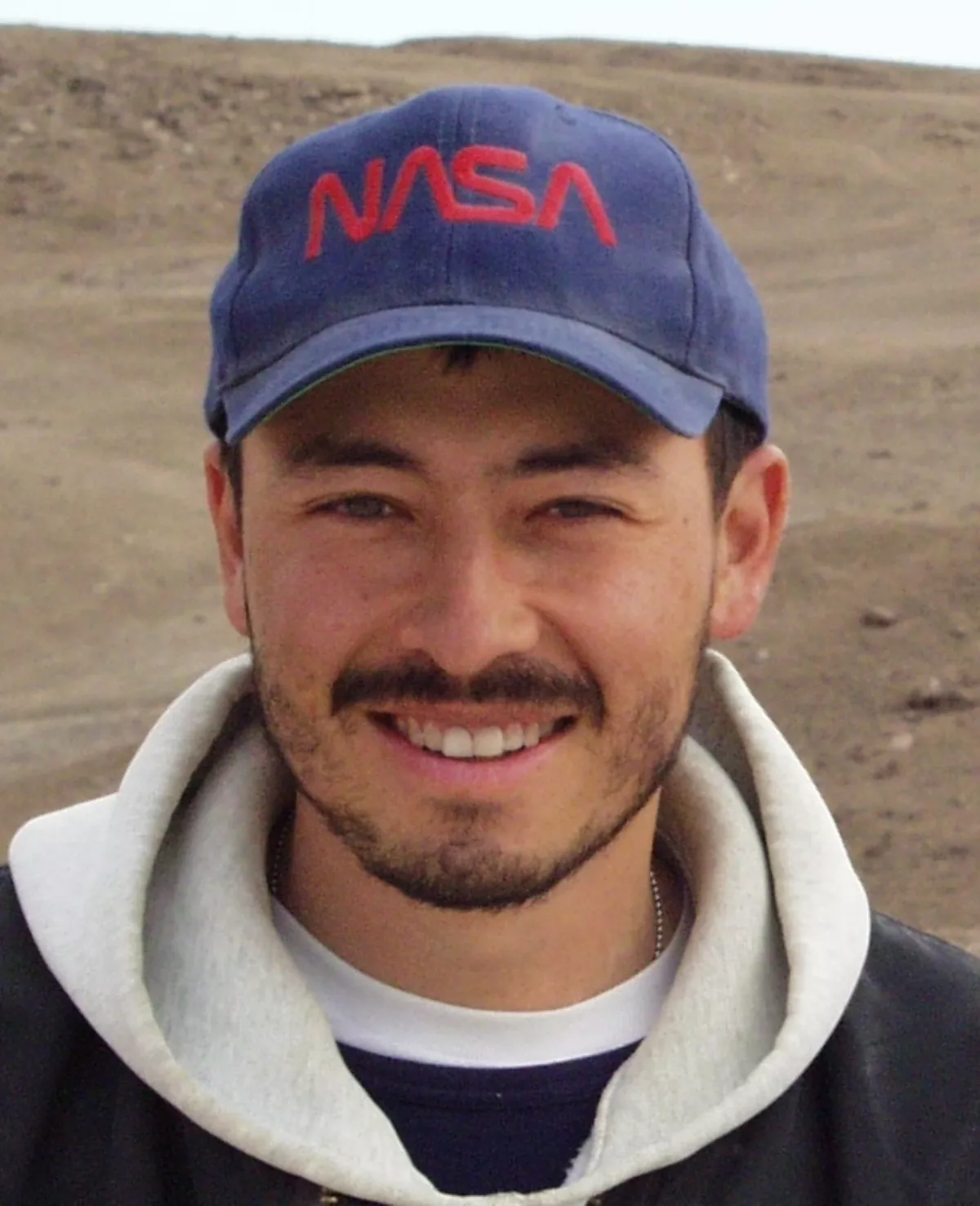
 1.
1. Pascal Lee holds an ME in geology and geophysics from the University of Paris, and a PhD in astronomy and space sciences from Cornell University.
 1.
1. Pascal Lee holds an ME in geology and geophysics from the University of Paris, and a PhD in astronomy and space sciences from Cornell University.
Pascal Lee is known internationally for his work on Moon and Mars analogs in the Arctic, Antarctica, and other extreme environments on Earth.
Pascal Lee is the author and co-author of over 100 scientific publications, and first proposed the "Mars Always Cold, Sometimes Wet" model of Mars evolution based on field studies of the geology of Earth's polar regions.
In 1988, Pascal Lee wintered over for 402 days at Dumont d'Urville Station, Adelie Land, Antarctica, where he served as the station's chief geophysicist.
Pascal Lee participated in five summer campaigns in Antarctica as a geologist and planetary scientist, in particular as a member of the US Antarctic Search for Meteorites program.
Pascal Lee has led over 18 HMP field expeditions to date, including the "Northwest Passage Drive Expedition" in April 2009 and May 2010, and continues to serve as the HMP's Director in support of research for NASA and the Canadian Space Agency.
Pascal Lee is widely recognized for his efforts to advance the human exploration of Mars, in particular via its asteroid-like moons Phobos and Deimos.
Pascal Lee is a recipient of the United States Antarctic Service Medal and the Space Frontier Foundation's Vision to Reality Award.
Pascal Lee is an FAA-certified helicopter flight instructor and lives in Santa Clara, California.
Pascal Lee was born in 1964 and attended St Joseph's Primary School in Wan Chai.
Pascal Lee began Mars research as a student intern under Audouin Dollfus at the Paris Observatory and Philippe Masson at the University of Paris-Sud.
In 1982, Pascal Lee was elected the Cosmos Club de France's General Secretary and served in that position until 1987.
From November 1987 to February 1989, Pascal Lee spent over a year in Antarctica on national service duty.
Pascal Lee studied astronomy and space sciences at Cornell, and worked as a research and teaching assistant for his thesis adviser Joseph Veverka, and the late Carl Sagan.
In 1993, Pascal Lee was awarded the Cornell University Department of Astronomy Eleanor Norton York Award.
In 2004, Pascal Lee returned to Cornell to teach for a semester as Visiting assistant professor of astronomy.
In 1999, Pascal Lee collaborated as a Participating Scientist on the NASA Mars Polar Lander mission.
In 2001, Pascal Lee was Principal Investigator of the "H2O Mars Exploration Rover" mission concept proposed jointly by the SETI Institute and the Boeing Company to NASA's Mars Scout program.
In 2006, Pascal Lee was Principal Investigator of the "Phobos Reconnaissance and International Mars Exploration" Mars mission concept study proposed jointly by the Mars Institute, Optech, and MDA to the Canadian Space Agency.
Pascal Lee is currently Principal Investigator of the NASA "Hall" mission concept study, a New Frontiers-class Phobos and Deimos sample return mission concept study.
Pascal Lee commanded the mission while Andrew Abercromby of the NASA Johnson Space Center served as field lead of the rover traverse investigation.
In May 2010, Pascal Lee led the second and final phase of the Northwest Passage Drive Expedition by driving the Moon-1 Humvee Rover from Resolute Bay, Cornwallis Island, to Domville Point, Devon Island.
Pascal Lee participated in field tests of NASA's Surface Exploration Vehicle, formerly known as the Lunar Exploration Rover or Small Pressurized Rover.
In 1998, Pascal Lee proposed the creation of a Mars Lander-like habitat at Haughton Crater on Devon Island to support field studies of requirements for future human Mars exploration.