 1.
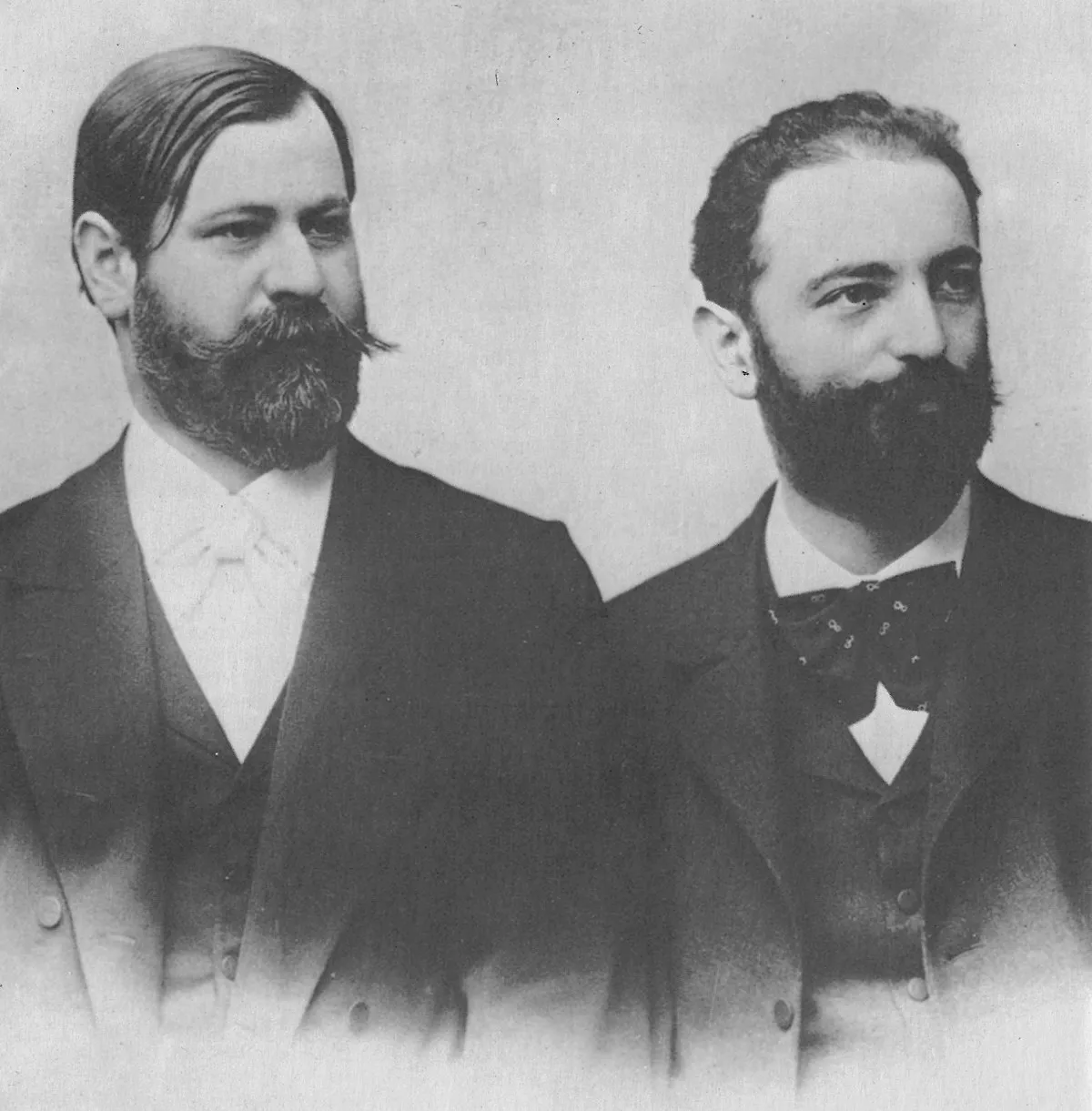
1. Wilhelm Fliess was a German otolaryngologist who practised in Berlin.
 1.
1. Wilhelm Fliess was a German otolaryngologist who practised in Berlin.
Wilhelm Fliess developed the pseudoscientific theory of human biorhythms and a possible nasogenital connection that have not been accepted by modern scientists.
Wilhelm Fliess is today best remembered for his close friendship and theoretical collaboration with Sigmund Freud, a controversial chapter in the history of psychoanalysis.
The theory postulated a connection between the nose and the genitals and related this to a variety of neurological and psychological symptoms; Wilhelm Fliess devised a surgical operation intended to sever that link.
On Josef Breuer's suggestion, Wilhelm Fliess attended several conferences with Sigmund Freud beginning in 1887 in Vienna, and the two soon formed a strong friendship.
Wilhelm Fliess wrote about his biorythmic theories in Der Ablauf des Lebens.
Freud consulted with another surgeon, who removed a piece of surgical gauze that Wilhelm Fliess had left behind.
Wilhelm Fliess even predicted Freud's death would be around the age of 51, through one of his complicated bio-numerological theories.
Wilhelm Fliess was born in Arnswalde, Province of Brandenburg, Kingdom of Prussia on 24 October 1858.
Wilhelm Fliess's son Robert Fliess was a psychoanalyst and a prolific writer in that field.
Wilhelm Fliess's niece Beate Hermelin, was an experimental psychologist who worked in the UK, where she made major contributions in what is known as developmental cognitive neuroscience.
Wilhelm Fliess appears as a character in Joseph Skibell's 2010 novel A Curable Romantic and in Human Traces by Sebastian Faulks.
The story of the relationship between Freud and Wilhelm Fliess is told by Martin Gardner in his July 1966 Mathematical Games column in Scientific American.