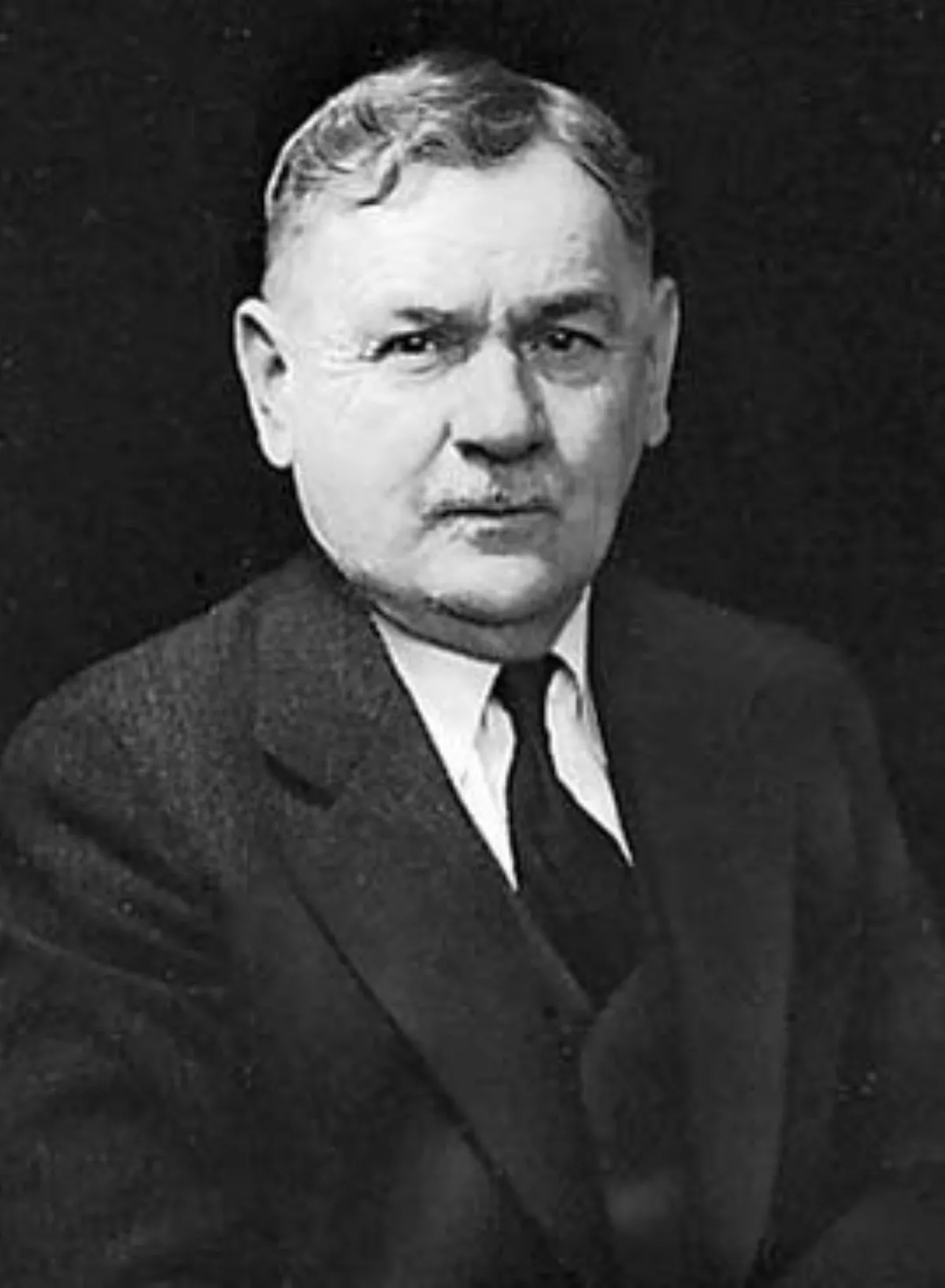
 1.
1. Clark David Wissler was an American anthropologist, ethnologist, and archaeologist.
 1.
1. Clark David Wissler was an American anthropologist, ethnologist, and archaeologist.
Clark David Wissler was born in Cambridge City, Indiana on September 18,1870 to Sylvania and Benjamin Franklin Wissler.
Clark Wissler continued his psychology graduate work under James McKeen Cattell at Columbia University.
Clark Wissler received his Doctor of Philosophy in psychology from Columbia in 1901.
From 1901 to 1903 Clark Wissler performed research on individual mental and physical differences.
In 1899 Clark Wissler was appointed assistant in psychology at Columbia University.
At Columbia, Clark Wissler served as an assistant professor of anthropology from 1903 to 1905 and as a lecturer from 1905 to 1909.
Clark Wissler was an instructor at New York University from 1901 to 1902.
In 1904, Clark Wissler was named Assistant Curator of Ethnology and in 1905, when Boas resigned, Clark Wissler was named Acting Curator of Ethnology.
In 1924 Clark Wissler began teaching at Yale University as a psychological researcher until 1931 when he switched to an anthropology professor, which he held until 1941.
Clark Wissler held the position of Curator of the Department of Anthropology until 1942 when he retired.
Clark Wissler was division chairman of the National Research Council in 1920 and 1921.
Clark Wissler was appointed as a member of the National Park Service Board by President Herbert Hoover.
Clark Wissler was elected to the American Academy of Arts and Sciences in 1920, the American Philosophical Society in 1924, and the United States National Academy of Sciences in 1929.
Clark Wissler performed his field research from 1902 until 1905 on the Dakota, Gros Ventre, and the Blackfoot.
Clark Wissler's fieldwork provided comprehensive ethnographies of each Native American culture, especially the Blackfoot.
Clark Wissler revolutionized the study of culture to a theory of cultural change and as an alternative to the Boasian style of anthropology.
Clark Wissler was trying to make cultural anthropology more scientific by forming a definition of culture that could be used to compare similar or different cultures.
Clark Wissler helped introduce statistics with the Pearson correlation coefficient formula which could be used to compare different artifacts in relations to their geological location.
Clark Wissler was the first anthropologist to perceive the normative aspect of culture, to define it as learned behavior, and to describe it as a complex of ideas, all characteristics of culture that are today generally accepted.
Clark Wissler was a specialist in North American ethnography, focusing on the Indians of the Plains.
Clark Wissler contributed to the culture area and age-area ideology of the diffusionist viewpoint that is no longer popular in anthropology.
Clark Wissler's influence is overlooked because of other anthropologists like Franz Boas and Ruth Benedict.
Clark Wissler offered some new theories that were quite different from Boas, who was a leading cultural researcher.
Clark Wissler was actively engaged in the American eugenics movement, a movement with the aim of purifying the American population of people with hereditary qualities deemed undesirable.
Clark Wissler was a proponent of a hierarchic racial theory that saw Africans as the lowest and Nordics as the highest rungs.
Clark Wissler married Etta Viola Gebhart of Hagerstown, Indiana on June 14,1899.
Clark Wissler died at Doctors Hospital in New York City on August 25,1947.