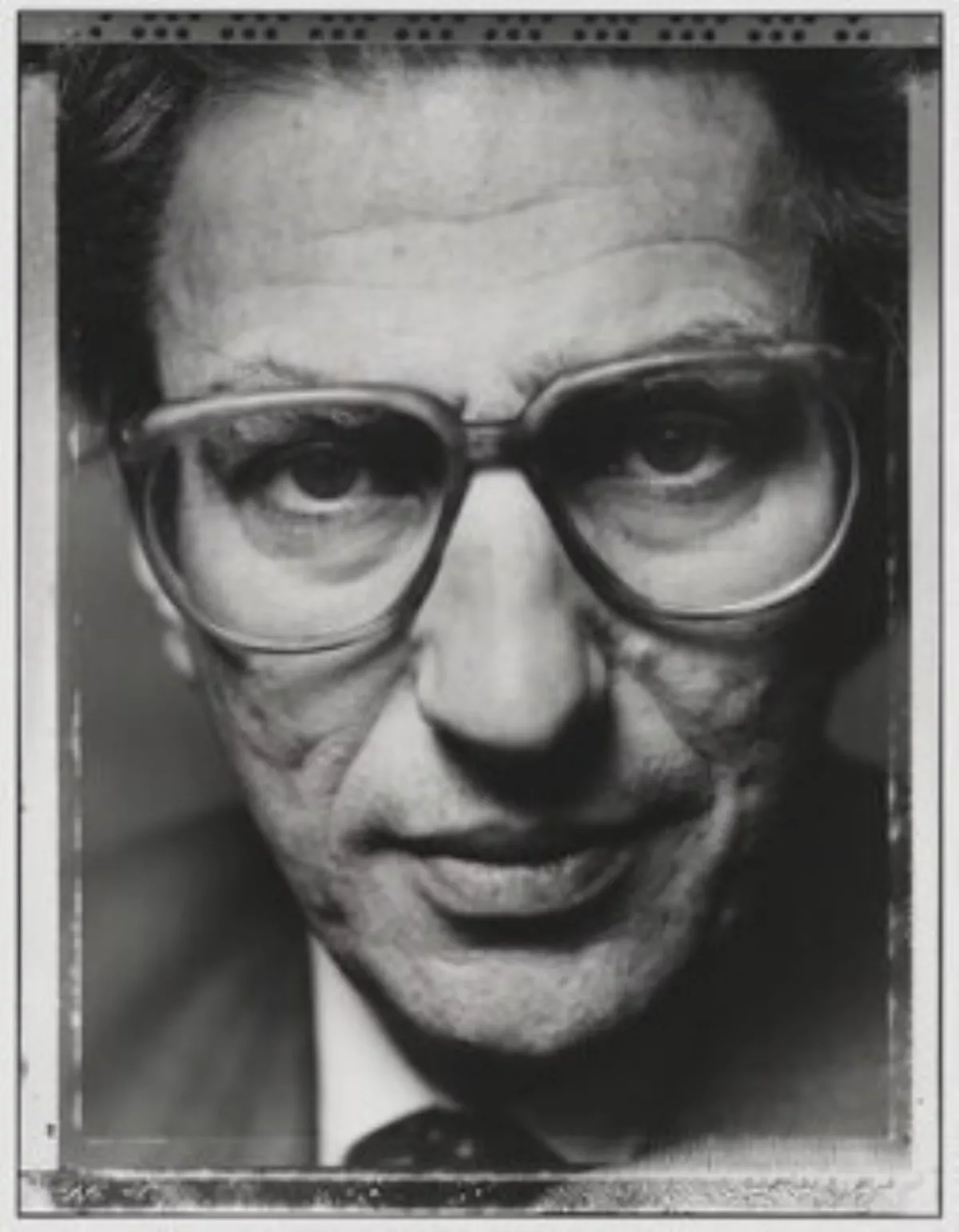
 1.
1. Lord Gowrie was the hereditary Clan Chief of Clan Ruthven in Scotland.
 1.
1. Lord Gowrie was the hereditary Clan Chief of Clan Ruthven in Scotland.
Grey Gowrie was educated at Eton and Oxford, and held posts in academia for a period, in the US and London, including time working with poet Robert Lowell and at Harvard University.
Grey Gowrie was a Conservative Party politician for some years, including a period in the British Cabinet.
Grey Gowrie held ministerial posts under Margaret Thatcher, in the areas of employment and Northern Ireland, and was Minister of State for the Arts, as well as Chancellor of the Duchy of Lancaster, with responsibility for Civil Service reform.
Grey Gowrie later chaired the Arts Council of England.
Grey Gowrie published several volumes of poetry, with a collected edition released in 2014, and a volume on the artist Derek Hill; he was a contributing author for a book on British painting.
Grey Gowrie underwent a heart transplant at Harefield Hospital in his early sixties.
Grey Gowrie died at his home in Llanfechain, Powys, Wales, in September 2021.
Grey Gowrie's father was the only surviving son of Alexander Hore-Ruthven, later the 1st Earl of Gowrie in its new creation, and his wife Zara.
Grey Gowrie had one sibling, younger brother Malise Ruthven, later a writer.
Grey Gowrie was known as "Grey", short for his third forename, to most, and "Greysteil" to close friends.
Grey Gowrie's surname drew on the Ruthven clan of Scotland, a name once outlawed, and the Hore family of County Wexford, Ireland.
Grey Gowrie's parents were both active in Cairo during the Second World War, his father, "Pat" to the family, as a major in the Rifle Brigade, and his mother working with the intelligence services.
Grey Gowrie's parents left Grey, at the age of three months, with his maternal grandmother in Ireland.
Grey Gowrie's father was killed in action at Tripoli in 1942, while attached to the then-new SAS, at which point Gowrie became his paternal grandfather's heir apparent; his grandparents played an active role in his upbringing thereafter.
When his grandfather, who had been the Governor-General of Australia, was created Earl of Gowrie in January 1945, reviving a title suppressed in 1600, Grey became known by the courtesy title Viscount Ruthven of Canberra.
Grey Gowrie's family moved for a time to a tower at Windsor Castle, where the 1st Earl was deputy constable, and then returned to Ireland, living in Dublin and Kilcullen, County Kildare.
Grey Gowrie's mother remarried in 1952, to her partner Major Derek Cooper, and the family moved to a Regency lodge on a 4,000-acre country estate at Dunlewey, a village at the edge of the Poisoned Glen in Gweedore, County Donegal.
Grey Gowrie matriculated his coat of arms with the Lord Lyon King of Arms in 1959.
Grey Gowrie worked for the Times Literary Supplement for a short time, and taught, meeting his future wife while working in a girls' school.
Grey Gowrie returned from the US in 1969, as lecturer in English and American Literature at University College London; he trained as an art dealer in Bond Street, working with Thomas Gibson Fine Art.
Early deals included a portrait of Peter Lacy by Francis Bacon, which Grey Gowrie offered first, at no commission, to the National Gallery of Ireland.
Grey Gowrie dealt in Old Masters, Picassos, and David Hockney at an early stage, and on one occasion sold a Jackson Pollock to the National Gallery of Art in Washington, DC, for $2 million.
Grey Gowrie produced his first volume of poetry, A Postcard from Don Giovanni, in 1972; David Hockney produced a sketch of Gowrie for its front cover.
Grey Gowrie became a member of the Conservative Party, and made his maiden speech in the House of Lords in 1968, speaking on reform of the house.
Grey Gowrie joined the Conservative front bench under Ted Heath in 1972 as a Lord-in-waiting and Conservative whip in the House of Lords, posts he held until 1974.
Grey Gowrie was seen as socially liberal but at the same time was described as an early convert to Thatcherite policies, and at the "dry" end of his party's debates between wets and dries.
Grey Gowrie followed his senior minister to Northern Ireland, where he was Minister of State and Deputy Secretary of State at the Northern Ireland Office from 1981 to 1983, during the period of IRA hunger strikes; he was noted as "expressing quiet admiration for what he saw as the dying men's misguided courage".
Grey Gowrie described himself as an "Irishman with a Scots name and a German wife, working, somewhat to his surprise, for a very English government".
Grey Gowrie was involved in the legalisation of homosexual acts in Northern Ireland in 1982, remarking to Ian Paisley, who led delegations opposed to the move, "We're not proposing to make it compulsory".
Grey Gowrie played a part in discussions about restoring devolved government and proposed a model using a formal arrangement between the two main communities of Northern Ireland, somewhat like that which was eventually introduced under the Good Friday Agreement.
Grey Gowrie is said to have "made little secret of his support for Irish unity" and he proposed joint British and Irish citizenship for Northern Irish people, the option of which was enshrined in the Good Friday Agreement.
Grey Gowrie commented that "Orange and Green both had an appetite for public spending undreamed of by Grantham or Finchley".
Grey Gowrie was Chancellor of the Duchy of Lancaster from 1984, with additional responsibility for personnel and management of the Civil Service.
Grey Gowrie was brought on to the global board of Sotheby's under Alfred Taubman; he worked for the company until 1994.
Grey Gowrie supported, and later inaugurated, the Angel of the North sculpture.
Grey Gowrie took up a role as a non-executive director of major betting firm Coral Ladbrokes and in 1995 he became non-executive chairman of property company Development Securities plc.
Grey Gowrie lectured on English and American literature at Harvard and University College, London.
Grey Gowrie held the unpaid post of Provost of the Royal College of Art from 1985 to 1996.
Grey Gowrie opened the first Bacon exhibition in the Soviet Union, in 1988 at the Central House of Artists in Moscow, for which he wrote the catalogue introduction.
Grey Gowrie made a number of television appearances, including in a 2017 documentary on the Anglo-Irish artist Francis Bacon, a programme on the Irish art collector Garech Browne, and a 2009 documentary on artist and British folk revivalist and blues pioneer Rory McEwen, the Poet Laureate.
Grey Gowrie appeared in a programme on the Royal National Theatre, as well as multiple episodes of Question Time in the 1980s.
Grey Gowrie was a patron of the Elton John AIDS Foundation.
Grey Gowrie was a founding director of the British Fund for the National Gallery of Ireland, from 1996 to 2000, rejoining in 2003, serving as co-chairman, and stepping down in 2011.
Grey Gowrie was a member of the Advisory Council of the London Symphony Orchestra.
Grey Gowrie published one volume of poetry in his 20s, A Postcard from Don Giovanni, after a period working as an assistant to American poet Robert Lowell, and later contributed the chapter on 20th century painting to a book on British painting, The Genius of British Painting, published in 1975.
Grey Gowrie became friends with his principal surgeon, Magdi Yacoub, and chaired the institute named for him.
Grey Gowrie later released Third Day with a mix of new and collected poetry.
Grey Gowrie inherited Castlemartin House and Estate at Kilcullen in County Kildare, Ireland, from his great-aunt, Sheelagh Blacker, in 1967, and later sold it to Tony O'Reilly.
Grey Gowrie lived partly in Ireland until 1983, and then, selling his Kildare house to Ronnie Wood, moved to the Welsh Marches village of Llanfechain in what was formerly Montgomeryshire.
Lord Grey Gowrie presided over the local show in Llanfechain in 1998, and attended the regional literary festival.
Grey Gowrie maintained a London home for much of his adult life, during his time in ministerial office in Covent Garden, latterly a house in Kensington.
Grey Gowrie married Xandra Bingley, daughter of Colonel Robert Bingley, on 1 November 1962.
Grey Gowrie was known to describe himself as "an Irishman with a Scots title, married to a German" and to say "I am a Nationalist, not a Unionist".
Grey Gowrie remained friends with Lowell, his poetic mentor, and was a pallbearer at his funeral.
Grey Gowrie has been closely associated with Edward Plunkett, the Anglo-Irish painter.
Grey Gowrie described Margaret Thatcher, Francis Bacon and Andrew Lloyd Webber as among his best friends.
Grey Gowrie had come to know Bacon later in life, but discovered that they had both partly grown up around the same small town, Kilcullen in County Kildare.
Grey Gowrie was friends with Boris Johnson, leading the pre-wedding dinner for Johnson's first marriage.
Grey Gowrie participated in a television documentary about another friend, Guinness heir Garech Browne.
Lord Grey Gowrie died at his home in Llanfechain, Powys, Wales, on 24 September 2021, at the age of 81, from COVID-19 during the COVID-19 pandemic in Wales.